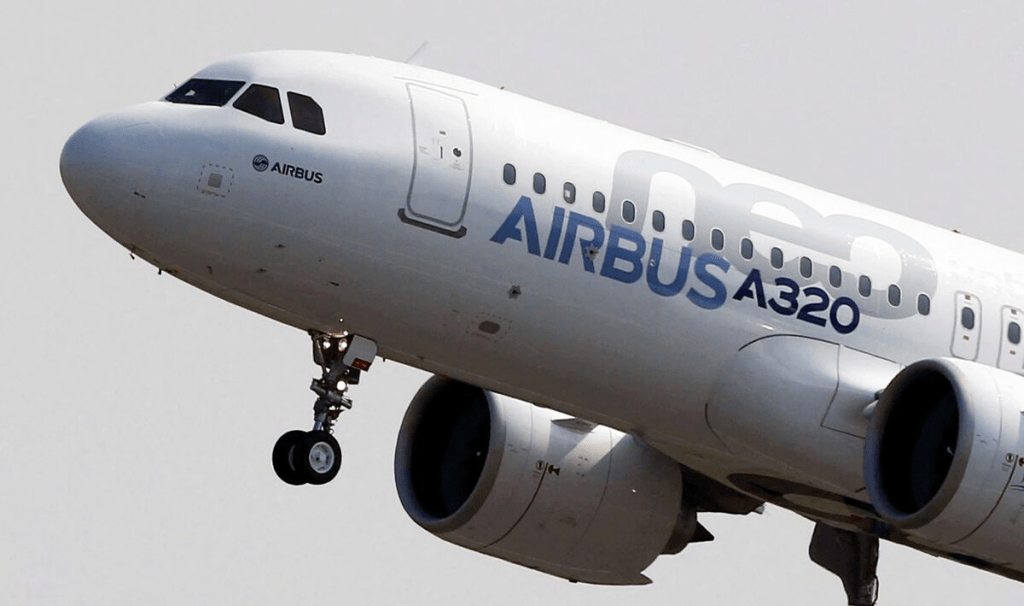
In an unprecedented global safety move, Airbus has issued an urgent recall for nearly 6,000 aircraft from its A320 family, the world’s most widely flown commercial jets, after investigators discovered that cosmic radiation can disrupt a critical flight-control computer mid-air.
The recall comes after a chilling JetBlue incident in October, when an Airbus A320 suddenly pitched downward at cruising altitude, injuring at least 15 passengers. The cause? A rare interference from high-energy cosmic particles that affected the aircraft’s Elevator Aileron Computer (ELAC) — the system that stabilises altitude and controls the aircraft’s balance.
Aviation experts call it “the flaw that stays invisible until it almost causes a disaster.”
India Hit Hard — 338 Jets Affected
India operates 338 A320-family aircraft, mostly under:
IndiGo
Air India
Vistara
AIX Connect
GoFirst (as applicable)
So far, 270 planes have received the safety upgrade, while 68 aircraft remain grounded until fixed. The DGCA has issued a strict order:
“No A320-family aircraft will fly passengers until the mandatory software patch is installed.”
The upgrade takes around three hours per aircraft.
Worldwide Impact
6,000 aircraft: requiring immediate software updates
900 older jets: need hardware replacement, and can fly only without passengers
regulators in the US, UK, EU have issued emergency directives
Airbus warns that delays and cancellations may be unavoidable.
What Exactly Went Wrong?
The JetBlue incident revealed that cosmic radiation can cause:
●false altitude readings
●momentary ELAC malfunction
●abrupt nose-down movement
This rare disruption, known as a Single-Event Upset (SEU), happens when charged cosmic particles flip a digital bit inside an aircraft computer — a tiny glitch with potentially catastrophic consequences.
●Scientists say aircraft cruising at 35,000 ft face:
●solar radiation
●high-energy neutrons
●cosmic particles from deep space
Most avionics are shielded, but the incident exposed a weakness in specific A320-series computers.
`This Could Have Ended in Disaster’ — Expert Warning
Aviation specialist Capt. Harsh Vardhan noted:
“A runaway ELAC failure can cause sudden, sharp descent.
This was a wake-up call. Regulators acted just in time.”
Should Passengers Be Worried?
Authorities say NO, because:
●the problem has been identified
●planes are grounded until updated
●new checks are enforced before every flight
You may see some flight rescheduling, but safety is fully under control.
India Compliance Status
India 338 270 upgraded, 68 pending
Worldwide~6,000 Updates underway
What Happens Next?
DGCA has mandated:
●real-time ELAC health check before every flight
●digital certification for every upgraded aircraft
●additional simulator training for pilots
●enhanced radiation shielding in older fleets
Airbus expects global upgrades completed by mid-December.
Why This Matters
This incident highlights a new reality:
●Modern aircraft rely heavily on digital systems
●Cosmic radiation poses a rare but real risk
Early detection + transparency + immediate action prevented a potential aviation disaster
The case will likely become a global model for proactive aviation safety.