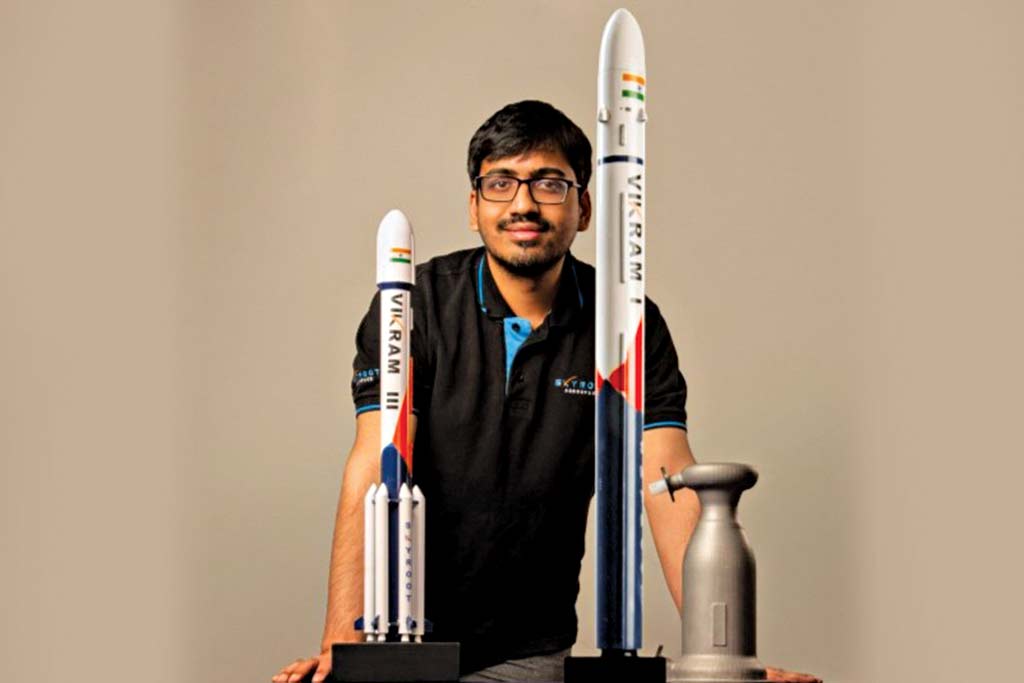
In a country where academic scores are often seen as the ultimate measure of potential, the story of Pawan Kumar Chandana proves that passion can take you far beyond any mark sheet. Born and raised in Visakhapatnam, this ordinary boy—who once scored just 51 marks in Maths—went on to achieve something extraordinary: building India’s largest private rocket factory and becoming one of the leading faces of India’s booming space-tech revolution.
Today, Chandana is the co-founder and CEO of Skyroot Aerospace, the startup behind India’s first private rocket launch, Vikram-S. His journey from a government school classroom to the centre of India’s private space race is nothing short of inspirational.
From Vizag Classrooms to the Indian Space Dream
Growing up in a middle-class household, Pawan was always fascinated by rockets and space. But like many Indian children, he struggled with Mathematics in school. Scoring 51 in the subject could have discouraged anyone — but not Pawan. Instead, he doubled down on his dreams.
His persistence paid off. He cracked IIT Kharagpur and graduated as a mechanical engineering topper — a moment that completely changed his trajectory.
Five Years at ISRO: The Turning Point
After IIT, Pawan joined ISRO, where he worked for five years on key missions. He gained deep expertise in:
●Launch vehicle dynamics
●Rocket design
●Advanced composite technologies
●Cryogenic and solid propulsion systems
It was during these years that Pawan realised India needed private players to accelerate innovation in space technology. He also understood the market opportunity: global demand for satellite launches was booming, and India could play a major role.
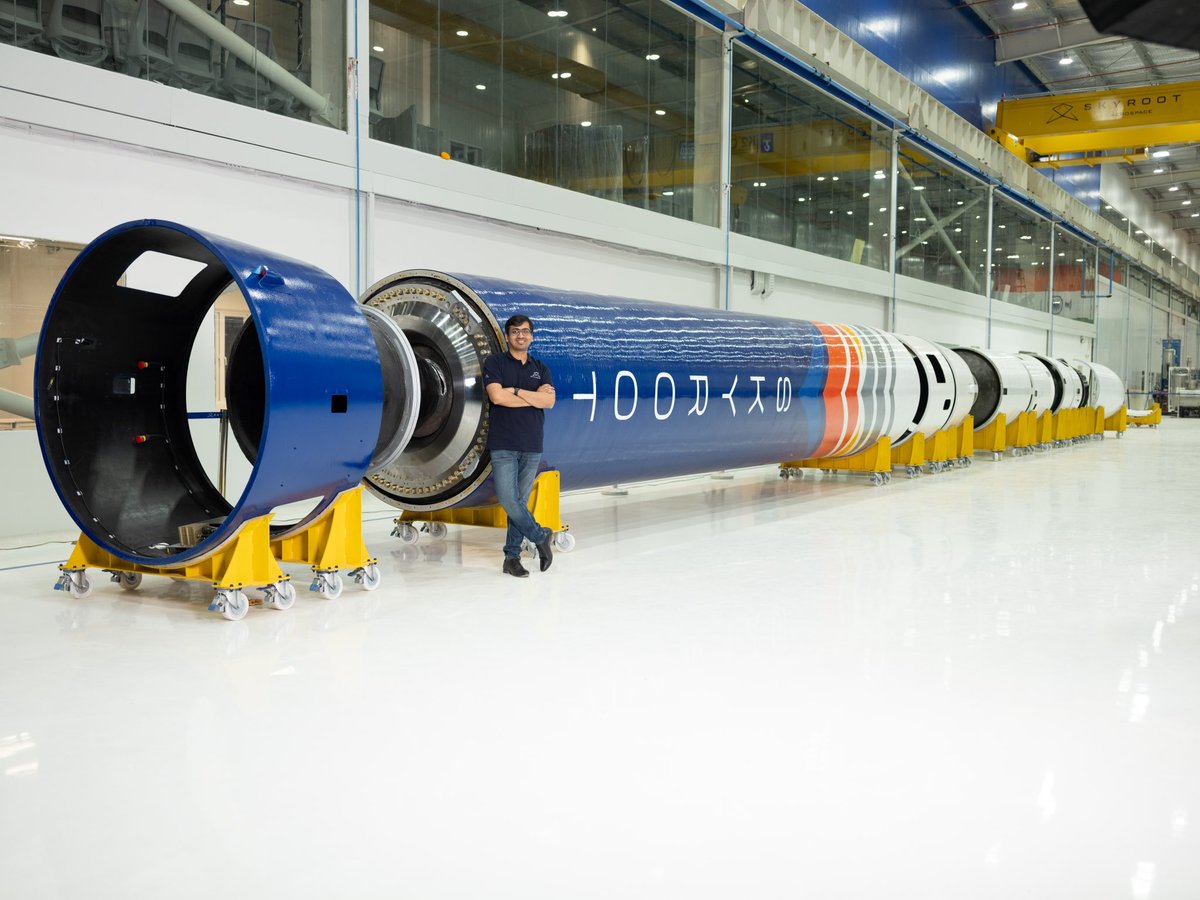
Skyroot Aerospace: A Startup That Changed India’s Space-Tech Landscape
In 2018, Pawan teamed up with fellow ISRO engineer Naga Bharath Daka to launch Skyroot Aerospace.
Within a few years, Skyroot achieved milestones that even global companies struggle with:
Skyroot Highlights
●Built India’s first privately developed rocket, Vikram-S.
●Became the first Indian startup to sign an agreement with ISRO.
●Developed world-class rocket engines using advanced 3D printing.
●Raised more than $95 million (Rs 800+ crore) in funding.
Became India’s largest private rocket factory, capable of producing multiple launch vehicles every year.
On November 18, 2022, Vikram-S soared into space from Sriharikota — creating history and signalling a new era for Indian private space ventures.
A Global Vision for the Future
Chandana’s goal is bold and clear:
To make space access as affordable and reliable as air travel.
Skyroot’s upcoming rockets — Vikram-1, Vikram-2, and Vikram-3 — aim to offer low-cost, on-demand satellite launches for customers across the world.
With India emerging as a global hub for space technology, Pawan’s journey represents the new India — daring, innovative, and unstoppable.
A Message for India’s Students
Pawan often says:
“Marks don’t define your future. Skills do.”
His success proves that passion, curiosity, and relentless hard work are far more powerful than any number on a report card.