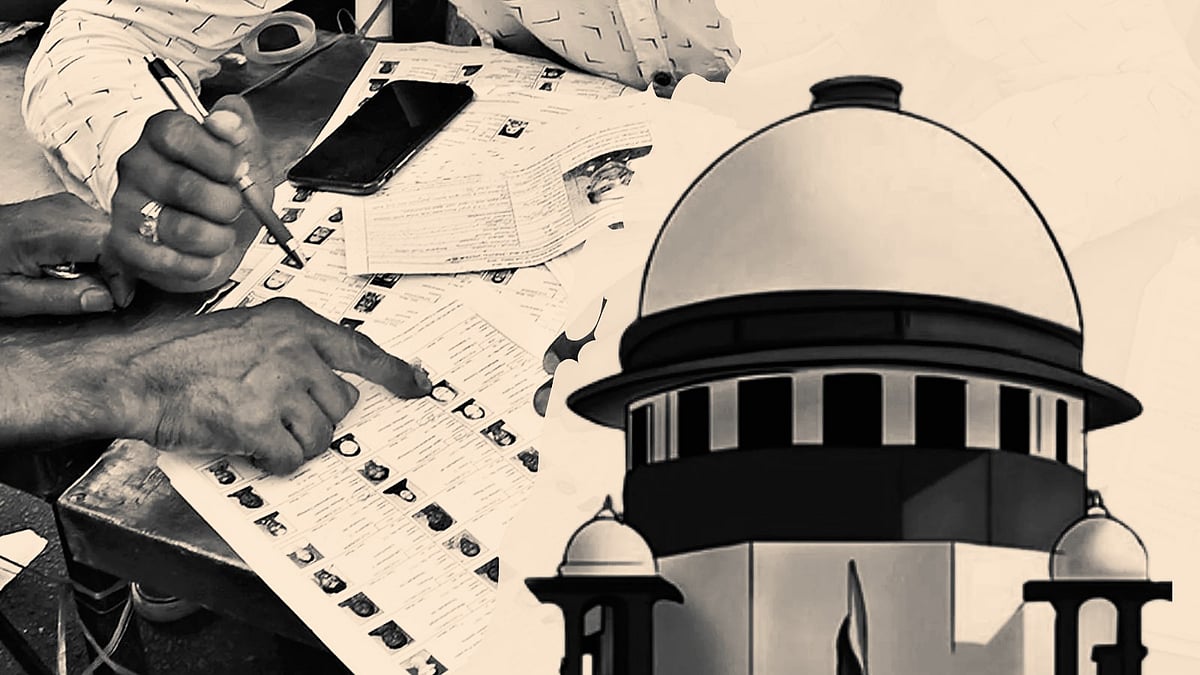
In a strong message aimed at protecting the integrity of India’s electoral system, the Supreme Court on Monday pulled up several states for allegedly obstructing the Special Intensive Revision (SIR) of electoral rolls and for reports of intimidation of Booth Level Officers (BLOs). The Court made it clear that disruptions to this crucial democratic exercise would not be tolerated and directed the Election Commission of India (ECI) to immediately report such incidents so the Court could step in with appropriate orders.
A bench led by Chief Justice Suryakant and Justice Joymalya Bagchi said the Election Commission must remain vigilant and should not overlook any attempt to derail or influence the revision process. “Any administrative indiscipline or lack of cooperation from states must be brought to our notice,” the bench remarked, emphasising that a free and accurate voter list is the foundation of any fair election.
“If Situation Worsens, Police Deployment Will Be Necessary”: Supreme Court
During the proceedings, the Court expressed concern over continuing complaints from West Bengal and other states, where BLOs—tasked with door-to-door verification of voter details—allegedly faced threats and harassment. The Court warned that if tensions escalate, it would have “no option but to deploy police forces” to ensure smooth execution of the SIR exercise.
Appearing for the ECI, senior advocate Rakesh Dwivedi assured the bench that the Commission already holds broad constitutional powers to address intimidation or obstruction. However, the Court clarified that before the formal election process begins, the Commission cannot independently take control of state police machinery. This makes the cooperation of state administrations crucial, the bench noted.
Debate Over BLO Stress: Court Pushes Back Against ECI Claims
The Court also scrutinized reports of BLO harassment in West Bengal. While the ECI’s counsel argued that BLOs were handling only a small workload—6 to 7 households per officer—Justice Bagchi disagreed sharply.
“This is not a desk job,” he said. “They must go door to door, interact with citizens, collect forms, and upload data. It is a physically demanding task.”
The bench stressed that BLO safety and working conditions must be monitored carefully, and the ECI must not trivialize their challenges.
ECI Deploys Senior IAS Officers for Transparency in Bengal
In response to rising concerns, the Election Commission has deputed five senior IAS officers as Special Roll Observers (SROs) to oversee the SIR process across West Bengal.
These include:
Kumar Ravi Kant Singh (Ministry of Defence) – Presidency Division
Neeraj Kumar Bansod (Ministry of Home Affairs) – Medinipur Division
Krishna Kumar Nirala (Ministry of I&B) – Bardhaman Division
The CEO’s office said the move will enhance transparency, strengthen accountability, and ensure field-level supervision of the revision exercise.
Final Voter List to Be Published in February 2026
The SIR began on November 4, 2025, and the final electoral roll is scheduled for publication on February 14, 2026. The ECI maintains that the revision is essential for ensuring that voter rolls remain accurate, transparent, and inclusion-friendly ahead of upcoming elections.
With the Supreme Court’s sharp comments ringing loud, officials expect state governments to extend full cooperation—ensuring that the democratic process proceeds without disruption or intimidation.