South Korea was placed on high alert Tuesday morning after Chinese and Russian military aircraft entered its Air Defence Identification Zone (KADIZ), prompting Seoul to scramble fighter jets amid rising regional strain.
The Joint Chiefs of Staff (JCS) confirmed the aircraft left shortly after entering the zone and did not breach South Korean territorial airspace, but the incursion was serious enough to trigger immediate defensive action.
Seven Russian, Two Chinese Aircraft Detected
According to the JCS, seven Russian and two Chinese military planes flew into KADIZ around 10 a.m. local time (0100 GMT).
Earlier reports by Newsis suggested 11 aircraft were involved.
South Korean forces quickly:
●Identified the aircraft
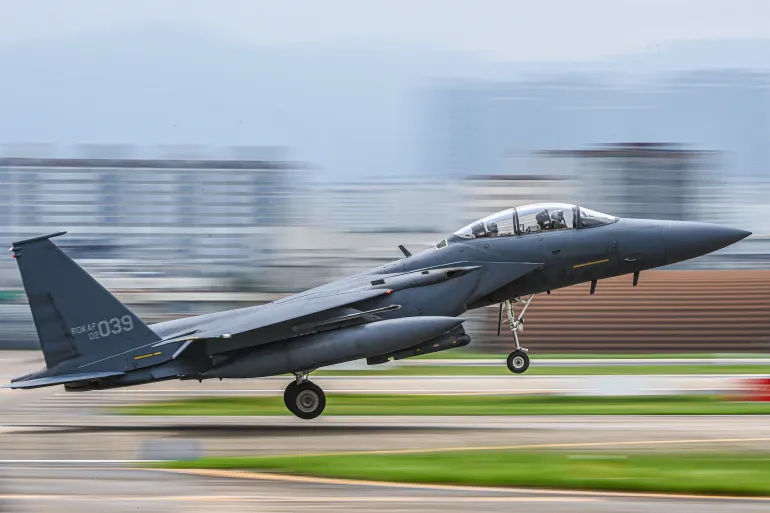
●Scrambled fighter jets
●Monitored the flight paths near the eastern and southern coasts
Yonhap reported the aircraft remained inside KADIZ for about an hour before exiting.
No Airspace Violation—But Serious Concern
Although the aircraft did not cross into sovereign airspace, South Korea labeled the move “a matter of security concern”, especially given:
●No prior notification from Beijing or Moscow
●Increased joint air activity in recent years
●Expanding China–Russia military coordination
The JCS said fighter jets were deployed as a precautionary readiness measure.
Routine China–Russia Joint Patrols Becoming Flashpoints
China and Russia often conduct joint strategic patrols in international airspace near the Korean Peninsula.
These missions typically include bombers and reconnaissance aircraft flying through air defence zones of:
South Korea
Japan
Allied regions in the Western Pacific
Both nations insist these flights are “routine exercises”, but neighbours interpret them as strategic muscle-flexing in an increasingly contested Indo-Pacific.
Broader Geopolitical Tensions Rising
This latest encounter comes as:
●South Korea, Japan, and the U.S. boost trilateral defence cooperation
●China and Russia strengthen joint military drills
●North Korea continues provocative missile tests
Analysts say the Indo-Pacific is becoming a major power battleground, where even non-intrusive air zone entries can spark diplomatic friction.