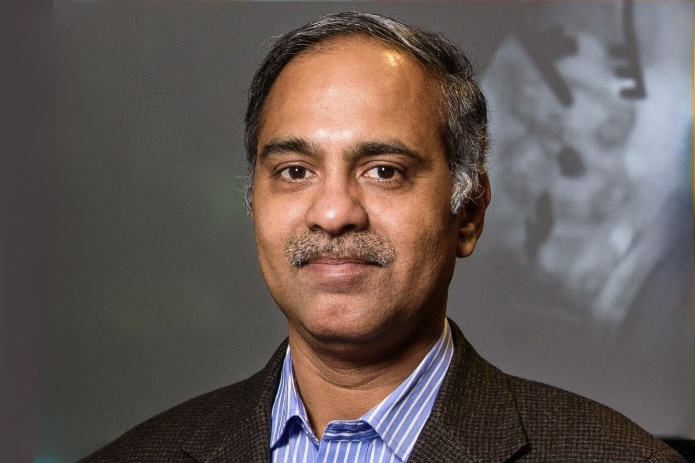
Indian-origin cancer researcher Dr. Raghuraman Kannan has been selected as a Fellow of the National Academy of Inventors (NAI), one of the highest recognitions for academic innovators in the United States. The honour places him among the most influential inventors whose work has made a tangible impact on society, healthcare, and economic growth.
The University of Missouri announced that Dr. Kannan is one of only two professors from the institution selected for the NAI Fellows Class of 2025. The other honouree is Professor Henry Nguyen, a globally respected expert in plant genetics and biotechnology.
The NAI Fellowship is awarded to innovators whose inventions have significantly improved quality of life and demonstrated real-world application. Selection involves a rigorous evaluation of patented technologies and their societal benefits.
Dr. Kannan is a Curators’ Distinguished Professor and holds the Michael J. and Sharon R. Bukstein Chair in Cancer Research. He has joint appointments at the University of Missouri’s School of Medicine and College of Engineering, and also serves as Associate Director of Immuno-Oncology and Therapeutics at the Ellis Fischel Cancer Center.
His research focuses on advanced nanoparticle-based drug delivery platforms, designed to target cancer tumors precisely while sparing healthy cells—an innovation that has the potential to transform cancer treatment. His technologies are being further developed for treating lung, breast, ovarian, pancreatic, and liver cancers.
Dr. Kannan holds 65 patents worldwide, including 12 active U.S. patents, highlighting the translational impact of his work from laboratory research to clinical potential.
Reacting to the honour, Dr. Kannan said that being named an NAI Fellow is a profound privilege. He emphasized that the recognition belongs not only to him but also to his collaborators, colleagues, and students who contributed to these innovations.
The selected fellows will be formally inducted during the NAI Annual Meeting in Los Angeles later this year. Dr. Kannan’s achievement stands as a proud moment for the global Indian scientific community and reinforces India’s growing influence in cutting-edge medical research and innovation.