
When people think of the world’s most expensive materials, gold, diamonds, and rare artworks usually top the list. But far beyond the reach of luxury markets lies an extraordinary category of substances so rare, complex, and scientifically vital that their value defies all conventional measures of wealth. These materials are not traded on exchanges, displayed in showrooms, or worn as status symbols. In some cases, they exist only in microscopic quantities inside secure laboratories—yet a single gram could be worth more than the GDP of several countries combined.
At the pinnacle of this list stands antimatter, widely considered the most expensive substance ever created by humanity.
Antimatter: The Costliest Substance Known to Science
Antimatter is not mined or manufactured—it is created fleetingly in high-energy particle accelerators. When particles collide at near-light speeds, minuscule amounts of antimatter are formed, only to vanish almost instantly when they encounter normal matter.
Storing antimatter is one of science’s greatest challenges. It must be suspended in ultra-precise magnetic fields within perfect vacuums, as even the slightest contact with ordinary matter causes complete annihilation, releasing immense energy.
Scientists estimate that producing just one gram of antimatter would cost tens of trillions of dollars, making it far more valuable than any precious metal or gemstone. Today, antimatter exists only in trace amounts, used for advanced physics experiments, medical imaging techniques like PET scans, and research into the origins of the universe. Its price remains largely theoretical—but unmatched.
Californium: A Metal Worth Millions Per Gram
Among tangible materials, californium ranks as one of the most expensive substances ever produced. This highly radioactive metal is synthesised in nuclear reactors and particle accelerators, and only a few grams have ever been created worldwide.
Despite its extreme scarcity and hazardous nature, californium plays a crucial role in nuclear reactor start-ups, neutron radiography, oil exploration, and certain cancer treatments. Its price runs into millions of dollars per gram, driven by its unique neutron-emitting properties and near-impossible production scale.
Actinium: Small Quantities, Massive Medical Impact
Another material commanding extraordinary value is actinium, a rare radioactive element used in cutting-edge cancer therapies. Actinium-based treatments allow doctors to target tumours with remarkable precision, minimising damage to surrounding healthy tissue.
However, actinium is extremely difficult to isolate and decays rapidly, making large-scale production nearly impossible. Its growing role in nuclear medicine has made it one of the most strategically valuable elements in modern healthcare.
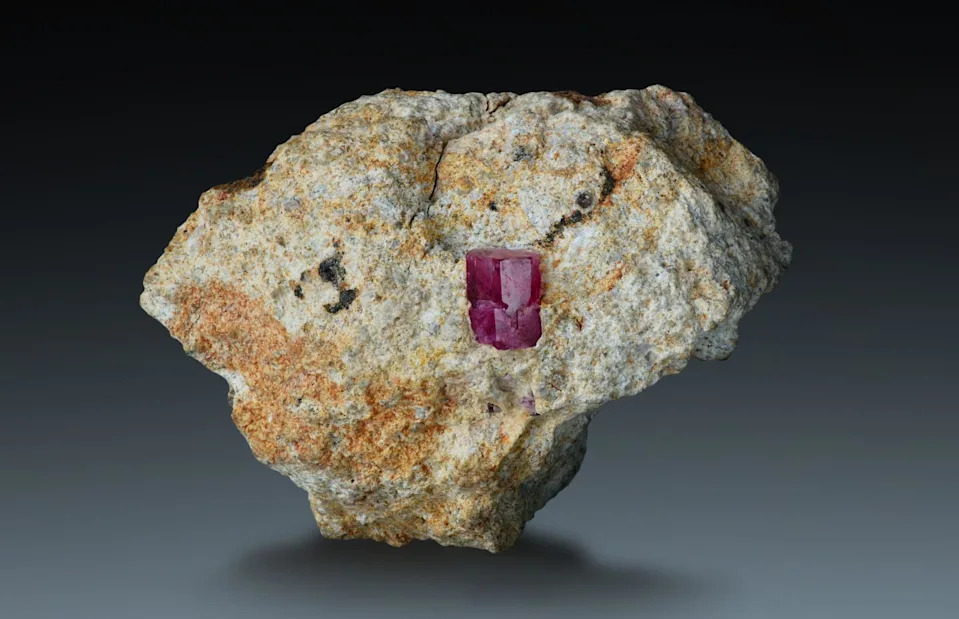
Red Diamonds and Painite: Nature’s Rarest Treasures
In the realm of natural materials, red diamonds are considered the rarest gemstones on Earth. Their striking colour is caused not by impurities but by rare distortions in their crystal structure. Fewer than 30 verified red diamonds exist globally, with prices reaching millions of dollars per carat.
Similarly, painite, once officially declared the rarest gemstone in the world, remains extraordinarily scarce despite new discoveries. High-quality specimens are prized by collectors and museums, commanding exceptional prices.
Redefining the Meaning of Wealth
What unites these materials is not luxury appeal but extreme scarcity, scientific importance, and technological limitation. Their value is not dictated by fashion or markets, but by humanity’s ability—or inability—to create, control, and preserve them.
As advances continue in medicine, space exploration, and fundamental physics, experts believe these substances will become even more critical. In a world increasingly shaped by innovation, the most valuable materials are no longer those we can easily own—but those that push the boundaries of human knowledge itself.