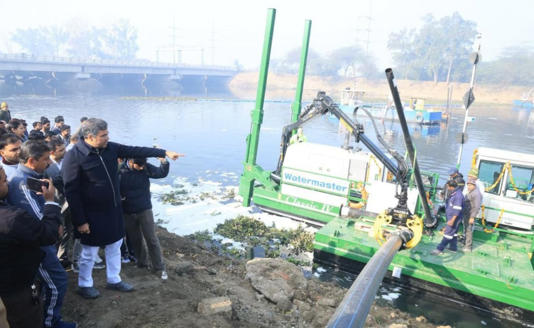
In a significant step towards restoring the health of the Yamuna River, the Delhi government has deployed a state-of-the-art Finnish dredger at the Najafgarh Drain, the single largest source of pollution flowing into the river. The initiative signals a shift towards technology-led, large-scale and continuous action to tackle one of Delhi’s most persistent environmental challenges.
The advanced amphibian dredger, known as Watermaster, has been commissioned by the Irrigation and Flood Control Department and will be used for sludge removal and aquatic weed clearance. Officials estimate that the Najafgarh drain alone contributes nearly 70% of the total pollution load entering the Yamuna, making it a critical intervention point.
What Makes the Watermaster Dredger Special
Sourced from Finland, the Watermaster dredger is designed to operate seamlessly from dry land to water bodies as deep as six metres. Its multipurpose capabilities allow it to perform dredging, raking, piling, desilting, and weed removal—tasks that are especially challenging in congested and heavily polluted drains like Najafgarh.
A key feature of the machine is its GPS-based tracking system combined with a fuel sensor, enabling real-time monitoring of operations. This ensures transparency, efficiency, and accountability—areas where earlier river-cleaning efforts often faced criticism.
Minister Highlights Outcome-Based Approach
Delhi Irrigation and Flood Control Minister Parvesh Verma described the deployment as a decisive move towards measurable results. He said that cleaning the Yamuna is impossible without first addressing the Najafgarh drain, which acts as the main carrier of untreated waste and sludge into the river.
According to the minister, if the performance of the Watermaster dredger meets expectations, similar high-end machines will be deployed across other major drains and stretches of the Yamuna. The goal is to create a sustained and replicable model rather than short-term cosmetic clean-up drives.
A Step Toward Long-Term River Rejuvenation
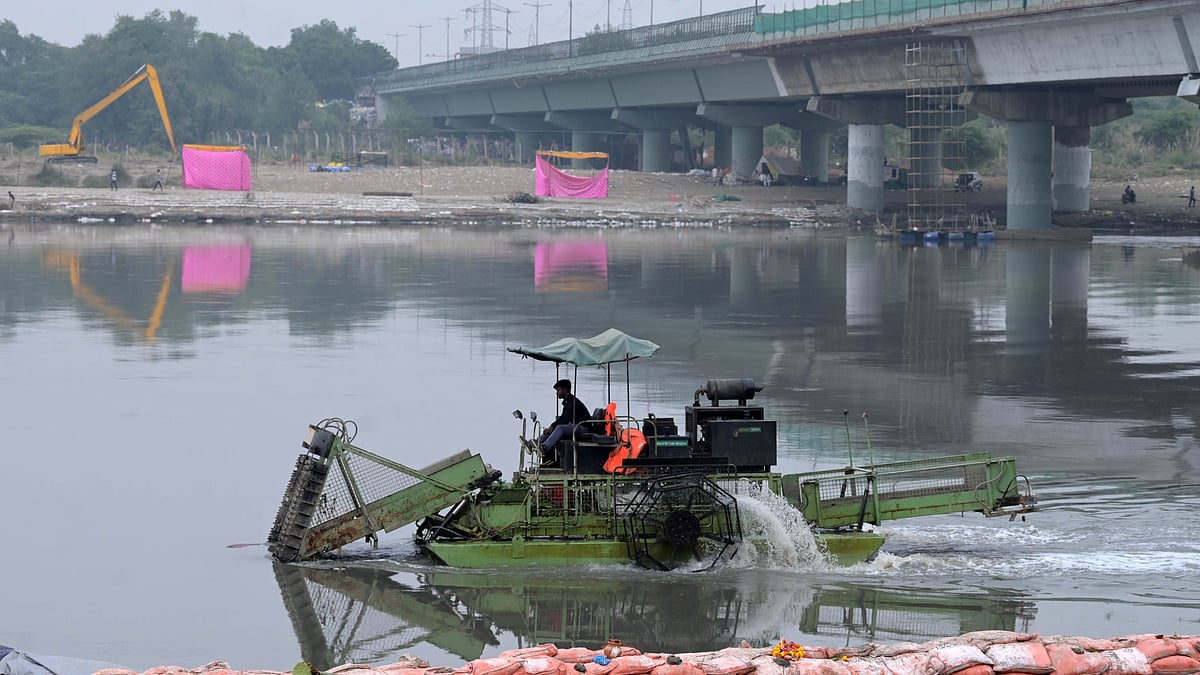
Environmental experts believe that while a single machine cannot solve the Yamuna’s pollution crisis, consistent desilting and weed removal can significantly reduce organic waste, improve water flow, and support future sewage-treatment interventions. The use of global-standard machinery also reflects a growing recognition that traditional methods are no longer sufficient for Delhi’s scale of pollution.
As the capital continues to battle air and water pollution, the deployment of advanced technology at critical pollution hotspots offers cautious optimism. If backed by sustained political will, monitoring, and parallel upgrades in sewage treatment, this initiative could mark a meaningful step towards reviving Delhi’s most important river.