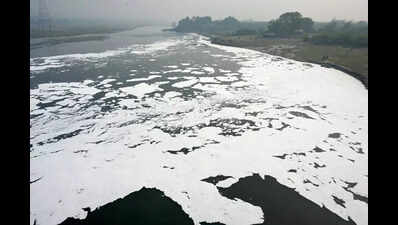
Despite spending over Rs 5,536 crore in the last three financial years on cleaning the Yamuna, pollution levels in the Delhi stretch of the river remain a major concern. This was revealed by the Union Ministry of Jal Shakti in a written reply submitted in the Rajya Sabha, raising serious questions about the effectiveness of existing cleanup measures.
The expenditure was incurred by the Delhi Jal Board as part of various river rejuvenation and sewage management projects. However, the Centre has acknowledged that large infrastructural gaps continue to undermine efforts to restore the river’s health.
Untreated Sewage Remains the Biggest Polluter
According to the government, the primary reason behind the persistent pollution is the continued discharge of untreated and partially treated sewage into the river. As of August 2025, Delhi recorded a sewage treatment gap of nearly 414 million litres per day, meaning a substantial volume of wastewater is still flowing directly into the Yamuna.
Officials admitted that delays in the construction and upgradation of sewage treatment plants have slowed progress, allowing pollution levels to remain dangerously high in several stretches of the river.
Industrial Effluent and Solid Waste Add to the Crisis
The Centre also flagged the absence of Common Effluent Treatment Plants in several approved industrial areas, leading to untreated industrial waste entering the river system. In addition, weaknesses in solid waste management continue to worsen the situation.
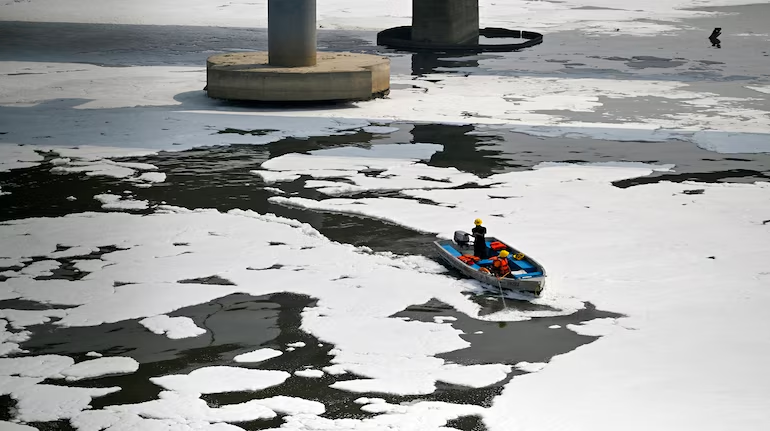
Delhi generates around 11,862 tonnes of solid waste every day, while its processing capacity stands at only 7,641 tonnes. The resulting daily gap of over 4,200 tonnes increases the risk of garbage and pollutants finding their way into drains and eventually the Yamuna.
Water Quality Shows Mixed Trends
Monitoring data presents a mixed picture. At the Palla entry point from Haryana, water quality showed some improvement during parts of 2025, with oxygen levels briefly falling within acceptable limits. However, officials noted that water quality fluctuates significantly depending on seasonal flow and discharge patterns, making sustained improvement difficult.
Centre Pushes Long-Term Solutions
To address these challenges, the Centre has sanctioned 35 projects under the Namami Gange Programme for the Yamuna, with a total estimated cost of Rs 6,534 crore. These projects aim to create additional sewage treatment capacity of over 2,200 MLD. While 21 projects have been completed, the remaining are still under various stages of implementation.
Experts warn that unless sewage treatment gaps, industrial effluent control, and solid waste management are addressed together, financial investment alone will not be enough to clean the Yamuna.