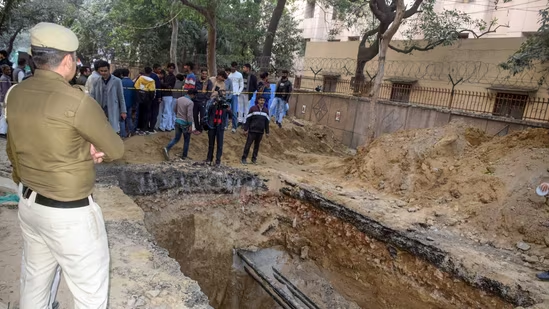
The recent deaths of three individuals in Noida and Delhi have intensified concerns over civic negligence and infrastructure safety in the National Capital Region.
A 27-year-old software engineer lost his life in Noida after his car plunged into a deep, water-filled excavation pit. Shortly after, a 25-year-old man in Delhi’s Janakpuri fell into a sewer repair pit and reportedly remained trapped for hours before succumbing. In another shocking incident, a daily wage labourer died after falling into an open manhole in Rohini’s Sector 32.
The pattern across all three cases points to unsafe civic conditions — open pits, inadequate barricading, poor lighting, and uncovered drains.
Repeated Safety Lapses Despite Warnings
Following the Noida tragedy, authorities had issued safety advisories and directed agencies to strictly implement protective measures at construction and repair sites. However, the fatal incident in Janakpuri occurred soon after such instructions were circulated.
The sequence of events has raised questions about whether safety directives are being properly implemented or merely issued on paper. In multiple instances, barricades were reportedly broken or insufficient, and warning signs were either missing or poorly visible.
Delayed Responses Also Under Scrutiny
Beyond structural negligence, delays in response have also drawn criticism. In one case, bystanders reportedly informed authorities but left the scene while the victim remained trapped. In another, family members raised concerns about the time taken to locate the victim.
These incidents have sparked debate over emergency preparedness, coordination among civic agencies, and the accountability of contractors and supervising departments.

Growing Public Anger and Demand for Accountability
Urban infrastructure projects are meant to improve civic life, but repeated tragedies are now eroding public trust. Residents across NCR have voiced concern over poor monitoring of construction zones, especially in residential and high-traffic areas.
Experts warn that unless strict enforcement, real-time inspections, and accountability mechanisms are strengthened, such incidents may continue.
The back-to-back fatalities serve as a stark reminder that urban development without adequate safety compliance can have fatal consequences.