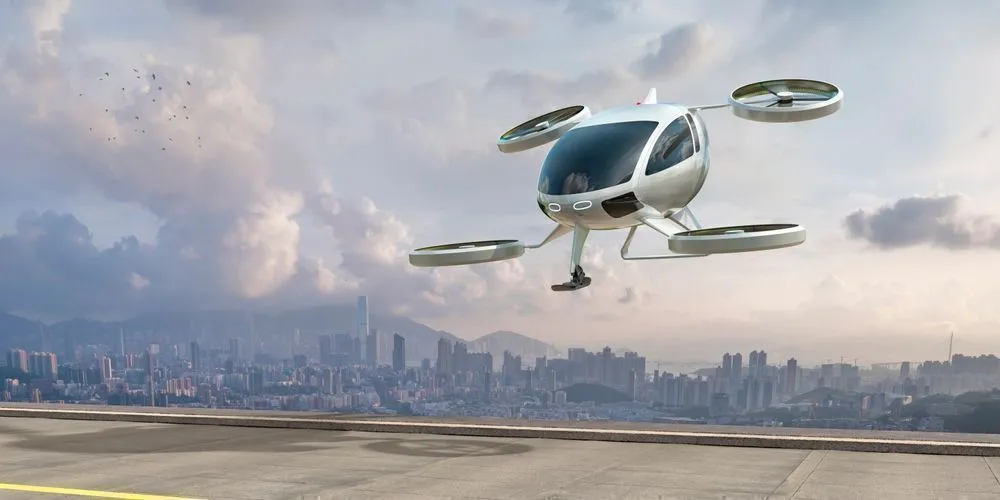
Travel between Gurugram and the upcoming Noida International Airport could soon take just 30 minutes if Advanced Air Mobility (AAM) plans move from concept to reality.
A recent study by the Confederation of Indian Industry (CII) has explored the feasibility of introducing air taxi services in the Delhi-NCR region, modelling a high-impact corridor connecting Gurugram, Connaught Place, and the upcoming airport at Jewar.
Currently, the nearly 100-kilometre road journey between Gurugram and Jewar can take several hours during peak traffic. The proposed air taxi network aims to dramatically cut that travel time while easing road congestion.
What Is Advanced Air Mobility?
Advanced Air Mobility refers to next-generation electric vertical take-off and landing (eVTOL) aircraft designed for short urban and regional trips. These aircraft are expected to operate like aerial taxis, flying above traffic bottlenecks and offering fast point-to-point connectivity.
According to the CII report titled “Navigating the Future of Advanced Air Mobility in India,” AAM is emerging as a transformative solution to two major urban challenges — traffic congestion and inefficient connectivity.
Pilot Corridor: Gurugram–Connaught Place–Jewar
The study assessed a hypothetical 65–75 km pilot corridor linking:
●Gurugram’s corporate hub
●Central Delhi’s Connaught Place
●Noida International Airport at Jewar
This flagship corridor could serve as a model for future expansion across metropolitan India.
Experts believe such a route could help India leapfrog traditional infrastructure bottlenecks by introducing vertical mobility into urban planning.
Boost to Net-Zero and Sustainable Transport Goals
Beyond convenience, the proposal aligns with India’s Net-Zero 2070 climate targets. Most AAM platforms are expected to run on electric propulsion systems, significantly reducing emissions compared to conventional road traffic.
By shifting a segment of high-value, time-sensitive travel to electric air mobility, authorities could ease pollution levels and reduce fuel consumption in heavily congested corridors.
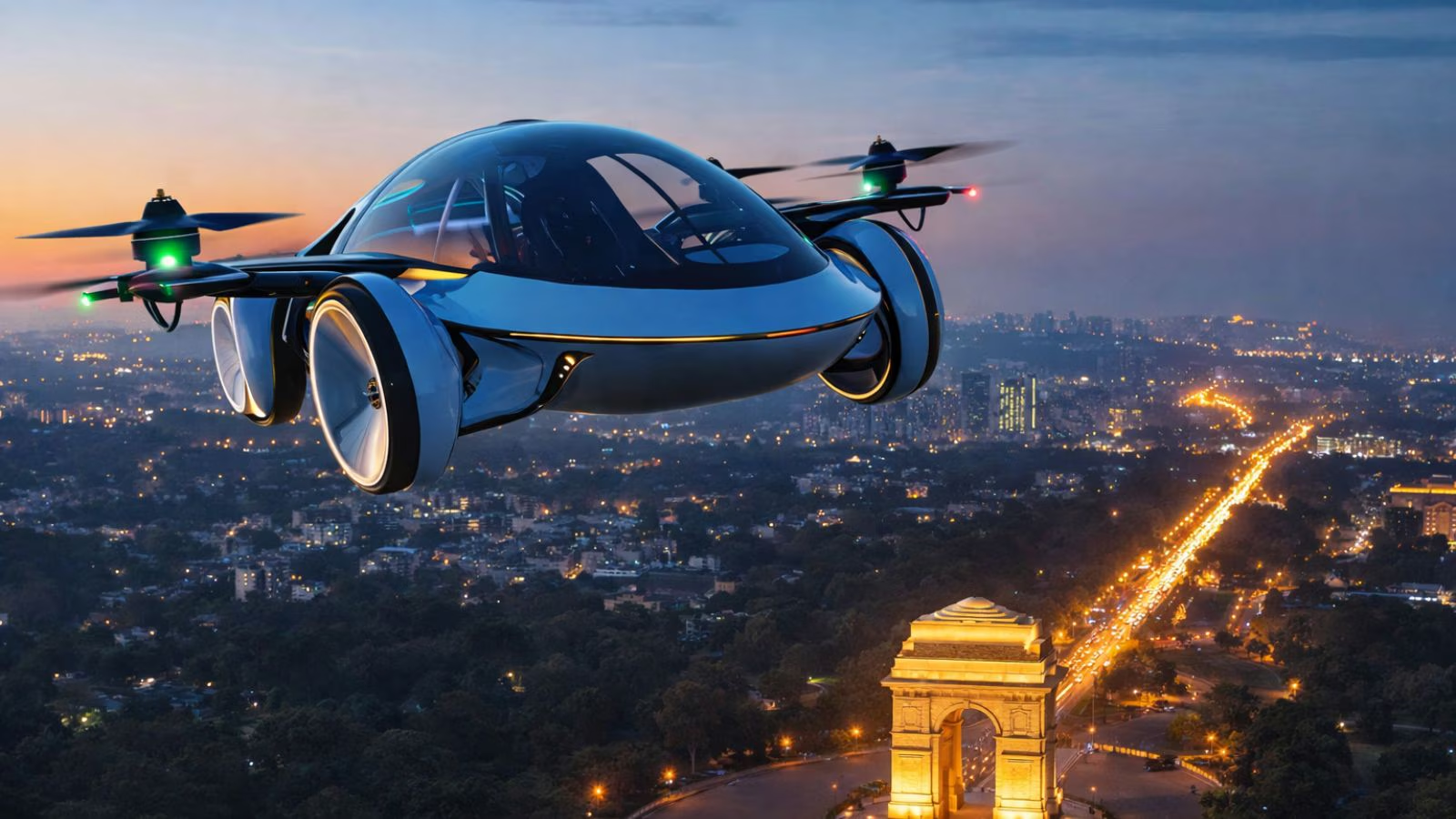
Challenges Ahead
While the concept is promising, implementation would require:
◆Regulatory approvals from aviation authorities
◆Dedicated vertiports (urban landing hubs)
◆Airspace integration with existing flight paths
◆Robust safety and air traffic management systems
◆Cost, public acceptance, and infrastructure readiness will also determine how quickly air taxis become reality in NCR.
A Glimpse Into Future Urban Mobility
If executed successfully, Delhi-NCR could become one of the first regions in India to deploy commercial air taxis, setting a benchmark for other megacities struggling with gridlock.
The study positions the initiative as more than just a transport upgrade — it represents a shift toward futuristic, sustainable, and time-efficient urban mobility.