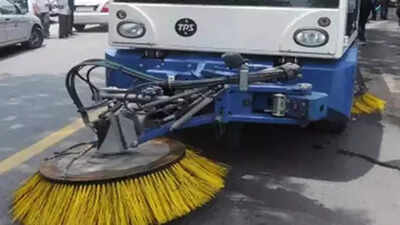
Gurgaon’s battle against air pollution has hit another roadblock as the city currently operates only 18 mechanical road sweeping machines (MRSMs) against a required 38, exposing a significant gap in dust-control infrastructure. With nearly 287 kilometres of roads wider than 60 feet, the shortfall of 20 sweepers is raising concerns about compliance with the Commission for Air Quality Management (CAQM) guidelines.
Despite repeated directives from CAQM mandating strict deployment standards for mechanised sweeping across NCR cities, Gurgaon has yet to bridge the deficit. Officials estimate that filling the gap would require an investment of around Rs 26 crore, but procurement remains pending administrative clearance.
Dust Major Contributor to Pollution Levels
Road dust remains one of the dominant contributors to PM10 pollution in Gurgaon, especially during dry months when traffic movement, construction activities, and unpaved shoulders lead to re-suspension of particles. CAQM has warned that this dust not only spikes PM10 levels but also contributes significantly to PM2.5 pollution.
MRSMs are specialised vehicles equipped with integrated water-spraying systems and vacuum filtration units designed to prevent dust from re-entering the air. CAQM guidelines mandate that new fleets must operate on CNG or electric fuel and run for at least eight hours per shift under declared schedules.
Other Dust-Control Equipment Also Inadequate
The shortfall extends beyond sweepers. During GRAP periods, Gurgaon requires 40 water sprinklers but currently has only 30. Similarly, just 13 anti-smog guns are operational against a requirement of 24. Funding for additional equipment is still awaited.
Moreover, over 410 kilometres of medium and narrow roads remain outside the mechanised sweeping framework, as no medium or small-sized sweepers have been deployed — a violation of CAQM’s road-width-specific norms.
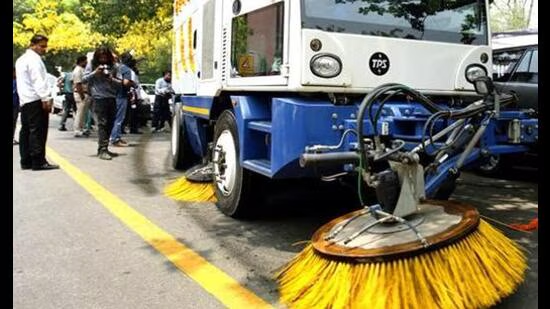
Experts Call for Structural Road Reforms
Environmental experts caution that mechanised sweeping alone cannot solve Gurgaon’s dust crisis. They advocate comprehensive road redevelopment — including paved shoulders, proper drainage, and avenue greening — to reduce dust generation at the source.
Without structural improvements, experts warn, sweeping and sprinkling may only offer temporary relief while dust continues to accumulate and recirculate in the city’s air.