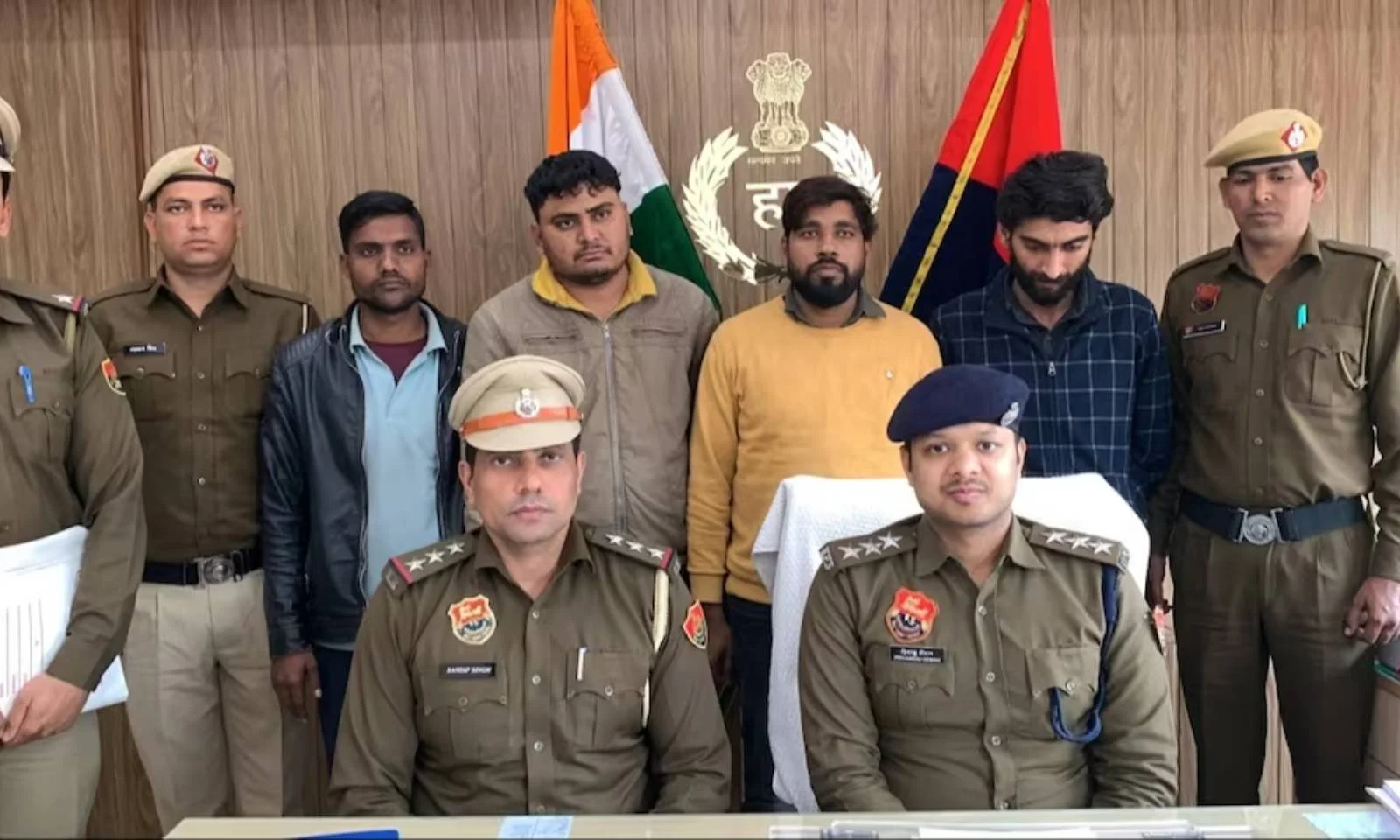
Gurgaon Police have busted an international e-SIM racket allegedly linked to what officials describe as the “largest digital arrest scam”, arresting a 28-year-old suspect from West Bengal. The accused, identified as Rajat Kumar, was apprehended and brought to Gurgaon on transit remand before being sent to judicial custody.
With this arrest, the total number of accused held in the case has risen to eight, spanning multiple states including Rajasthan, Uttar Pradesh, Haryana, and West Bengal. Police say the investigation is now expanding to identify handlers based in Cambodia who allegedly operated the fraud network.
How the e-SIM Network Operated
According to police officials, the accused converted physical SIM cards into e-SIMs using Apple devices and shared QR codes with foreign handlers via encrypted platforms. He allegedly earned cryptocurrency — approximately 19,050 USDT — for converting and supplying around 2,100 e-SIMs.
The cyber crime team recovered:
●87 SIM cards
●42 mobile phones
●One laptop
Investigators revealed that the accused was also involved in enrolling fake loan applications on digital platforms. He reportedly received ₹3,000 per app enrolment and helped circulate dozens of fraudulent loan apps used to scam victims.
‘Digital Arrest’ Fraud Targeted Elderly Victim
The racket came to light after a 75-year-old retired resident of Palam Vihar was placed under a so-called “digital arrest.” Fraudsters posing as National Investigation Agency officials threatened him with a fake money-laundering case and kept him under continuous online monitoring for nearly a day.
The victim was coerced into transferring Rs 17.8 lakh after being told that Rs 70 lakh in illegal funds had been credited to his account.
Interstate Trail and International Links
The investigation traced the fraudulent SIM credentials from Rajasthan to West Bengal, eventually leading to the suspect’s arrest. Police officials say efforts are underway to dismantle what appears to be a well-organised interstate and international cyber fraud network.
Authorities believe the racket exploited cryptocurrency payments, app-based enrolments, and cross-border coordination to sustain operations.