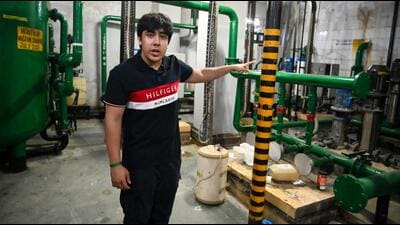
In a remarkable example of youth-driven sustainability, a student’s innovative greywater recycling project has significantly reduced fresh water consumption in a residential society while gaining international attention as a model for urban water management.
The initiative focused on reusing greywater — wastewater generated from bathrooms, sinks and washing machines — which is typically discarded despite being relatively clean. Working closely with engineers and management teams at Central Park Resorts, the student mapped existing plumbing systems to identify points where greywater could be safely separated, treated and reused.
Pilot Began with 26 Bathrooms
The project started with a pilot involving the refurbishment of 26 bathrooms to create a controlled testing environment. This phase allowed engineers to monitor performance under real-life conditions and fine-tune the system before expanding it across the complex.
After successful trials, the treated greywater began to be used for non-potable purposes such as:
◆Toilet flushing
◆Gardening and landscaping
◆Cleaning common areas
◆Maintenance activities
This significantly reduced the society’s dependence on fresh water supplies.
Overcoming Public Hesitation
One of the biggest challenges was convincing residents to accept the idea of using recycled wastewater. Many people initially associated the term “wastewater” with health risks.
To address concerns, awareness sessions were organised explaining the difference between greywater and blackwater (sewage). Residents were reassured that treated greywater would never be used for drinking or cooking.
“The biggest difficulty was designing a system that saved water while meeting strict safety standards,” the innovator said, adding that community education proved crucial for acceptance.
Model for Other Communities
To expand the impact, an ambassador programme was launched to connect representatives from other housing societies. Weekly discussions now focus on replicating the system and sharing best practices for water conservation.
The project’s success has drawn global attention. In December 2024, the student was invited to a United Nations summit in New York, where the initiative was showcased as a youth-led community sustainability model.
Looking Ahead
Encouraged by the results, the young innovator aims to continue working on practical solutions to urban environmental challenges, particularly water scarcity — a growing concern for rapidly expanding cities.
As climate pressures intensify and water resources become increasingly strained, this grassroots innovation demonstrates how simple, scalable solutions can deliver meaningful change — proving that sustainable cities can start with a single idea and determined action.