
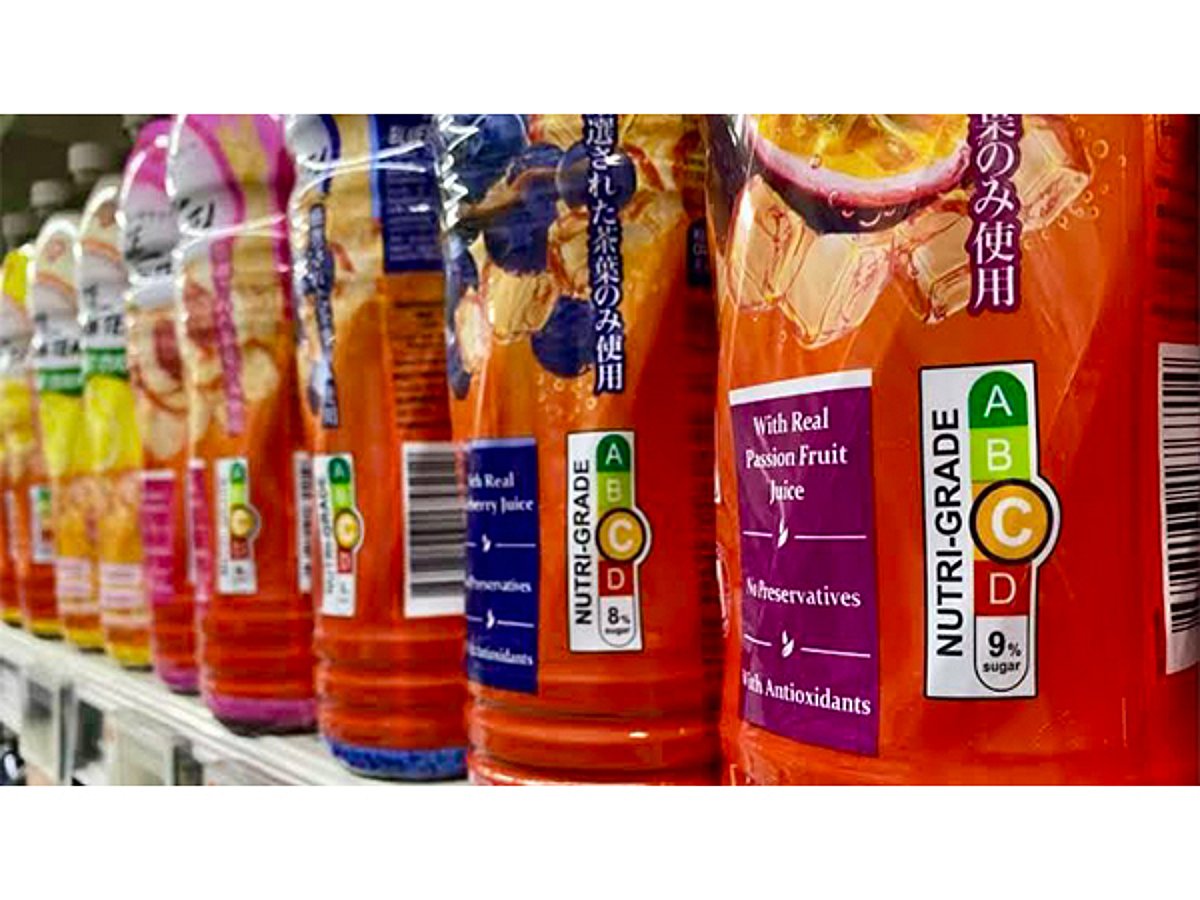
Think about the last time you stood in a grocery aisle, holding a colorful packet of “healthy” vegetable chips. The front probably screamed “Zero Trans-Fat” or “Heart Healthy” in bold letters. The real story is that the staggering amount of salt and cheap palm oil was likely buried in a font so small on the back that you would need a magnifying glass to find it.
This is the daily reality for millions of Indian consumers. We make split-second decisions based on flashy marketing, often unaware of the health costs. Recently, the Supreme Court of India sent a clear, sharp message to the country’s food regulator: the era of hidden ingredients is officially over.
Expressing deep dissatisfaction with the Food Safety and Standards Authority of India (FSSAI), the apex court has demanded that the regulator stop dragging its feet and finally implement Front-of-Pack Labeling (FOPL).
The Court’s logic is refreshingly simple. Every Indian has a fundamental Right to Health, and that starts with knowing exactly what is in their food before it ever hits the billing counter.
The “Back-of-Pack” Mystery vs. Real Transparency
For years, the FSSAI has been going back and forth on how to warn us about high levels of sugar, fat, and sodium. Their proposed solution was the Indian Nutrition Rating (INR). Think of this like the star-rating system you see on an air conditioner or a refrigerator. On paper, it sounds fine, but in practice, it is a bit of a loophole.
The Supreme Court, led by Justices J.B. Pardiwala and K.V. Viswanathan, isn’t convinced. During the hearing on February 10, 2026, the Court pointed out that stars can be deceptive. A packet of biscuits might get three stars just because the manufacturer added a pinch of fiber or some nuts, even if the product is still loaded with sugar.
Instead, the Court is pushing for something much harder to ignore: Warning Labels. We are talking about clear, bold symbols that explicitly state: HIGH IN SUGAR or HIGH IN SALT.
Why This Matters: A National Health Emergency
This isn’t just a legal debate over stickers; it is a response to a massive public health crisis. India is currently known as the “Diabetes Capital of the World,” and our modern snacking habits are the primary culprit. The data gathered by the FSSAI and ICMR over the last year tells a scary story.
The Human Cost: A Story of Two Parents
Consider Ravi, a father in Delhi, trying to buy a “nutritious” cereal for his daughter before school. He sees “Fortified with Vitamins” on the front and feels good about the purchase. He doesn’t have the time or the training to calculate the “Percentage of Recommended Dietary Allowance” for sugar hidden in the fine print on the back.
If the Supreme Court’s vision becomes reality, Ravi won’t need to be a nutritionist to protect his kids. He will see a clear, black octagon right on the front of the pack. The choice becomes instant. It shifts the burden of health from the exhausted consumer back to the manufacturer where it belongs.
A Four-Week Ultimatum
Naturally, the food industry has pushed back. They argue that bold warning labels will hurt sales and “vilify” certain products. But the Supreme Court was firm. The Bench stated that the priority should not be the profits of multinational companies, but the actual health of the citizens.
The FSSAI now has a strict four-week deadline to file a fresh plan. The Court has made it clear that it is no longer interested in “further research” or “stakeholder consultations.” It wants a roadmap for a label that actually works for the common person.
What Happens Next?
If India adopts these labels, we will join a global movement that has already seen success in countries like Chile and Mexico. In those places, clear warnings led to a significant drop in the consumption of junk food almost overnight.
For us, this isn’t just about a new sticker on a bag of chips. It is about a future where “safety” isn’t just a hidden legal checkbox, but a visible promise on every shelf. It is about reclaiming our right to choose health, one snack at a time.