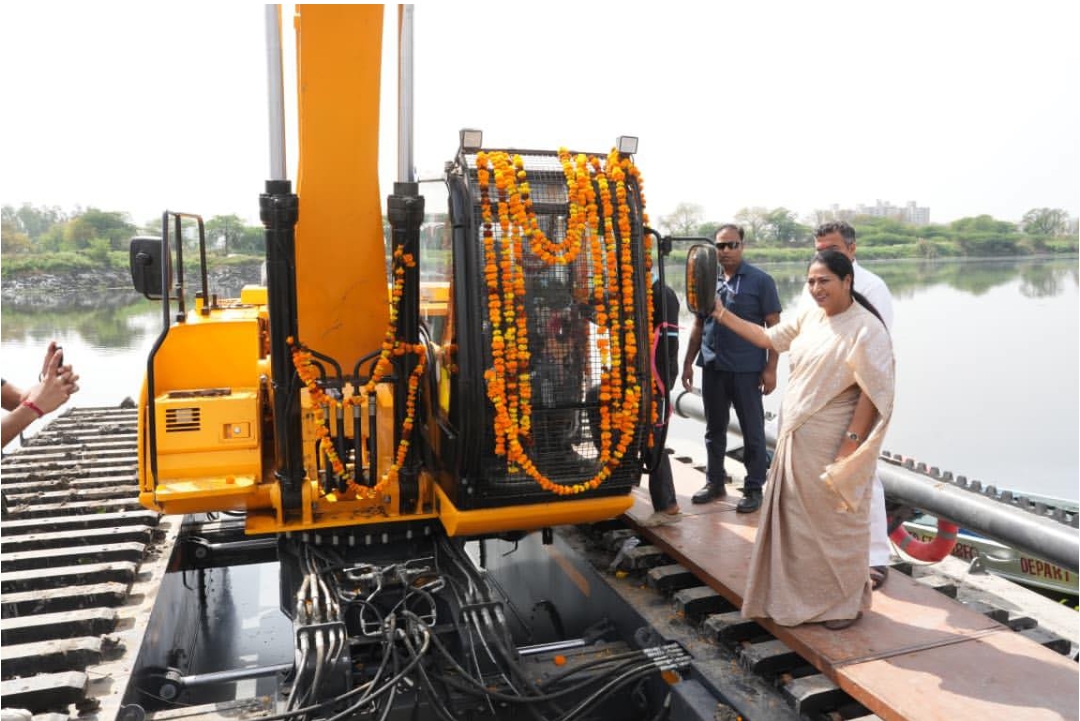
In a major step toward improving Delhi’s drainage infrastructure and preventing monsoon flooding, Rekha Gupta flagged off advanced amphibious excavator machines for cleaning the Najafgarh Drain and the Pankha Road Drain.
The initiative aims to remove accumulated silt, waste and water hyacinth from the drains to ensure smoother water flow during the monsoon season. Officials believe the deployment of these modern machines will significantly speed up cleaning operations and help reduce the risk of severe waterlogging across the capital.
The machines were flagged off during a special event at Badusarai Bridge in New Delhi.
Najafgarh Drain: A Critical Lifeline for Delhi’s Drainage
The Najafgarh drain is the largest drainage channel in Delhi and carries nearly 75% of the city’s drainage load. Over the years, massive amounts of silt and debris have accumulated in the drain, reducing its water-carrying capacity.
Officials estimate that more than 10 million metric tonnes of silt have accumulated in the drain over the past several years.
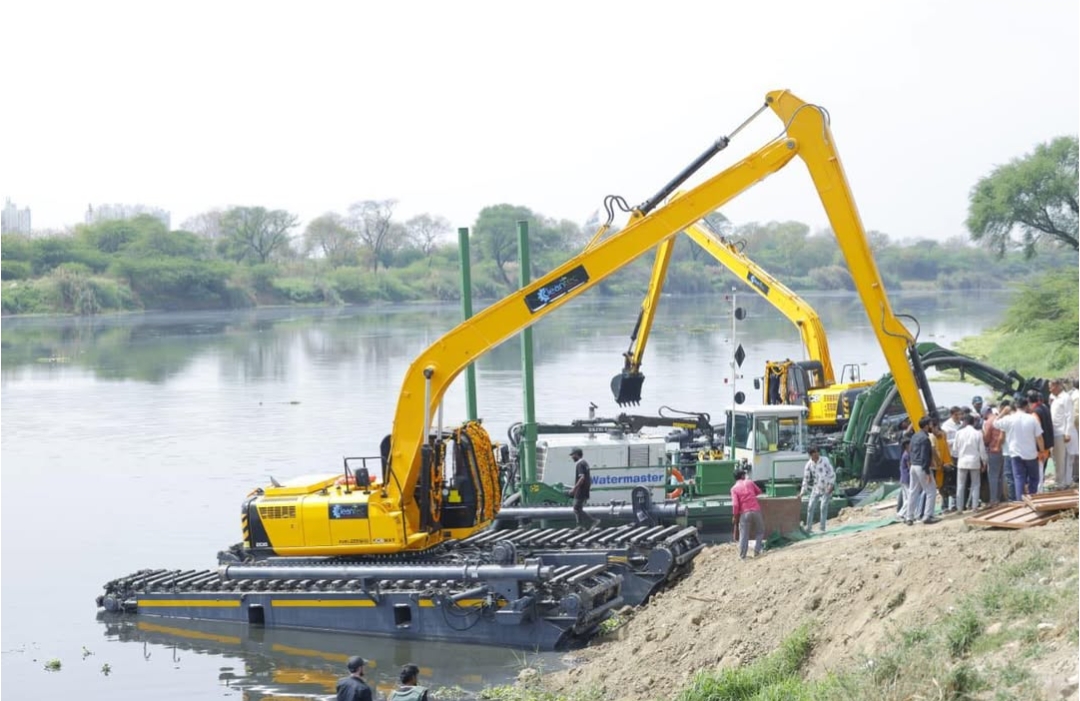
Traditional excavation equipment often struggled to access deeper and central sections of the drain. The newly introduced floating amphibious machines are capable of reaching difficult areas within the drain and extracting silt directly from the bottom.
Initially, four machines have been deployed, while additional machines are expected to join the cleaning operation soon.
Advanced Technology for Faster Drain Cleaning
The machines deployed by the Irrigation and Flood Control (I&FC) Department are designed specifically for challenging environments such as waterlogged or marshy areas.
Two types of machines have been introduced:
●Short-Boom Amphibious Machine
●Cost: Approximately Rs1.27 crore
●Engine Power: 65 HP
●Suitable for drains up to 5 metres wide
●Equipped with a 2.25 cubic metre waste bin for collecting debris
Long-Boom Amphibious Machine
●Cost: Around Rs 3.15 crore
●Engine Power: 135 HP
●Equipped with a 15-metre long boom
●Capable of cleaning drains up to 9 metres deep
These machines can operate directly in water and muddy terrain, making them highly effective for deep desilting work.
Key Locations for Deployment
Authorities have identified several sensitive and high-risk locations where these machines will be deployed, including:
●Badusarai Bridge
●Kakrola
●Dwarka
●Uttam Nagar
These areas often face severe waterlogging during heavy rainfall.
Government Focus on Modern Drainage Infrastructure
Chief Minister Rekha Gupta said the use of modern technology will significantly improve the drainage capacity of the city’s major drains.
According to officials, improving drainage efficiency will not only reduce flooding on city roads during monsoon but also support the broader goal of cleaning the Yamuna River by reducing polluted discharge into the river.
The government plans to modernise Delhi’s drainage infrastructure through technology-driven solutions, ensuring faster cleaning, improved water flow and better environmental management.