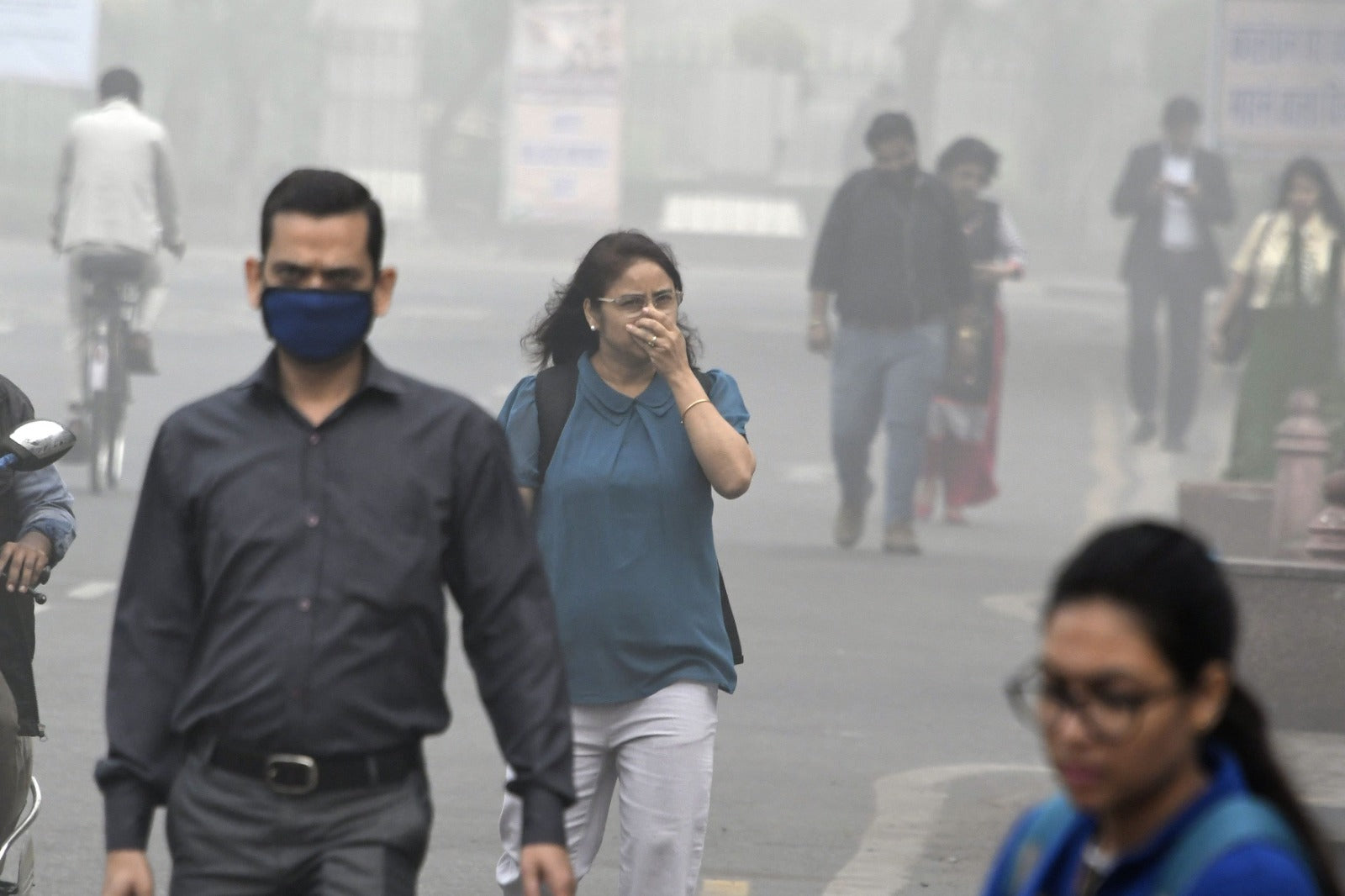
Air pollution across the National Capital Region (NCR) has reached alarming levels, with multiple cities dominating India’s most-polluted rankings for 2025. The data highlights a worsening environmental crisis, with toxic air continuing to impact millions of residents across the region.
At the top of the list is Loni, which recorded an annual PM2.5 level of 112.5 µg/m³, making it the most polluted city in the country.
📊 Major NCR Cities Among Worst Polluted
The pollution rankings reveal a troubling pattern, with several NCR cities occupying top positions. Delhi recorded 99.6 µg/m³, followed by Ghaziabad at 89.2 µg/m³.
Noida and Greater Noida also featured in the top 10, while Gurgaon ranked 11th with 74.6 µg/m³.
Although Gurgaon showed some improvement compared to 2024, its pollution levels still remained far above safe limits, reflecting a broader regional issue.
Far Above Global Safety Standards
Globally, New Delhi continues to hold the title of the most polluted capital city for the eighth consecutive year. Its PM2.5 levels are nearly 16 times higher than the safe limit set by the World Health Organization (WHO).
India’s own permissible limit for PM2.5 is 40 µg/m³, yet most NCR cities consistently exceed even this threshold, exposing residents to long-term health risks.
Seasonal Spikes Make Situation Worse
The pollution crisis in NCR follows a clear seasonal pattern. Winter months remain the most dangerous, with PM2.5 levels peaking sharply due to:
●Crop residue burning
●Temperature inversion
●Stagnant wind conditions
In Gurgaon, pollution surged dramatically in November and December, while temporary relief was observed during the monsoon months. However, this relief is short-lived, with pollution levels rising again post-monsoon.
Structural Issues Behind Rising Pollution
Experts point to deeper systemic problems driving the crisis. These include:
●Heavy dependence on fossil fuels
●Rapid urbanisation and construction activity
●Weak enforcement of emission norms
Despite initiatives like the National Clean Air Programme (NCAP), a large portion of funds has been directed towards road dust control, while relatively less focus has been placed on vehicular and industrial emissions.
Serious Health Impact Emerging
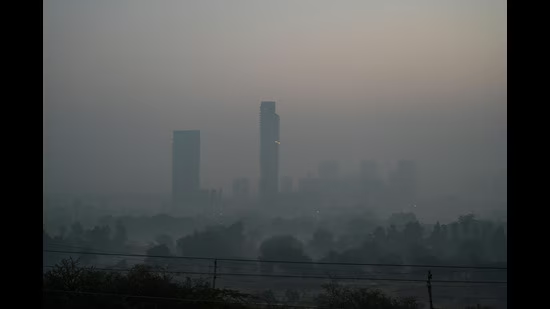
The consequences of hazardous air quality are becoming increasingly visible. During peak pollution periods in 2025, hospitals across NCR reported a surge in:
●Respiratory illnesses
●Heart-related conditions
Public protests and emergency measures, including school closures and construction bans, were also witnessed as air quality reached dangerous levels.
Need for Stronger Policy Action
Experts believe that current measures are insufficient to tackle the scale of the problem. They emphasize the need for:
●Sector-specific emission controls
●Better regional coordination
●Stronger enforcement of pollution norms
Without urgent and comprehensive action, NCR is likely to remain one of the world’s most polluted regions.