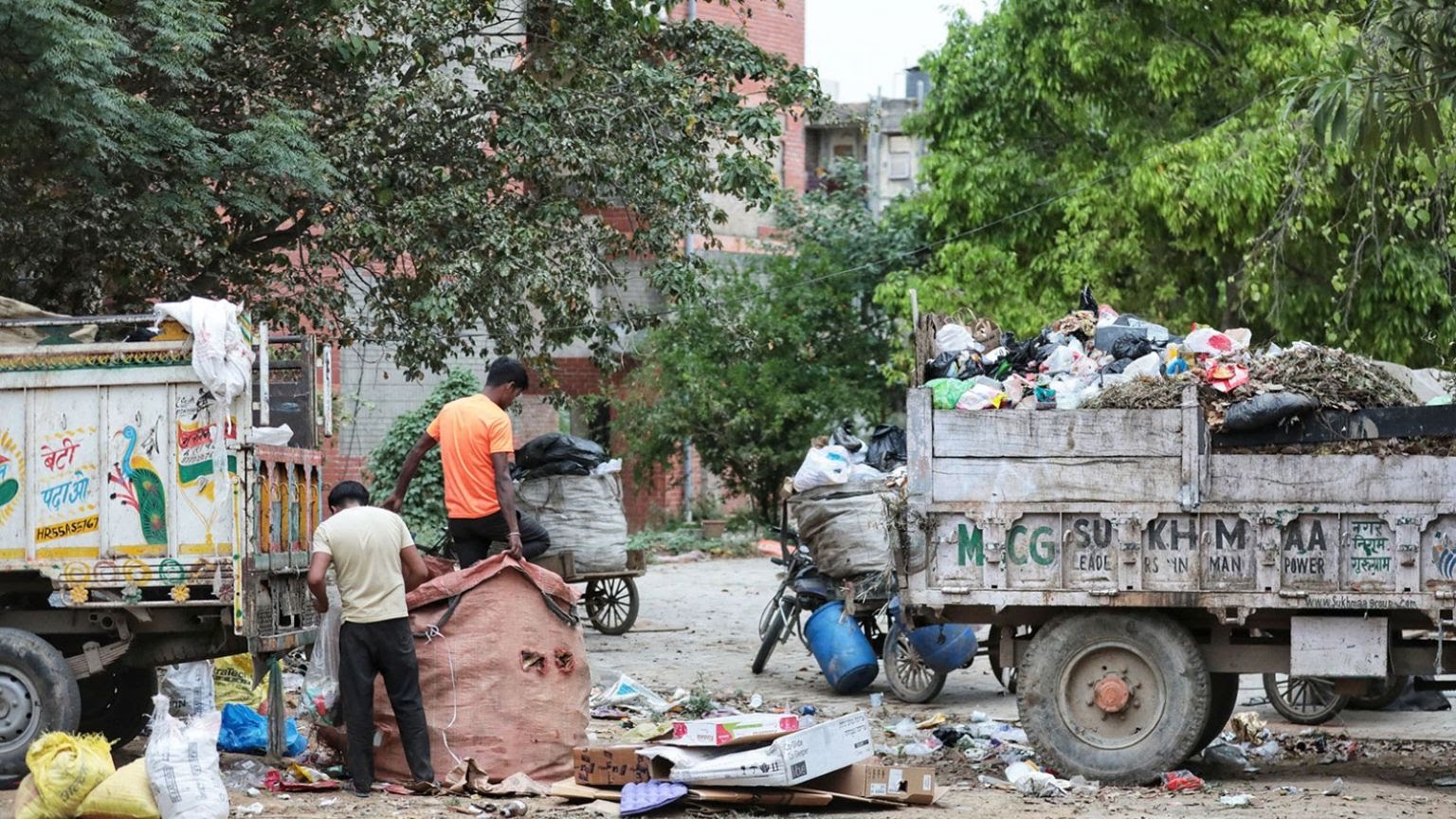
A growing standoff has emerged in Gurugram as Residents’ Welfare Associations (RWAs) push back against new waste management rules, even as the city continues to struggle with mounting garbage and weak civic infrastructure.
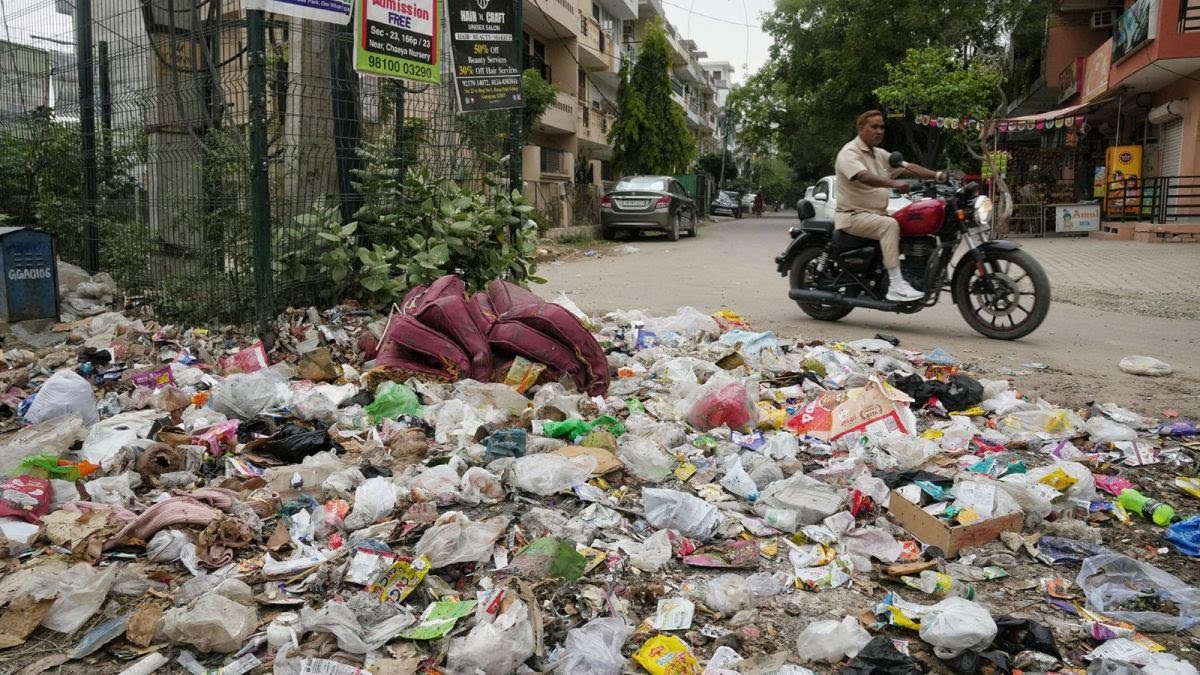
The conflict comes at a time when waste collection systems remain fragile, and residents across several sectors are dealing with overflowing bins, foul smell, and uncollected garbage just outside their homes.
A City Running on Stopgap Waste Systems
Since June 2024, when the contract of the municipal waste collection agency was terminated, the Municipal Corporation of Gurugram has been operating through temporary arrangements.
These ad-hoc systems, often dependent on migrant labour, have failed to ensure consistent garbage collection. As a result, the city now has at least 186 identified “garbage vulnerable points” where waste is frequently dumped but rarely cleared.
In areas like Sector 23A near Carterpuri village, even premium residential zones with properties worth crores are facing daily exposure to garbage piles and unbearable stench.
New Rules Shift Responsibility to Residents
With the implementation of the Solid Waste Management Rules, 2026 from April 1, the civic body has introduced a major shift in responsibility.
RWAs have been asked to register as Bulk Waste Generators (BWGs), which means they must manage waste within their premises—processing wet waste, ensuring segregation, and arranging transportation to collection points.
However, this move has triggered strong resistance from residents who argue that the civic body is shifting its own responsibility without fixing existing gaps.
RWAs Say “Not Without Support”
Residents and RWA representatives have raised serious concerns about feasibility.
They argue that managing waste internally requires land, electricity, manpower, and infrastructure—resources that most RWAs, especially in non-gated or HSVP sectors, simply do not have.
There is also confusion around policy details, including what qualifies as a “premises,” how user charges will be calculated, and who will enforce compliance.
Many RWAs point out that they are voluntary bodies without legal authority to enforce waste segregation among residents, making implementation even more difficult.
The Fear of Living Next to Waste Plants
Beyond logistics, there is also strong emotional resistance.
Residents are reluctant to allow composting units or waste processing systems near their homes, fearing constant smell, hygiene issues, and decline in property value.
Even basic initiatives like placing bins or setting up leaf composting pits are often opposed, as they risk turning into permanent dumping spots.
A Model That Works—But at a Cost
While resistance is widespread, some societies have demonstrated that decentralised waste management can work.
Townships like Suncity on Golf Course Road have already registered as BWGs and run structured waste systems, including biogas plants and composting units.
However, the cost of such systems is significant. Monthly expenses for processing, maintenance, and collection run into lakhs, making it difficult for most RWAs to replicate the model without financial support.
Gurgaon’s waste crisis reflects a deeper governance challenge.
The policy aims to decentralise waste management and improve efficiency—but without infrastructure, clarity, and financial backing, it risks shifting the burden onto residents without solving the core problem.
As RWAs resist and garbage continues to pile up, the city stands at a critical point—where cooperation, clarity, and accountability will decide whether Gurgaon moves toward cleaner streets or deeper chaos.