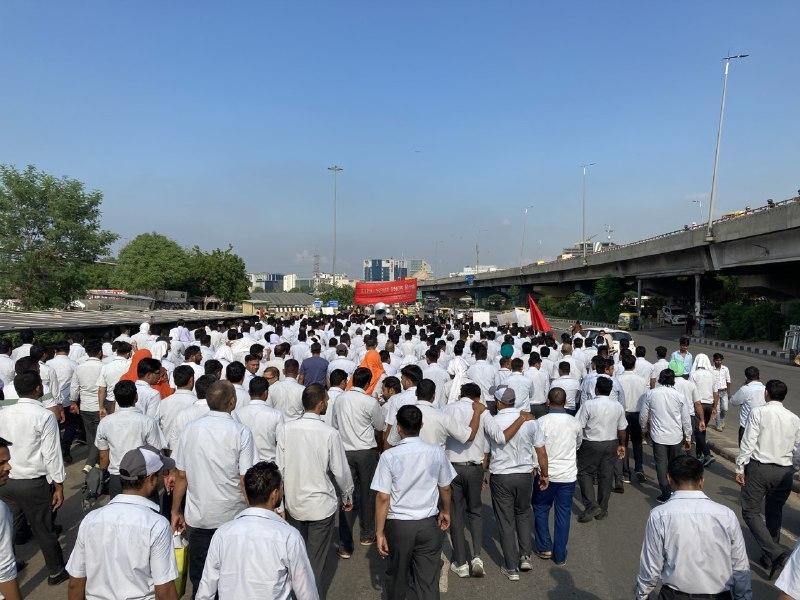
A labour protest in Gurugram’s IMT Manesar took a violent turn on April 9, exposing deep unrest among industrial workers and raising fresh concerns over labour conditions in the NCR region. What began as a continued strike over wages and working conditions quickly spiralled into a confrontation between workers and police, leaving more than 20 people injured and one worker in critical condition.
The incident unfolded when protesting employees refused to comply with administrative warnings to resume work. Authorities had issued an ultimatum urging workers to return to duty, but demonstrators continued their agitation, demanding long-pending reforms. As police moved in to disperse the gathering, tensions escalated sharply.
Violence Breaks Out During Police Action
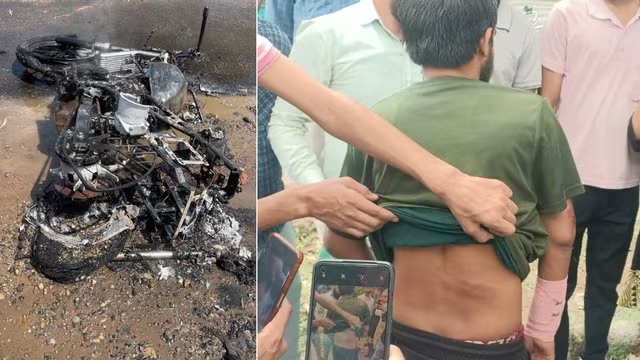
Eyewitness accounts suggest that the situation deteriorated when police attempted to clear the protest site. A lathi charge was reportedly carried out to control the crowd, which led to panic and resistance among the workers. In response, sections of the protesters allegedly began pelting stones at police personnel and vehicles.
Amid the chaos, a police motorcycle was set ablaze, and an emergency response vehicle was vandalised. The confrontation resulted in injuries to around 20 workers, with one individual sustaining a serious head injury and currently reported to be in critical condition. The incident has added a volatile dimension to an already sensitive labour dispute.
Workers Cite Wage Stagnation and Harsh Conditions
At the heart of the protest are long-standing grievances related to wages, job security, and working conditions. Workers claim that despite years of service, their salaries have remained stagnant, with many earning around Rs 12,000 per month. They allege that deductions further reduce their take-home pay, making it difficult to cope with rising living costs.
Protesters also highlighted issues such as lack of overtime compensation, absence of permanent employment status, and inadequate workplace safety measures. For many, the agitation represents a fight for basic dignity and economic survival rather than a sudden outburst of anger.
Labour unions supporting the protest have accused the administration of ignoring repeated demands and failing to initiate meaningful dialogue. They argue that the situation could have been avoided had there been timely intervention and negotiation.
Police Defend Action, Cite Law and Order Concerns
The police administration has defended its response, stating that multiple appeals were made to ensure a peaceful resolution before force was used. Officials said that prohibitory orders under relevant legal provisions were already in place, and the gathering was in violation of those restrictions.
According to police, the use of force was minimal and necessary to restore order after protesters allegedly turned aggressive and damaged public property. Authorities maintain that their priority was to prevent the situation from escalating further and to ensure safety in the industrial area.
Warning Signs for Wider Industrial Unrest
The fallout from the incident is likely to extend beyond IMT Manesar. Worker unions have issued warnings that if their demands are not addressed and if action is not taken regarding the police crackdown, the agitation could spread across other industrial areas in Haryana.
This raises concerns for businesses operating in the region, as prolonged unrest could disrupt production, supply chains, and overall industrial stability. Gurugram’s industrial belt, particularly Manesar, plays a crucial role in manufacturing and employment, making such conflicts significant for the broader economy.
A Deeper Crisis Beneath the Surface
The Manesar clash highlights a deeper structural issue within India’s industrial workforce—balancing economic growth with fair labour practices. As industries expand and urban economies grow, unresolved worker grievances can quickly escalate into larger conflicts if not addressed proactively.
With one worker battling for life and tensions still high, the focus now shifts to how authorities and industry stakeholders respond. Whether this incident leads to constructive dialogue or further confrontation will determine the next phase of labour relations in the region.