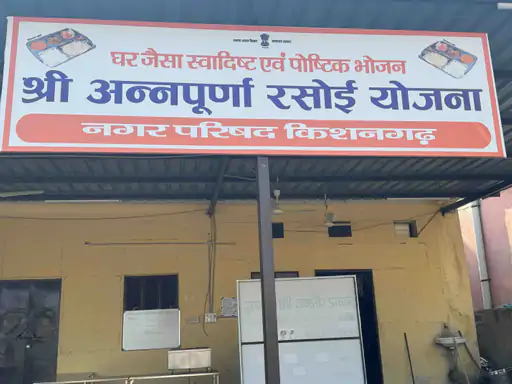
A shocking investigation has uncovered alleged large-scale irregularities in the Annapurna Rasoi scheme, raising serious concerns over misuse of public funds.Records show instances where a single individual was served food up to 21 times a day, pointing to possible manipulation of digital entries and fake billing.
The findings suggest that what is meant to be a welfare initiative for the poor may have been turned into a channel for financial irregularities running into crores.
How the ‘Food Scam’ Was Allegedly Executed
The investigation highlights a pattern of fake entries and manipulated digital records across multiple kitchens. The Annapurna Rasoi scheme provides subsidised meals, where:
●A beneficiary pays Rs 8 per meal
●The government provides an additional subsidy
However, the probe claims that:
●The same person’s name was entered multiple times within minutes
●In some cases, entries were made within 15–20 seconds intervals
Fake names and duplicate identities were used to inflate numbers
In one extreme case, records showed a person being served food 21 times in a single day, which is practically impossible.
Rs 2.57 Crore Monthly ‘Fake Payments’ Across Kitchens
The scale of the alleged scam is significant. The report indicates that:
Around 63 kitchens were involved
Fake billing amounted to approximately Rs 2.57 crore per month
This suggests a systematic attempt to exploit the subsidy mechanism by inflating the number of meals served.
The investigation also points to the possibility that hundreds of plates were recorded under different names using the same individual’s photograph, raising serious questions about verification mechanisms.
Digital Monitoring System Under Scanner
One of the biggest concerns emerging from the investigation is the failure of digital tracking systems. Despite having a system in place to record beneficiary data:
●Duplicate entries went undetected
●Repeated use of the same identity was not flagged
●No real-time alerts were triggered
This has led to questions about whether the system lacks safeguards or if there was deliberate manipulation at the ground level.
Impact on Genuine Beneficiaries
While fake records showed thousands of meals being served, the report suggests that actual needy beneficiaries were often missing. Poor quality food and operational issues may have discouraged real users, even as records continued to show high consumption.
This creates a troubling scenario where:
●Government funds are being misused
●The intended beneficiaries are not receiving proper support
●Trust in welfare schemes is being eroded
Authorities Respond, Probe Likely to Expand
Officials have acknowledged the seriousness of the findings and indicated that inspections and inquiries are ongoing. Authorities have stated that:
●Regular monitoring is conducted
●No major irregularities were officially detected earlier
●Further investigation will determine accountability
The focus is now on identifying those responsible and tightening monitoring mechanisms to prevent such misuse in the future.
Why This Story Matters
This case highlights a larger issue in welfare governance—implementation gaps and monitoring failures. Even well-intentioned schemes can face challenges if systems are not robust.
The alleged scam raises key questions:
●How effective are digital tracking systems?
●Who is accountable for ground-level verification?
●How can such leakages be prevented?
As the investigation unfolds, it could lead to stricter controls and reforms in subsidy-based schemes across the country.