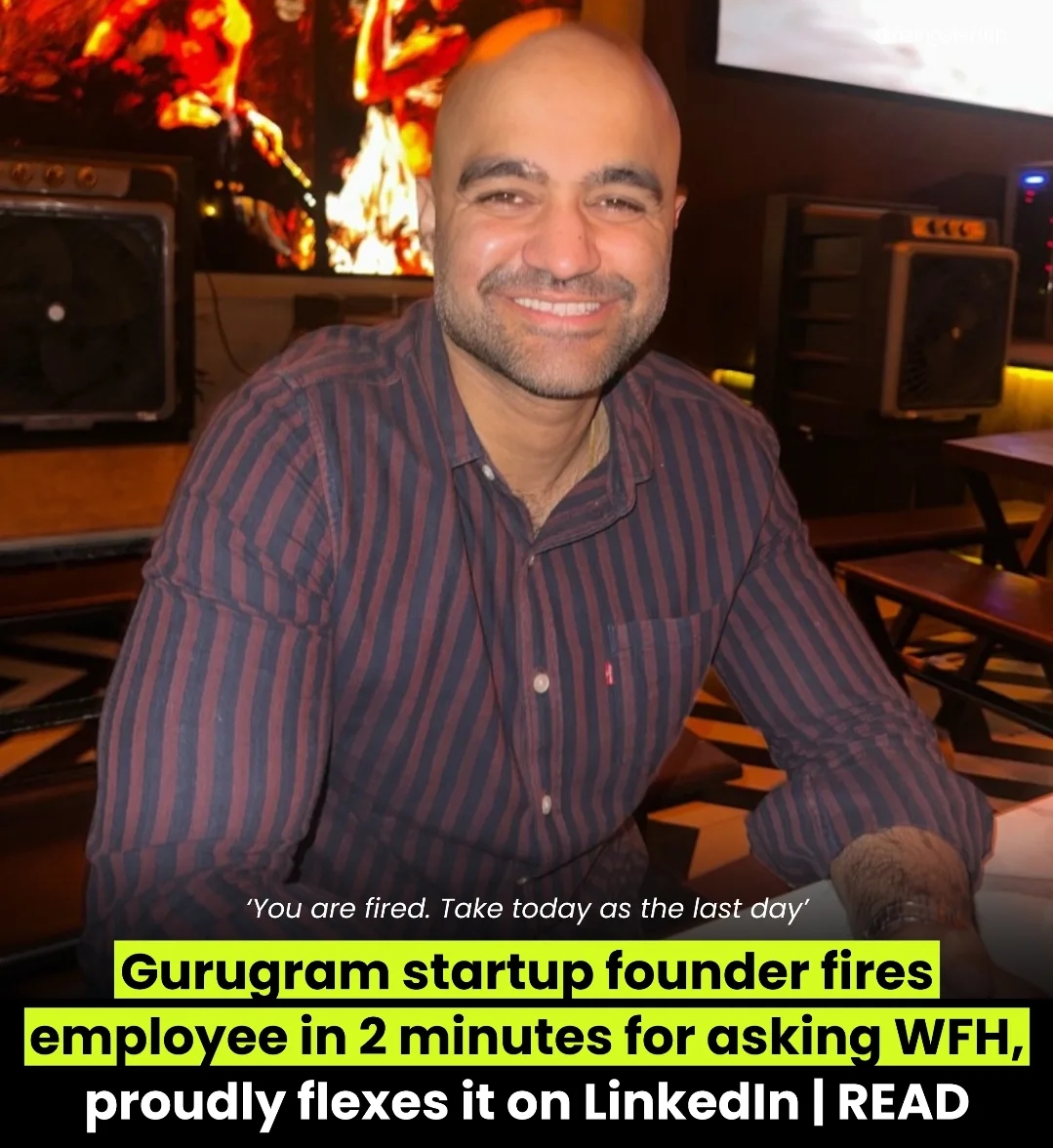
A workplace controversy from Gurugram has triggered a massive debate across India’s startup ecosystem after a founder reportedly fired an employee within two minutes of a work-from-home request.
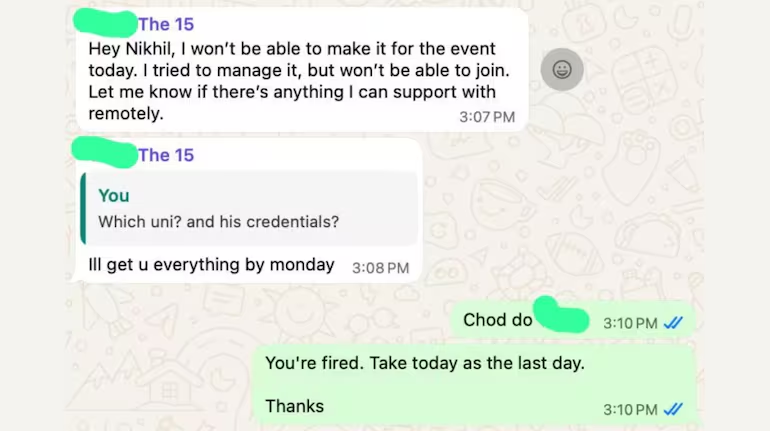
The incident involves Nikhil Rana, founder of The 15, who shared a screenshot of the exchange on LinkedIn, defending his decision and outlining his expectations from employees.
The Two-Minute Decision That Went Viral
According to the exchange, the employee informed the founder that they would not be able to come to the office for the day and requested permission to work remotely.
Within minutes, the founder responded with a termination message, stating that the same day would be the employee’s last working day.
What could have remained an internal HR matter quickly turned into a national conversation after the founder publicly posted the chat, presenting it as an example of his workplace philosophy.
Founder’s Stand: ‘Ownership Over Excuses’
Defending his decision, Rana emphasized that he values:
●High ownership and accountability
●Proactive mindset over situational excuses
●Employees who “make things happen” without waiting
He also criticised traditional employment practices like notice periods, calling them unnecessary and ineffective in fast-paced startup environments.
According to him, startups require a different level of commitment compared to conventional corporate setups, where flexibility may be more structured.
Backlash vs Support: Internet Divided
The post has sharply divided opinion across professionals, entrepreneurs, and HR experts.
Criticism includes:
●Lack of empathy toward employees
●Overreaction to a single-day request
●Publicly sharing a private conversation
Many users argued that one WFH request does not justify termination, especially in a post-pandemic work culture where remote work has become widely accepted.
Supporters, however, say:
●Startups demand high discipline and commitment
●Founders must take tough calls for efficiency
●Context of employee performance may be missing
Some also pointed out that without full background details, it is difficult to judge the fairness of the decision.
Bigger Question: Where Is Work Culture Headed?
This incident has reopened a larger debate around India’s evolving work culture, especially in startups.
Key questions being raised include:
●Should startups have stricter expectations than corporates?
●Is instant firing justified in high-pressure environments?
●Where should the line be drawn between discipline and empathy?
As remote and hybrid work models become more common, such cases highlight the clash between traditional authority-driven culture and modern flexibility-driven expectations.
Beyond one incident, this case reflects a deeper shift in workplace dynamics:
●Employees are increasingly valuing flexibility and respect
●Startups are prioritising speed, ownership, and performance
●Social media is amplifying internal workplace decisions into public debates
The outcome of such conversations could shape how future workplaces function in India.