The long-pending demand for metro connectivity in Greater Noida West is now turning into a full-fledged public movement. Frustrated by years of delays and repeated assurances, residents have decided to escalate their protest—this time at the national stage.
A major demonstration has been announced for April 26 at Delhi’s Jantar Mantar, where thousands are expected to gather and demand immediate action from authorities.
From Meetings to Movement: Residents Unite
A crucial meeting held recently saw participation from representatives of nearly 50 housing societies. The discussion was clear—enough of promises, now is the time for action.
The meeting was led by Abhishek Kumar, president of NEFOWA, who highlighted that for over a decade, residents have only received assurances regarding metro connectivity, with little visible progress on the ground.
The outcome of the meeting was decisive: a large-scale protest at Jantar Mantar to bring national attention to the issue.
April 26 Protest Expected to Draw Thousands
Residents from multiple societies have pledged to mobilise maximum participation. Organisers expect a massive turnout, with families, professionals, and daily commuters joining hands to press for their demand.
The protest aims to send a strong message to government bodies and development authorities that the issue can no longer be ignored.
Symbolic Protests Already Gaining Momentum
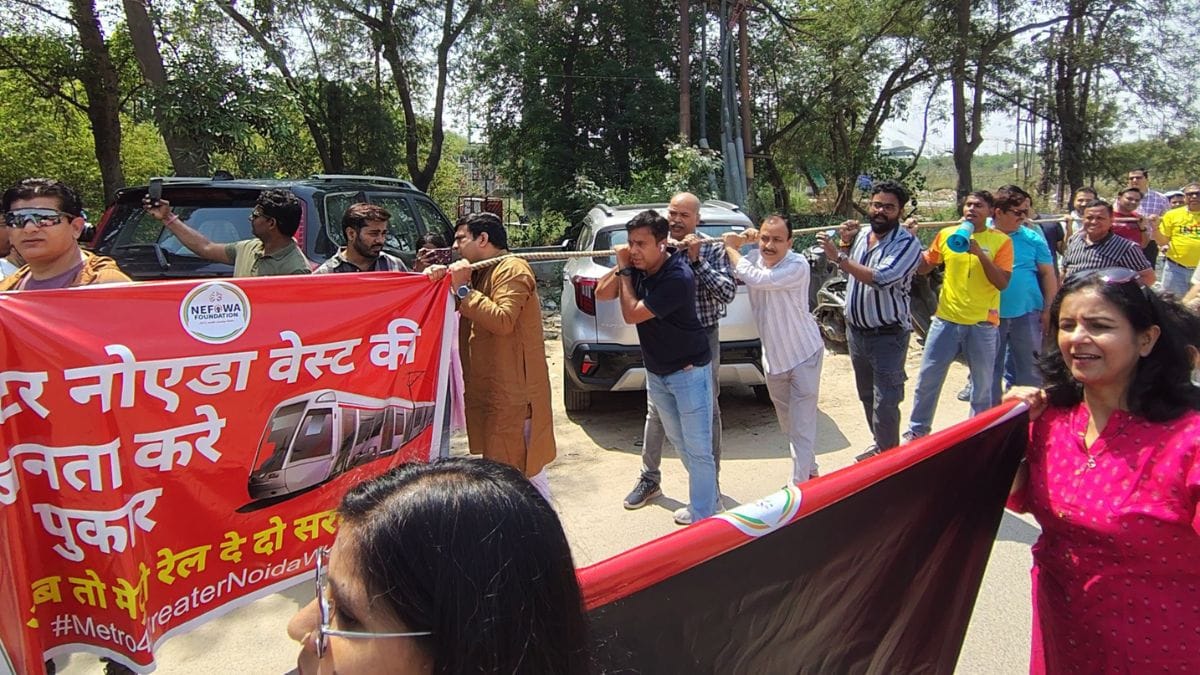
The movement has already started gaining traction. Recently, residents carried out a symbolic protest by pulling a mock metro pillar, which received overwhelming support across the region.
This act was not just symbolic—it reflected the growing frustration and unity among residents who feel neglected despite living in one of NCR’s fastest-growing residential zones.
Daily Struggles Fueling the Anger
For lakhs of residents, the absence of metro connectivity is not just an inconvenience—it’s a daily challenge.
●Long hours stuck in traffic
●Rising commuting costs
●Lack of reliable public transport
●Increasing pressure on roads
These issues have pushed residents to move beyond passive complaints to active protest.
A Growing Urban Flashpoint
Greater Noida West has rapidly evolved into a dense residential hub, but infrastructure has struggled to keep pace. The lack of metro connectivity has now become a symbol of broader urban planning gaps.
Residents have made it clear—they are no longer willing to wait for indefinite timelines. The demand is now for clear deadlines, visible progress, and accountability.