
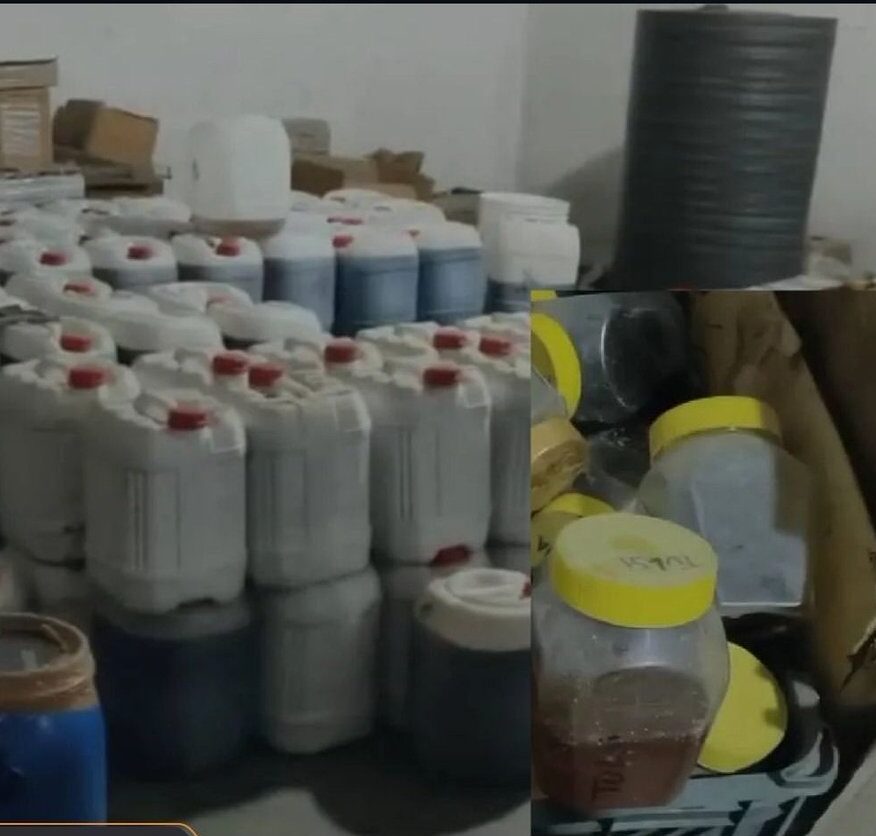
A shocking case of food adulteration has surfaced from Hapur, where authorities have seized 15,000 kilograms of allegedly fake honey, exposing what appears to be a large-scale fraud targeting unsuspecting consumers.
While the seizure itself has raised alarm, the bigger controversy now surrounds the delay in investigation, with critics questioning how such a large operation continued unchecked for months.
‘Why did it take 3 months?’ — Questions directed at Food Safety and Standards Authority of India
The incident has sparked a wave of outrage on social media, with users directly questioning the role of India’s food regulator, the Food Safety and Standards Authority of India (FSSAI).
Concerns are being raised over the three-month delay in completing the investigation, especially in a case involving such a massive quantity of adulterated food. Critics argue that during this period, large volumes of fake honey could have already reached markets and households.
The delay has reignited the debate over regulatory efficiency and real-time enforcement in India’s food safety system.
A Growing Threat: Fake Food Products Flooding Markets
This incident is not isolated. Experts warn that adulteration in food items like honey, milk, spices, and edible oils has become increasingly sophisticated.
Fake honey, in particular, is often manufactured using sugar syrups and chemicals, making it difficult for consumers to detect with the naked eye. Such products not only cheat buyers financially but may also pose long-term health risks.
The scale of the Hapur seizure suggests that adulteration is no longer a small-scale issue but part of an organized supply chain.
Public Trust at Stake as Accountability Questions Rise
The controversy has now shifted from just the seizure to accountability and systemic gaps. Citizens are asking whether existing monitoring mechanisms are strong enough to detect such operations early.
There is also growing concern about how many similar units might still be operating undetected across the country.
A Wake-Up Call for Stronger Surveillance and Faster Action
The Hapur case highlights an urgent need for faster inspections, stricter enforcement, and real-time tracking of food products.
As India’s food market continues to expand, ensuring safety and authenticity has become critical — not just for public health, but also for maintaining trust in regulatory institutions.