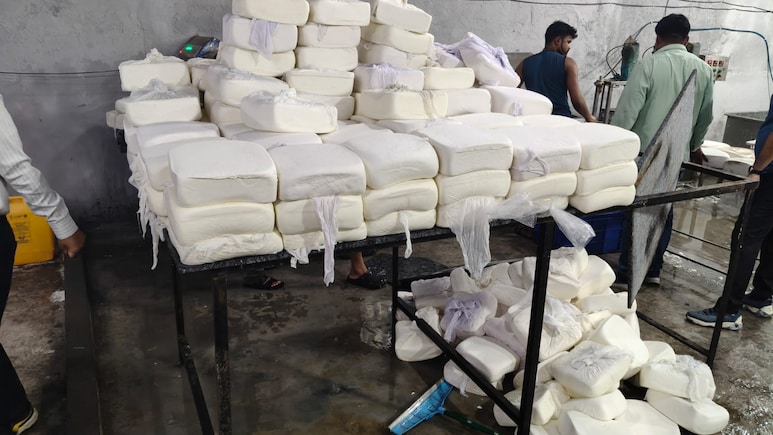
A major food safety crackdown in Meerut has exposed a disturbing racket involving the manufacture of fake or adulterated paneer, raising serious concerns over food safety in the region.
Authorities have busted two illegal factories and seized over 2,800 kilograms of paneer, allegedly prepared using harmful chemicals and refined oil instead of pure milk.
How the Fake Paneer Was Being Made
According to initial findings, the accused were producing paneer by mixing synthetic chemicals and refined oil, bypassing traditional milk-based processes.
This method significantly reduces production costs while allowing large-scale output — but at the cost of consumer health and safety. Such adulterated products are often difficult to identify visually, making them especially dangerous.
Supply Network Spread Across Delhi–NCR
Investigations indicate that the fake paneer was not limited to local distribution.
It was being supplied extensively across the Delhi–NCR region, potentially reaching restaurants, street vendors, and households.
The scale of distribution suggests an organized network, prompting authorities to probe supply chains and buyers linked to the racket.
Health Risks Raise Alarm
Food experts warn that paneer made using chemicals and non-dairy substances can pose serious health risks, including digestive issues and long-term complications.
The incident has once again highlighted the growing threat of food adulteration in high-demand items, especially in urban markets where consumption is high.
Action Taken, Investigation Expands
Authorities have sealed the factories and launched further investigations to identify those involved in production and distribution.
Officials are also expected to conduct additional inspections in nearby areas to ensure similar units are not operating undetected.
A Wake-Up Call for Consumers and Regulators
The Meerut bust serves as a stark reminder of the need for stronger food safety enforcement and consumer awareness.
As adulteration techniques become more sophisticated, the challenge now lies in ensuring that what reaches the plate is safe, genuine, and free from harmful substances.