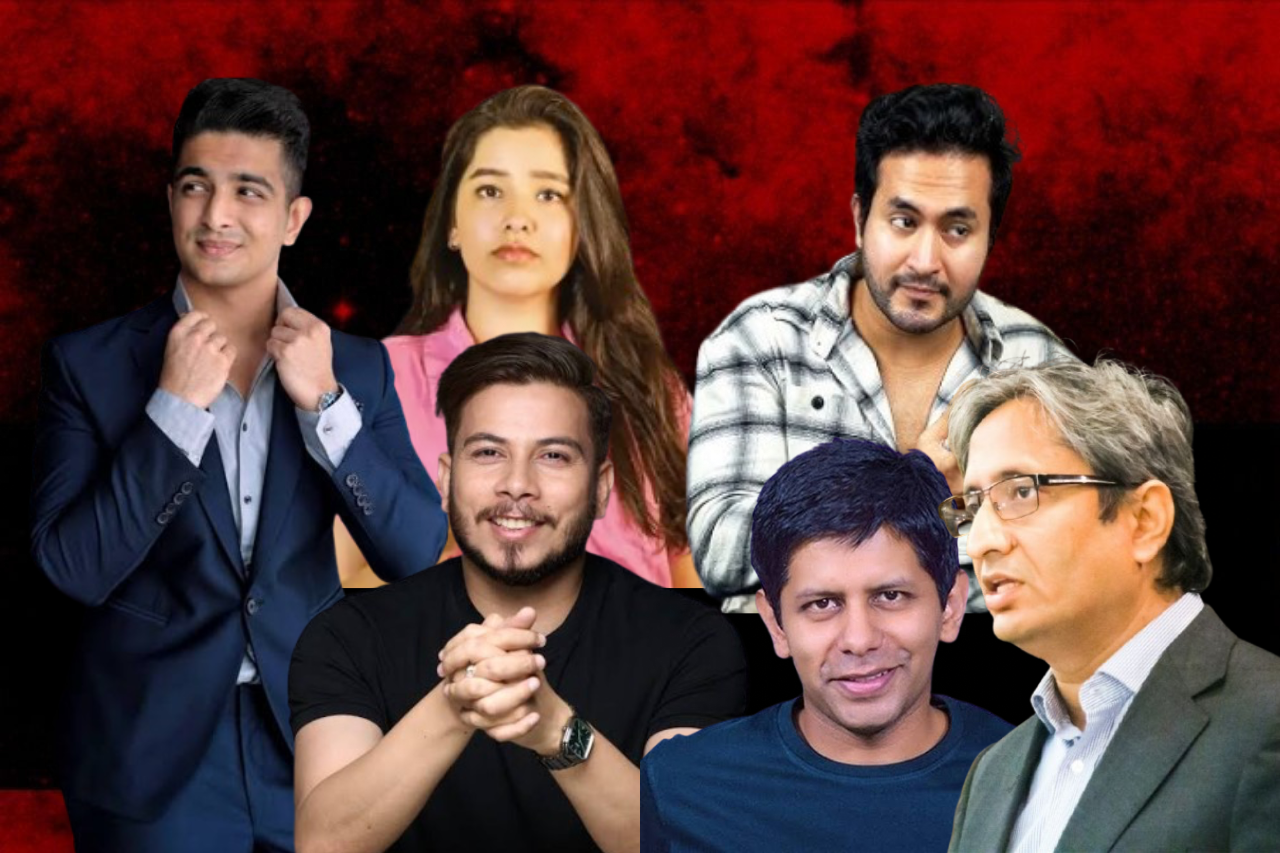
A new data snapshot of YouTube viewership has revealed a major shift in how political content is consumed in India. Independent digital commentators are now commanding massive audiences, collectively shaping public discourse far beyond traditional television news.The rankings, based on March uploads and view counts recorded till mid-April 2026, highlight how YouTube has evolved into a powerful alternative news ecosystem — where individual creators rival and even surpass established media networks.
Abhisar Sharma Leads the Pack, Digital Channels Close Behind
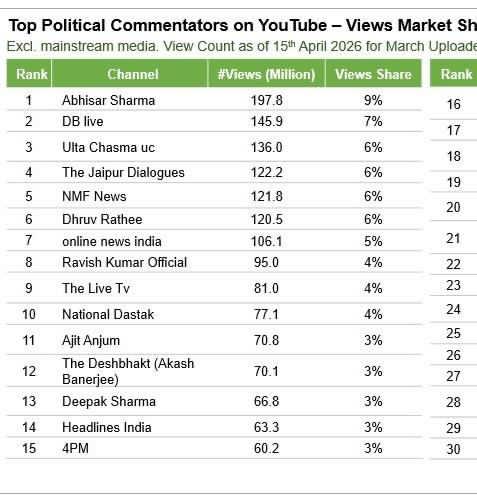
At the top of the list is Abhisar Sharma, whose channel recorded nearly 198 million views, capturing the largest share among political commentators. Close behind is DB Live with around 146 million views, followed by Ulta Chasma and The Jaipur Dialogues, both crossing the 120 million mark.The data clearly shows that audiences are no longer dependent solely on television debates. Instead, they are actively choosing digital-first voices that offer direct, often opinion-driven narratives.
Independent Creators vs Traditional Narratives
Among the most notable names in the list is Dhruv Rathee, whose channel continues to maintain strong viewership, alongside Ravish Kumar, who has successfully transitioned from mainstream media to a powerful independent digital presence.These creators represent a broader trend — where credibility, relatability, and direct audience engagement are becoming more important than institutional backing.The rise of such voices also reflects a growing demand for explained, long-form, and perspective-driven content, rather than traditional panel-based shouting matches.
A Fragmented but Expanding Digital Ecosystem
The list also includes a wide mix of channels such as NMF News, Online News India, The Live TV, and National Dastak — showing that the digital space is no longer dominated by a few players.Instead, it has become a fragmented but highly competitive ecosystem, where multiple voices with different ideologies and styles are competing for attention.This diversity is reshaping how narratives are built and consumed in India’s political landscape.
What This Means for Media and Democracy
The shift towards YouTube-based political commentary signals a deeper transformation. Viewers today are not just consuming news — they are choosing who they trust.Algorithms, engagement, and shareability now play a critical role in determining reach, sometimes even more than editorial structures.However, this also raises important questions about information accuracy, echo chambers, and accountability, as independent creators operate without the same regulatory frameworks as traditional media.
The Bigger Picture: Power Has Moved to the Screen in Your Hand
The data is clear — political influence is no longer confined to studios and prime-time debates. It has moved to smartphones, where millions of viewers scroll, watch, and form opinions daily.YouTube is no longer just a platform for entertainment. It is now a battleground of narratives, where creators, not channels, are becoming the new power centers.