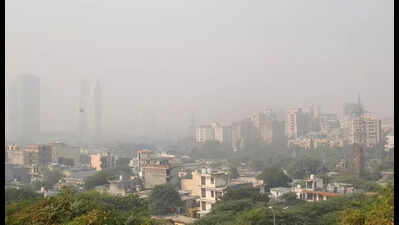
In a significant move to improve air pollution tracking, authorities in Gurugram have decided to shift the air quality monitoring station from TERI Gram to Bhondsi.
The decision is part of a larger plan to strengthen the city’s pollution monitoring system and ensure that air quality data reflects ground realities more accurately across different zones.
Why TERI Gram Station Is Being Shifted
The TERI Gram monitoring station has long been under scrutiny, with concerns that its location may not fully represent the city’s overall pollution levels.Experts have pointed out that air quality in Gurugram varies significantly from one area to another, and certain monitoring locations may not capture the worst-affected zones. In fact, past observations have shown that pollution is often concentrated in specific hotspots rather than evenly spread across the city.By shifting the station to Bhondsi, authorities aim to cover an area that previously lacked comprehensive monitoring, leading to more balanced and location-specific data.
Expansion Plan: From Limited Stations to a Wider Network
Currently, Gurugram operates with a limited number of continuous ambient air quality monitoring stations. The new plan aims to expand this network to 10 stations across the city, significantly increasing coverage.
This expansion is expected to:
●Capture real-time pollution variations across different zones
●Improve data accuracy for policymaking
●Strengthen response to pollution spikes
●More monitoring points will allow authorities to identify problem areas faster and take targeted action.

Why This Move Matters Now
Gurugram has frequently struggled with poor air quality, especially during winter months when pollution levels spike sharply. At times, AQI has remained in the ‘poor’ to ‘very poor’ category, raising health concerns for residents.Accurate monitoring is critical because pollution control strategies depend heavily on reliable data. If monitoring stations do not reflect real exposure levels, policies may fail to address the most affected areas.
A Shift Towards Smarter Environmental Planning
The relocation and expansion plan reflects a broader shift — from just measuring pollution to measuring it correctly.
Authorities are now focusing on building a more robust and transparent environmental monitoring system that can guide future urban planning, traffic management, and industrial regulation.
The Bigger Picture: Data Will Drive Action
This move is not just about shifting one station. It is about creating a system where data becomes the foundation of action.With better coverage and improved accuracy, Gurugram will be in a stronger position to tackle one of its biggest challenges — air pollution.