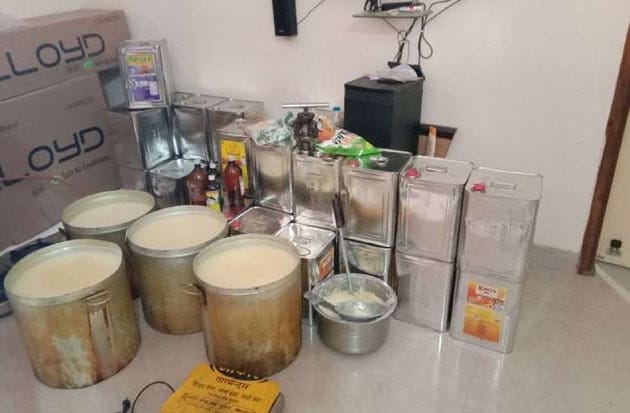
A series of raids across India has exposed a worrying trend — fake and adulterated products are entering everyday households at an alarming scale. From food items to personal care products, enforcement agencies have uncovered multiple illegal manufacturing units and seized large quantities of counterfeit goods.These actions, carried out in different parts of India, highlight a growing concern: how safe are the products people use daily?
Major Seizures Reported Across Cities
Recent enforcement actions have revealed shocking figures:
In Surat — 2000 kg of fake ghee seized
In Ayodhya — 500 crates of fake refined oil recovered
In Delhi — fake factory producing Veet-like cosmetic products busted
From Rajasthan to UP — 1270 kg of fake khoya intercepted
In Delhi — fake Sensodyne toothpaste manufacturing unit exposed
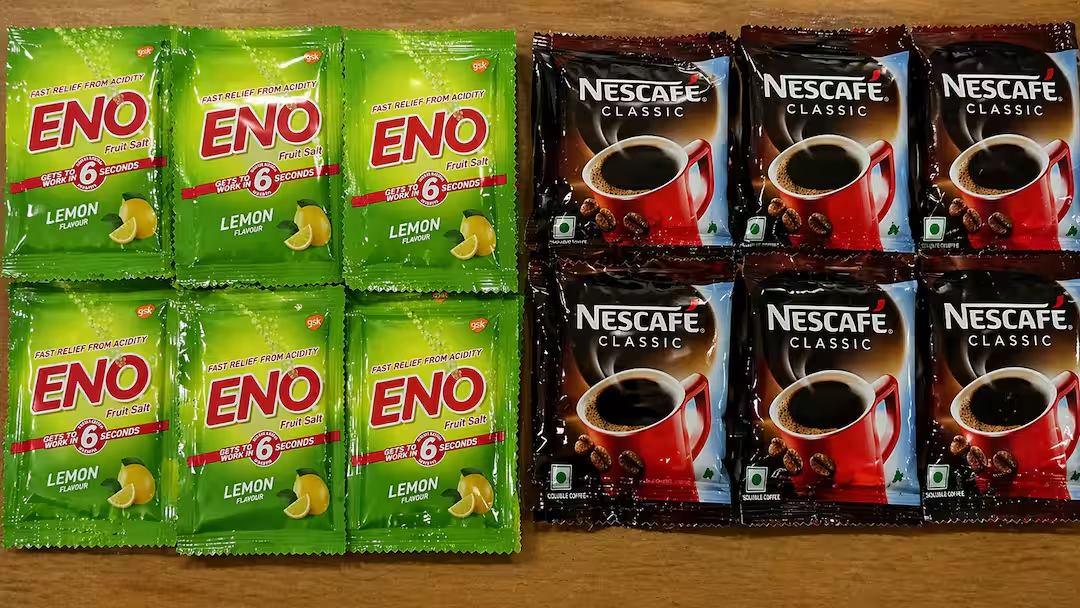
In Delhi — illegal production of fake ENO and Nescafe coffee uncovered
These are not isolated incidents — they point toward organized networks involved in large-scale duplication and distribution.
Daily Use Products Under Threat
What makes the situation more alarming is the nature of the products involved. These are not luxury or rare items — they are daily essentials:
◆Edible items like ghee, oil, khoya
◆Beverages like coffee
◆Health products like ENO
◆Personal care items like toothpaste and hair removal creams
This means consumers may be unknowingly exposed to substandard or harmful products in their everyday life.
Health Risks Cannot Be Ignored
Experts warn that counterfeit and adulterated products can have serious long-term health consequences, including:
●Digestive and metabolic disorders (from fake food items)
●Skin damage (from counterfeit cosmetics)
●Dental issues (from fake toothpaste)
The lack of quality control and unknown chemical compositions make these products potentially dangerous.
A Bigger Network at Play?
The pattern of seizures across multiple states suggests that this is not random activity, but possibly a well-organized supply chain operating across regions.
Despite repeated raids, similar cases continue to emerge — raising concerns about whether enforcement is keeping pace with the scale of the problem.
Growing Concern, Growing Demand for Action
These incidents have triggered a strong public reaction, with increasing demand for:
●Stricter monitoring and inspections
●Action against large-scale networks
●Better consumer awareness
For now, one reality is becoming clear:
The threat of fake products is no longer occasional — it is widespread.