

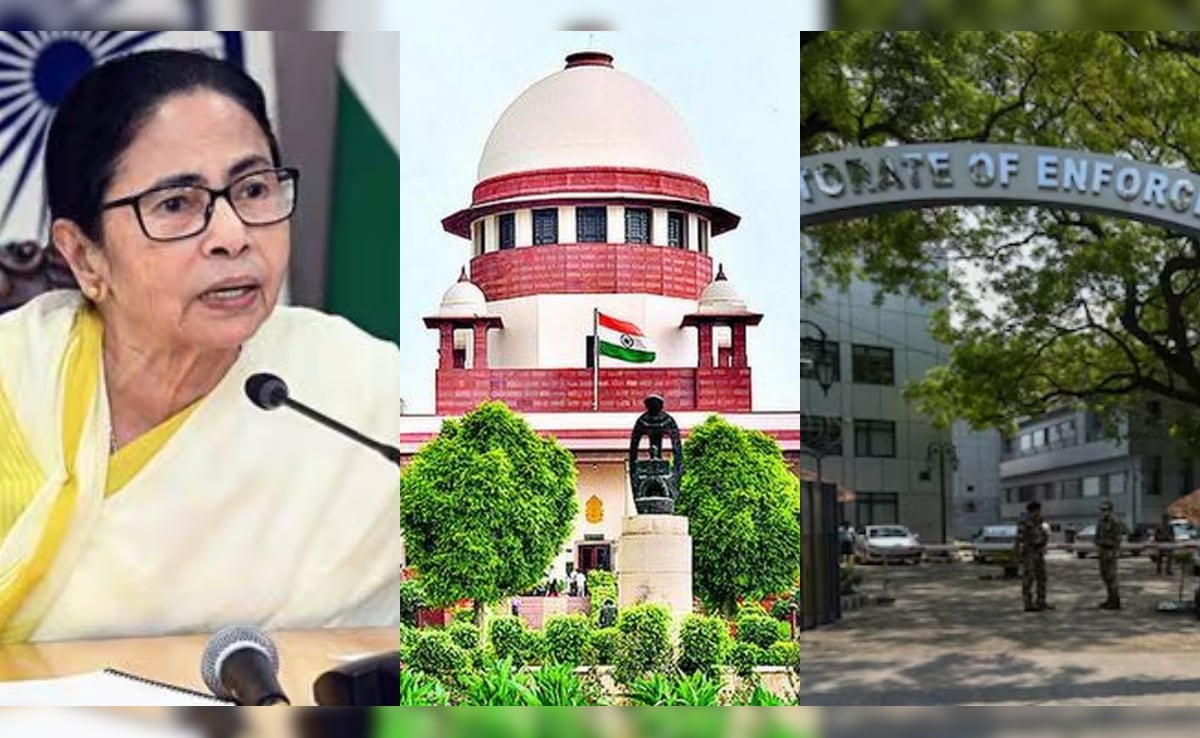
Former West Bengal Chief Minister Mamata Banerjee has submitted before the Supreme Court that the state’s incumbent administration holds complete authority to transfer the probe into the alleged disruption of an Enforcement Directorate search to the Central Bureau of Investigation. Appearing on her behalf on Thursday, senior advocate Kapil Sibal argued before a bench of Justices Prashant Kumar Mishra and N V Anjaria that the political landscape in West Bengal had fundamentally transformed following the recent assembly elections. Sibal maintained that because she no longer heads the state government, there is no constitutional or legal barrier preventing the present dispensation from exercising its statutory power under the Delhi Special Police Establishment Act, 1946, to hand over the inquiry to the central agency.
ED Demands Direct Judicial Order for Independent Probe
The dispute traces back to searches executed by the ED on January 8 at the Kolkata headquarters of political consultancy firm Indian Political Action Committee and the premises of its director, Pratik Jain, as part of a wider money laundering probe linked to coal pilferage. The central financial agency claimed that the former chief minister arrived at the site alongside a substantial police contingent, interfered with search operations, obstructed federal officers, and seized documents and digital materials gathered during the proceedings. Opposing Sibal’s contention, Additional Solicitor General S V Raju argued on behalf of the ED that relying on an executive transfer by the current state government could prompt allegations of political bias. The federal agency insisted that a direct mandate from the Supreme Court was vital to preserve the absolute credibility of the inquiry.
Serving Police Officers Under Scanner as Court Questions Transfer Mechanism
The agency also highlighted that several senior state police officials implicated in the incident continue to remain in active service, raising concerns that they could exercise undue influence over evidence if proceedings remain under state police jurisdiction. When the bench questioned why the current state administration could not independently refer the matter to the CBI now that conditions had normalized, the federal agency explained that routing the issue through executive channels or the High Court would trigger renewed litigation and unwanted delays. In earlier hearings, Solicitor General Tushar Mehta had similarly urged the apex court to establish definitive legal ground so that central authorities would not be ensnared in controversies concerning administrative motives following changes in political power.
Bench Reserves Verdict Following Change in State Government
The legal contest gained added complexity after the West Bengal Assembly elections in April, where the BJP secured 207 of the 294 seats, concluding the 15-year tenure of the Trinamool Congress administration. During earlier proceedings in April, the agency had claimed before the apex court that state machinery had been deployed to derail the coal smuggling investigation, prompting observations from the court regarding the grave risks posed to democratic governance when executive heads intervene in lawful probes. The Supreme Court had previously stayed retaliatory police FIRs filed in West Bengal against ED officers, ordered the preservation of raid video recordings, and issued notices to Banerjee, the state government, and former Director General of Police Rajeev Kumar. After hearing concluding submissions from both sides, the bench reserved its final judgment on the ED’s petition seeking a CBI-led investigation into the alleged obstruction and subsequent police actions.

