
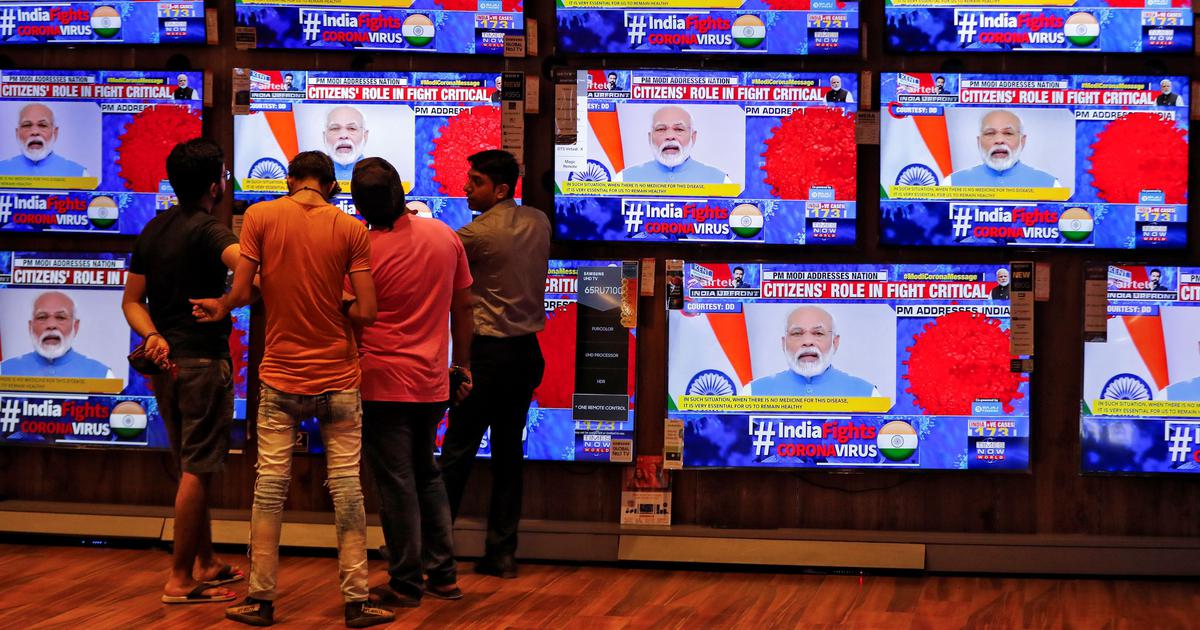
India’s news consumption is undergoing a powerful transformation. For decades, television giants like Aaj Tak dominated public discourse, shaping narratives through prime-time debates and breaking news culture.
But today, a different trend is clearly emerging—millions of viewers are gradually shifting toward independent digital voices like Dhruv Rathee.
This shift is not just about moving from TV to mobile screens. It reflects a deeper change in trust, content quality, and how audiences choose information in the digital age.
The Analytics Reality That Changes Everything
At first glance, television still appears dominant. Aaj Tak commands a massive digital presence with over 70 million subscribers on YouTube, compared to Dhruv Rathee’s approximately 20 million.
But the real story begins when engagement is examined closely.
Analytics Snapshot
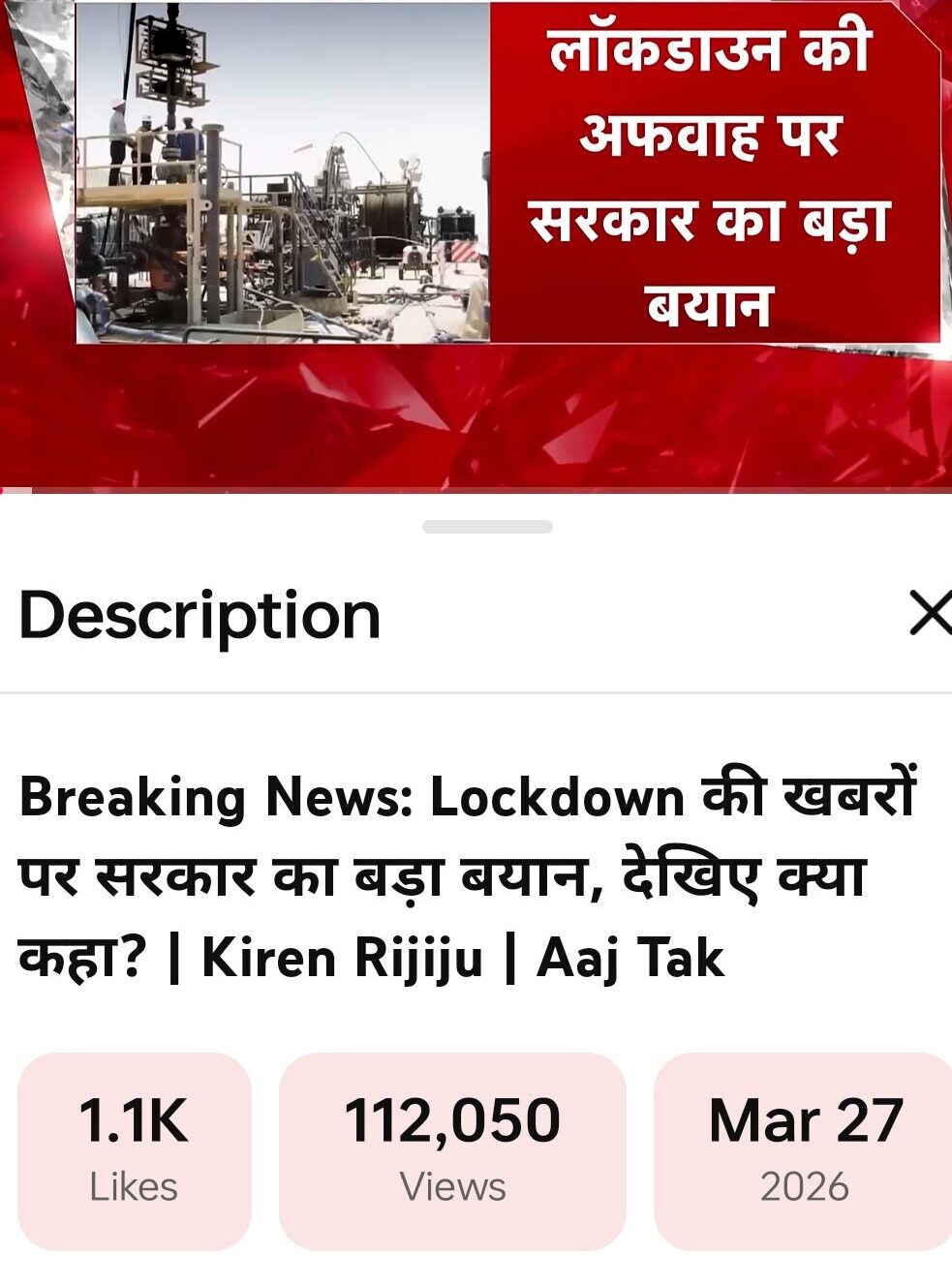
Aaj Tak
70M+ subscribers
Average views: 50,000 to 3 lakh per video
Upload frequency: 30–60 videos daily
Engagement rate: Very low compared to subscriber base
Watch time: Limited retention due to short, repetitive content
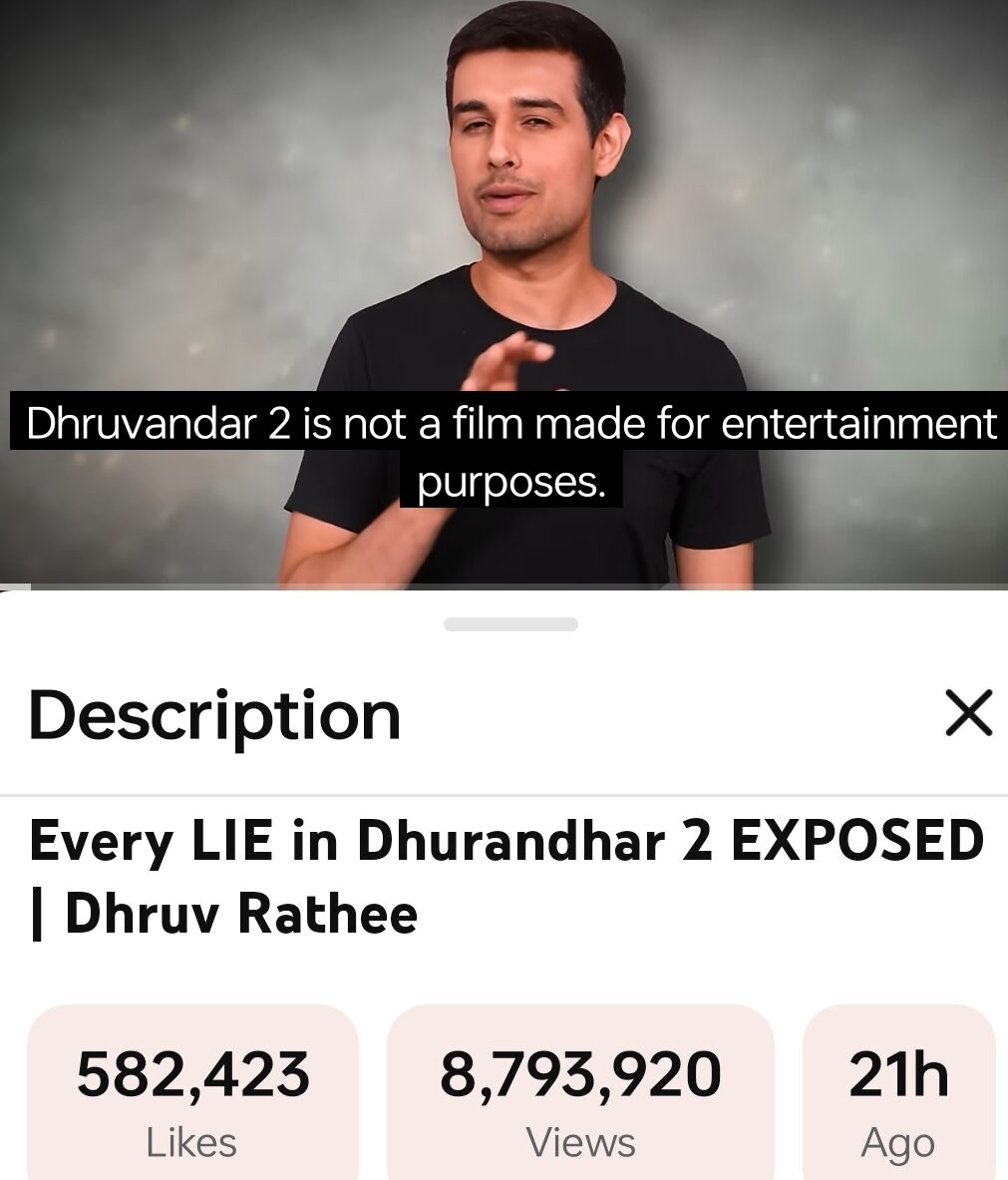
Dhruv Rathee
20M+ subscribers
Average views: 2 million to 10 million+ per video
Upload frequency: 1–2 videos weekly
Engagement rate: Extremely high (often 10%–40% of subscribers)
Watch time: Strong retention with long-form explanatory videos
The contrast is striking. While Aaj Tak dominates in scale, Dhruv Rathee dominates in attention and impact.
Each Rathee video often generates 10 to 50 times more engagement per upload, proving that in today’s media ecosystem, quality and depth are outperforming volume and reach.
Trust Deficit and the Perception Gap
A growing section of viewers believes that large television channels have become politically influenced or one-sided in their presentation.
Concerns frequently raised include limited space for opposing voices, aggressive debate formats, and a shift toward sensationalism over substance.
Whether entirely accurate or not, this perception has created a visible trust deficit. And in media, once trust weakens, audiences quietly migrate rather than confront.
Noise vs Narrative: A Fundamental Difference
Television debates are designed for speed and confrontation. Multiple panelists, constant interruptions, and time pressure often turn discussions into high-decibel exchanges.
In contrast, Dhruv Rathee’s content follows a completely different approach—structured storytelling, visual explanations, and data-backed narratives that help viewers understand complex issues.
This reflects a broader audience shift: from argument-driven content to understanding-driven content.
Personal Connection Is Replacing Institutional Authority
Another major change is emotional and psychological.
A brand like Aaj Tak represents an institution. Dhruv Rathee represents an individual voice.
This distinction matters more than ever. Viewers today are not just consuming news—they are following personalities they trust. This creates deeper engagement, higher shares, and stronger audience loyalty.
Changing Role of Television in Households
A senior advocate from the Allahabad High Court explains a critical behavioral shift:
“Public engagement on television news channels tends to be limited, as TVs in households are often used more as background media—keeping children occupied with cartoons, exposing homemakers to advertisements, and providing ambient sound for the elderly. In contrast, YouTube creators are actively chosen and awaited by viewers who seek factual reporting, unbiased perspectives, and in-depth analysis.”
This insight reveals a key truth—television is often passive consumption, while digital content is intentional consumption.
Structural Limitations of Traditional Media
Experts also point out that many traditional media anchors appear less prepared for in-depth analysis, while dependence on corporate and government advertising can sometimes introduce perceived bias.
As a result, informed audiences are increasingly turning toward independent platforms where discussions feel more open, detailed, and transparent.
Engagement Economy vs TRP Model
Television success has historically been driven by TRPs and reach.
But digital success is built on completely different metrics—watch time, retention, shares, and interaction.
Dhruv Rathee’s content performs strongly across all these parameters, while traditional TV content often struggles to maintain attention in the same way online.
The shift is clear:
◆ It’s no longer about who reaches more people
◆ It’s about who holds attention longer
◆ The Bigger Shift Beyond One Comparison
This is not just a comparison between Aaj Tak and Dhruv Rathee. It represents a much larger transformation in media consumption:
From institution-led news → personality-led analysis
From breaking headlines → explained narratives
From passive viewing → active selection.
The rise of creators like Dhruv Rathee does not signal the end of television. But it clearly shows that audience expectations have evolved faster than traditional formats.
Today’s viewers are looking for clarity, balance, depth, and trust. And wherever they find it, that is where they go.
◆In the digital era, audiences are no longer loyal to channels—they are loyal to credibility.