
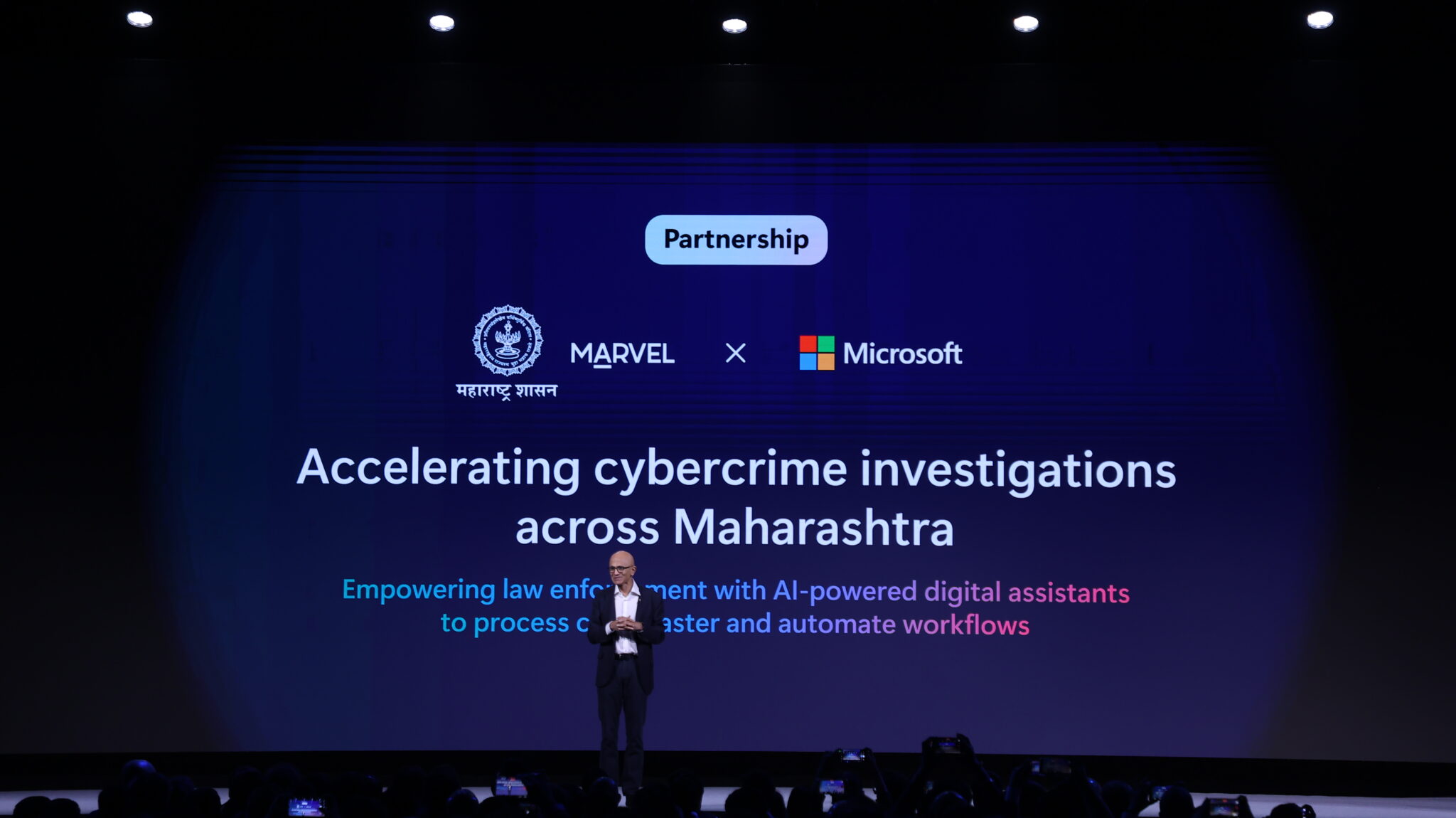
In a major leap toward technology-driven policing, Maharashtra has become the first Indian state to deploy an AI-powered cybercrime investigation system at scale. Microsoft CEO Satya Nadella on Monday flagged off the statewide rollout of MahaCrimeOS, an advanced artificial intelligence platform now operational across 1,100 police stations in the state.
Developed in collaboration with the Maharashtra government under the MARVEL (Maharashtra AI-based Responsive Vigilant Law Enforcement) initiative, MahaCrimeOS is designed to strengthen the police force’s ability to tackle the exploding threat of online fraud, digital arrest scams, identity theft, and investment cons.
Officials say the platform marks a fundamental shift in how cybercrime cases will be investigated in India.
A Digital Shield Against India’s Cybercrime Surge
India has witnessed an unprecedented rise in cybercrime, with over 3.6 million cases registered in 2024 alone, according to official data. Maharashtra remains among the most affected states, facing sophisticated scams involving fake officials, deepfake calls, phishing networks, and cross-border financial fraud.
Traditional policing systems, heavily dependent on manual processes and fragmented data, were struggling to keep pace. MahaCrimeOS has been introduced as a comprehensive solution to bridge this gap.
Built on Microsoft Azure OpenAI Service, the platform has been customised for Indian law enforcement, factoring in legal frameworks, regional languages, and on-ground operational realities.
What is MahaCrimeOS and Why It Matters
MahaCrimeOS acts as a digital co-pilot for investigating officers, supporting them at every stage of a cybercrime case—from complaint registration to charge-sheet preparation.
The system brings together FIRs, digital evidence, bank transaction data, call detail records, and documents into a single integrated dashboard, enabling faster analysis and clearer investigative direction.
By automating routine but time-consuming tasks, the platform significantly reduces paperwork and administrative delays, allowing officers to focus on strategy, suspect tracking, and field operations.

How Investigations Will Change on the Ground
Senior police officials highlight several key benefits:
Multilingual Intelligence:
The system processes data in multiple Indian languages, removing language barriers that often slow investigations.
Built-in Legal Guidance:
While registering cases, officers receive real-time suggestions on applicable IPC sections, cyber laws, and procedural steps, reducing legal errors.
Automated Workflow:
Notices to banks and telecom companies, evidence filtering, document verification, and case compilation can now be completed in minutes.
Faster Financial Trail Tracking:
The platform accelerates tracing of money flows, a critical element in cyber fraud and investment scam cases.
Why Maharashtra Needed This System
Officials admit that the sheer scale and complexity of cybercrime had outgrown conventional systems. Scams now involve multiple jurisdictions, encrypted platforms, and rapid fund transfers—making speed and data integration crucial.
MahaCrimeOS is expected not only to improve conviction quality but also to enhance early detection, helping authorities disrupt fraud networks before victims suffer major losses.
‘A Milestone for Policing’: CM Devendra Fadnavis
Maharashtra Chief Minister Devendra Fadnavis called the rollout a “milestone in modern policing,” stating that the initiative reflects the state’s commitment to using advanced technology for public safety.
He added that the success of MahaCrimeOS could pave the way for similar AI-driven systems across other departments and states.
Setting a National Precedent
With statewide deployment now complete, Maharashtra’s AI-powered policing model is being closely watched across India. Law enforcement agencies in other states are expected to study its performance before adopting similar systems.
If MahaCrimeOS delivers on its promise, it could redefine cybercrime investigation in India—making policing faster, smarter, and better equipped to handle the challenges of the digital age.