
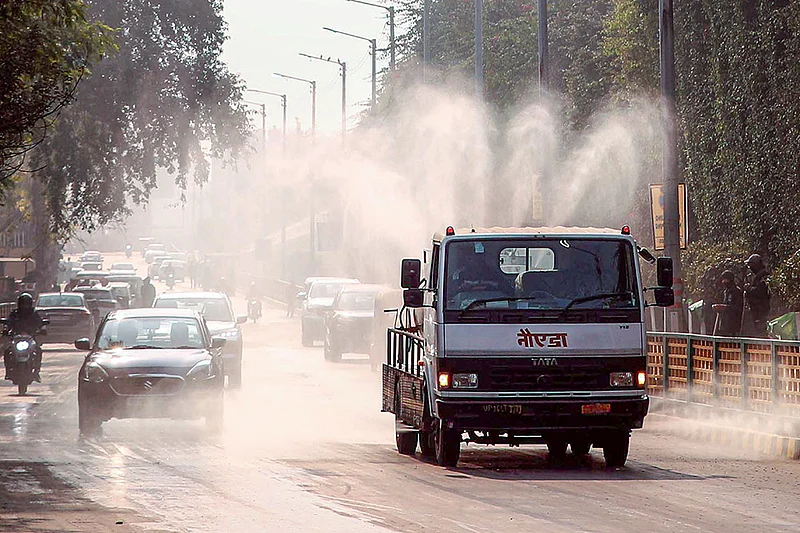
Noida and Greater Noida have plunged into a severe air pollution crisis, prompting authorities to enforce GRAP-4 (Graded Response Action Plan – Stage 4), the toughest anti-pollution framework in India. With the Air Quality Index (AQI) touching a hazardous 455 in Noida and 442 in Greater Noida, the twin cities are currently among the worst-polluted urban regions in the country.
The deteriorating air quality has significantly disrupted daily life, triggering health concerns, traffic chaos, and emergency administrative measures.
Dense Smog Chokes Roads, Visibility Drops to Dangerous Levels
Early Sunday morning painted a disturbing picture across Noida and Greater Noida. Thick smog enveloped major roads, cutting visibility to less than 20 metres in several locations. Traffic on the Yamuna Expressway, Noida–Greater Noida Expressway, DND Flyway, and internal city roads slowed to a crawl, increasing the risk of collisions and pile-ups.
Residents reported burning eyes, breathlessness, persistent coughing, and chest congestion, particularly affecting children, senior citizens, and those with asthma or chronic respiratory illnesses.
Why GRAP-4 Was Triggered
Health experts warn that AQI levels above 450 are classified as “severe plus”, capable of causing lung inflammation, reduced oxygen intake, heart stress, and long-term respiratory damage, even in otherwise healthy individuals.
Hospitals across Noida have reported a noticeable rise in asthma attacks, allergy flare-ups, bronchitis symptoms, and eye irritation, forcing authorities to activate GRAP-4 to prevent a complete public health emergency.
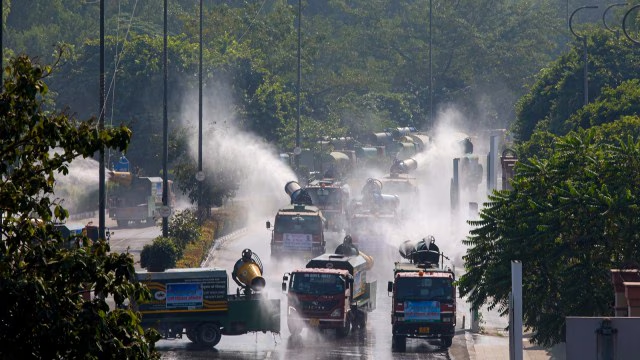
Strict Measures Under GRAP-4
As part of the emergency response:
●All construction and demolition activities—public and private—have been suspended
●Diesel generators are banned except for hospitals and emergency services
●BS-3 petrol and BS-4 diesel vehicles are barred from entering Noida
●Brick kilns, dust-emitting industries, and infrastructure projects have been shut
Intensive vehicle checks are underway at key entry points including Kalindi Kunj, Chilla Border, Mahamaya Flyover, DND Flyway, and Badarpur Border
Authorities are also considering temporary speed restrictions on the Yamuna Expressway due to poor visibility.
Schools Shift to Hybrid Mode
District Magistrate Medha Rupam announced that schools across Noida and Greater Noida will operate in hybrid mode (online and offline) until air quality improves. School timings are being adjusted to avoid exposure during early morning and evening pollution peaks.
“The health of children and vulnerable citizens cannot be compromised. These steps are precautionary but necessary,” the DM said.
Administration on High Alert
Joint teams from the district administration, traffic police, and pollution control board are conducting round-the-clock inspections. Violations of GRAP norms may attract heavy fines, vehicle seizures, and legal action.
How Other Metro Cities Compare
While Noida and Greater Noida currently top pollution charts, other metro cities are also facing worrying air quality trends:
Delhi: AQI hovering between 380–420, under GRAP-3 restrictions in several zones
Gurugram: AQI around 360–400, severe category, visibility severely affected
Faridabad: AQI close to 390, rising respiratory complaints reported
Ghaziabad: AQI near 410, thick smog during early mornings
Mumbai: AQI relatively better at 150–180, though coastal haze persists
Kolkata: AQI around 160–200, moderate to poor category
Bengaluru: AQI remains below 120, relatively safer but rising trend noted
Chennai: AQI between 90–110, moderate category
Experts note that the Delhi-NCR belt remains the worst-hit region due to vehicular emissions, construction dust, stubble burning impact, and stagnant weather conditions.
Public Advisory Issued
Authorities have urged residents to:
Avoid non-essential outdoor movement
Prefer public transport or carpooling
Keep children and elderly indoors
Wear masks if stepping outside
Use air purifiers indoors if available
Officials stressed that while the restrictions may cause inconvenience, they are critical to preventing a larger health crisis.
As winter deepens and wind speeds remain low, authorities warn that pollution levels may fluctuate sharply in the coming days, making strict compliance and public cooperation essential.