
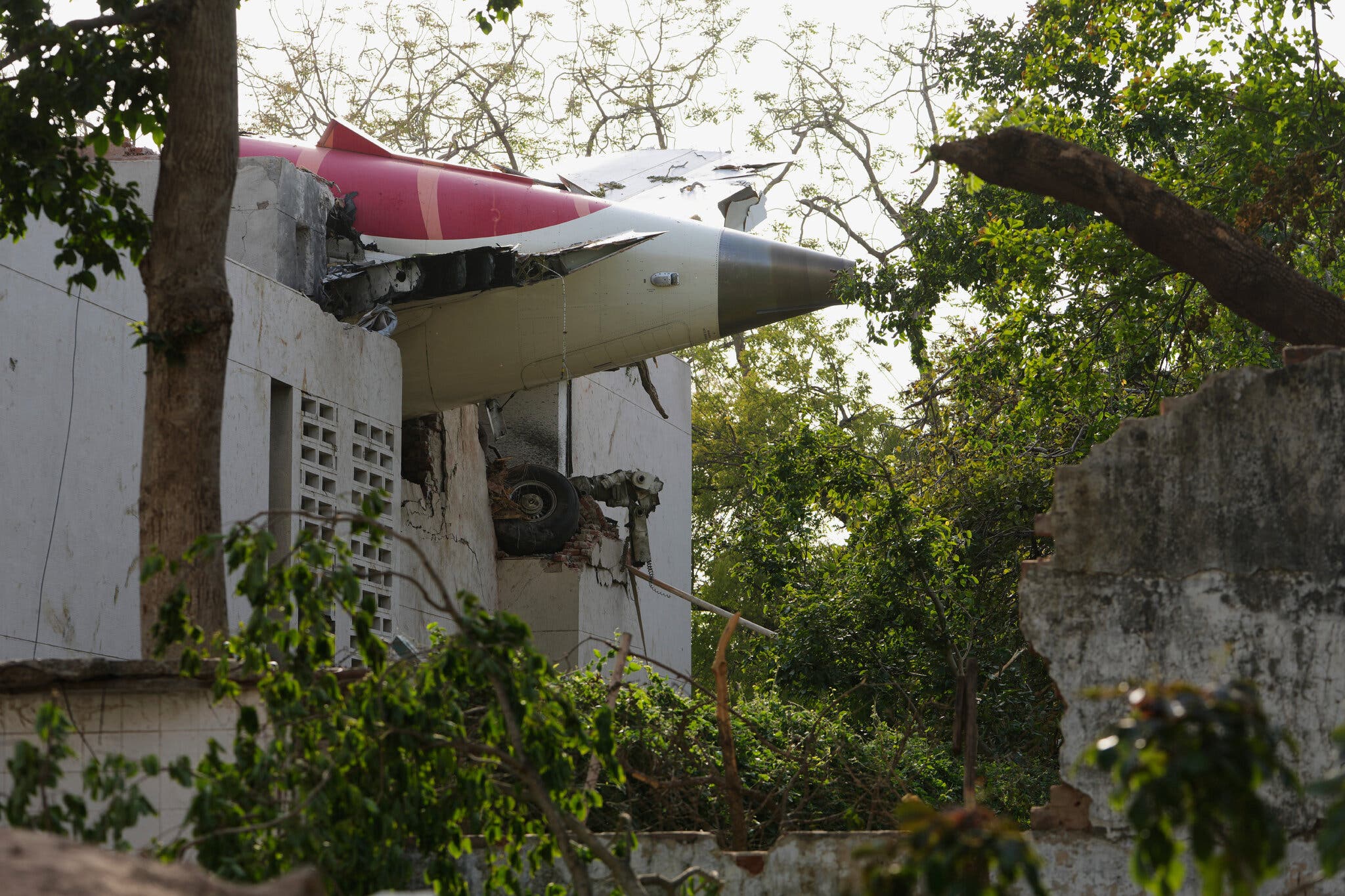
The investigation into the catastrophic Air India Boeing 787 Dreamliner crash in Ahmedabad, which claimed the lives 9P0of 241 passengers and crew, has reached its most critical stage yet. A senior delegation from India’s Aircraft Accident Investigation Bureau (AAIB) will travel to Washington, D.C. next week for a high-level technical review with the U.S. National Transportation Safety Board (NTSB) — a meeting aviation experts say could decisively shape the outcome of the probe.
The closed-door review at the NTSB’s headquarters will bring together investigators from India, U.S. aviation officials, and Boeing engineers to jointly examine the full dataset retrieved so far — including the Cockpit Voice Recorder (CVR) and Flight Data Recorder (FDR), both central to understanding what happened in the doomed aircraft’s final moments.
This unprecedented collaboration follows months of painstaking analysis by AAIB, which is probing whether the rare dual-engine flameout was caused by technical malfunction, procedural deviation, or human error.
Rising Tensions: Pilot Unions Push Back as Investigators Diverge
In recent weeks, fault lines have emerged between Indian and U.S. investigators regarding the possible direction of blame.
Several Indian pilot bodies have raised alarm, claiming the probe appears to be “tilting prematurely” toward pinning responsibility on the cockpit crew — especially the young co-pilot who was at the controls during take-off.
Pilot associations argue that the situation faced by the crew was “extraordinary and unforeseeable,” and that no conclusions should be drawn until every technical angle is fully exhausted.
The controversy deepened after preliminary data revealed that fuel control switches for both engines were switched off within seconds of take-off, robbing the aircraft of thrust. Although the crew reactivated the switches within 10 seconds, the aircraft had already lost too much altitude to recover.
The CVR recording has become a focal point:
The co-pilot is heard urgently asking, “Why were the fuel switches turned off?”
The captain’s reported response: “I didn’t touch them.”
This exchange has fueled intense debate — was this pilot error, a mechanical anomaly, or something else entirely?
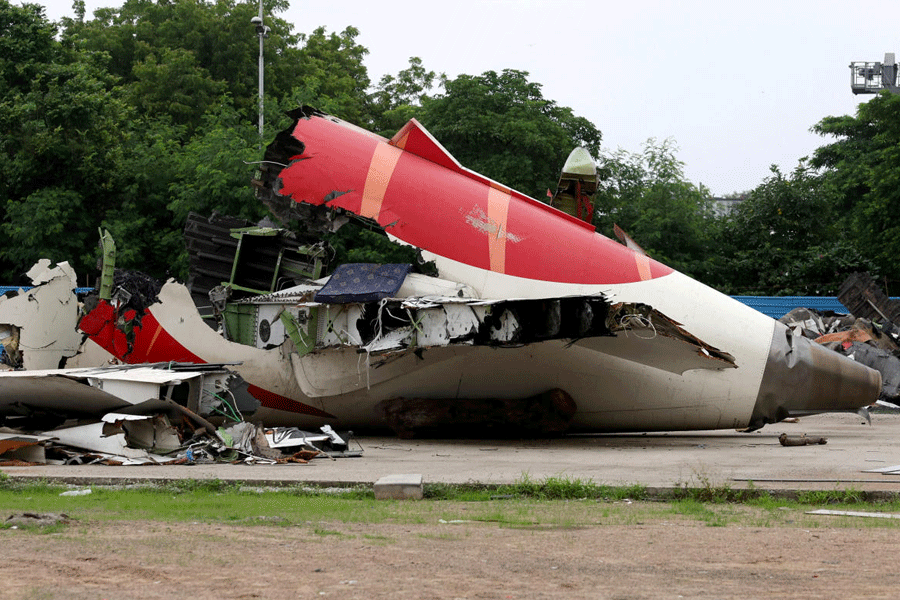
AAIB: “No Rushing to Judgment”
Facing growing speculation, AAIB has cautioned against premature conclusions.
A senior official said:
“Every technical possibility is being thoroughly examined. Assigning blame before the full evidence picture emerges would be irresponsible.”
The NTSB, sticking to protocol, has declined to comment and redirected queries to Indian authorities. Boeing has also confirmed its cooperation but avoided independent assessment.
India’s Ministry of Civil Aviation, meanwhile, has kept complete silence.
A Crucial Moment in Global Aviation Cooperation
Aviation analysts say the upcoming India–U.S. technical session represents one of the most significant cross-border investigative collaborations in India’s aviation history.
The session aims to harmonize analytical approaches, validate findings, and ensure that conclusions withstand global technical scrutiny. Experts believe the outcome may influence:
●international training protocols
●safety audits for next-generation aircraft
●India’s emergency-response frameworks
It may also become a reference case for future investigations involving automated or semi-automated aircraft systems.
What Happens Next?
The AAIB’s final report is expected within weeks — but only after the Washington review concludes. Officials say the joint session is likely to reveal critical insights into:
●the precise sequence of mechanical events
●human-machine interactions in the cockpit
●potential system or design vulnerabilities
●whether external factors played any role
For families seeking closure and for an industry seeking answers, the Washington review marks a decisive turning point.
As the probe enters this make-or-break phase, one question looms large:
Was this tragedy the result of a rare technical anomaly, a preventable human error, or a systemic failure hidden in plain sight?
The world now awaits the findings.