
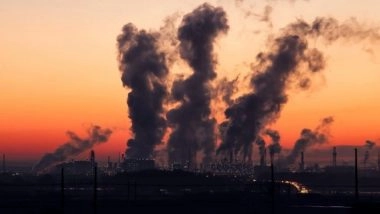
In a major step toward tackling chronic air pollution in the National Capital Region, the Commission for Air Quality Management (CAQM) has issued a statutory direction proposing significantly stricter particulate matter (PM) emission norms for industries across Delhi-NCR. The move is expected to reduce industrial pollution and contribute to long-term improvement in regional air quality.
Under the proposed framework, industries falling under identified high-polluting categories will be required to limit particulate emissions to 50 mg/Nm³, a threshold experts say is both technically achievable and environmentally necessary.
Wide Range of Industries Under New Norms
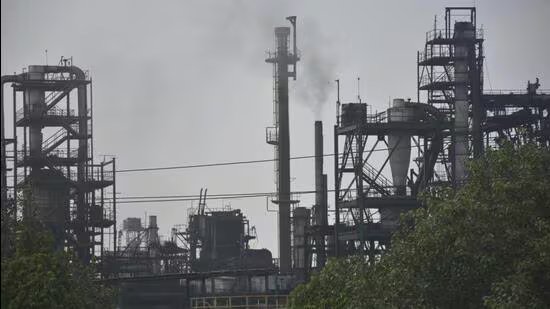
The revised standards will apply to 17 categories of highly polluting industries identified by the Central Pollution Control Board (CPCB), including red-category medium and large industries, units with boilers or thermic fluid heaters, metal furnaces, food processing facilities, and textile operations.
Officials said industrial stack emissions play a significant role in particulate pollution and secondary pollutant formation, making tighter controls essential for improving air quality in densely populated urban regions.
However, the rule will not apply to units already operating under stricter emission limits prescribed by existing regulatory approvals.
Phased Compliance Timeline Announced
To allow industries time to upgrade equipment and pollution-control systems, CAQM has proposed a phased implementation schedule:
Large and medium industries: Compliance by August 1
Remaining industries: Compliance by October 1
State governments in Delhi, Haryana, Uttar Pradesh, and Rajasthan, along with their respective pollution control boards, have been directed to ensure strict implementation within the specified timelines.
Science-Backed Policy Decision
The commission said the revised norms are based on recommendations from the CPCB, supported by technical studies conducted by IIT Kanpur and expert committee evaluations. Authorities believe the new standards will significantly cut particulate emissions from industrial sources — one of the key contributors to NCR’s winter smog crisis.
Push Toward Cleaner Industrial Growth
Environmental experts note that tightening emission norms signals a shift toward cleaner industrial practices without halting economic activity. Industries may need to invest in advanced filtration systems, improved combustion technology, and better monitoring mechanisms to meet the new requirements.
If implemented effectively, the directive could mark a crucial step in reducing pollution levels and protecting public health across one of the world’s most polluted urban regions.
Toward Sustainable Air Quality
While vehicular emissions, construction dust, and crop burning also contribute to pollution, regulators say controlling industrial emissions is a vital part of a multi-sector strategy to achieve cleaner air.
With stricter standards, defined timelines, and coordinated enforcement across NCR states, authorities hope the region can move closer to sustainable air quality — transforming policy intent into measurable environmental impact.