

From airlines to groceries, digital ads to job portals — India’s consumer markets are increasingly being dominated by a handful of powerful players. Economists warn that these duopolies may be convenient for users today but could pose serious long-term risks for innovation, pricing, and consumer choice.
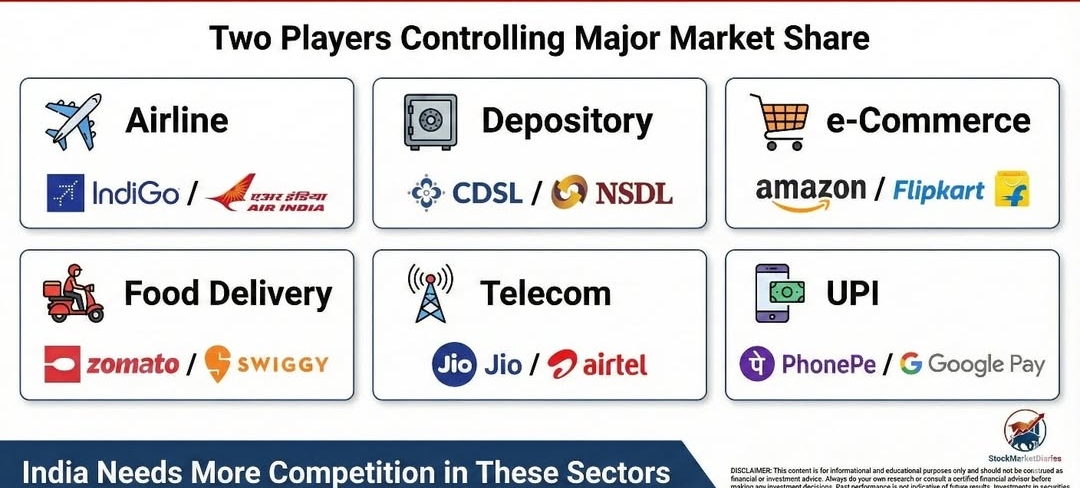
Industry data shows that in sector after sector, two giants are quietly controlling most of India’s modern economy:
India’s Growing Duopoly Map
Aviation: Indigo + Air India
Telecom: Jio + Airtel
Mobility: Uber + Ola (with Rapido as a small buffer)
E-commerce: Amazon + Flipkart
Food Delivery: Zomato + Swiggy
Home Internet: JioFiber + Airtel Xstream
Quick Commerce: Blinkit + Zepto (Swiggy Instamart as third player)
Job Listings: Naukri + LinkedIn
Digital Advertising: Google Ads + Meta Ads
Experts note that while competition still exists on paper, these pairs control 70–90% of the market share in their industries, giving them disproportionate influence over pricing, policies, and consumer behaviour.
Why Are Duopolies Emerging So Fast?
●Analysts attribute the trend to:
●Aggressive funding from global investors
●Network-effect driven tech ecosystems
●Heavy customer acquisition spending
●Consolidation and collapse of smaller competitors
●Regulatory gaps that allow dominance to grow
This dominance has helped scale services nationwide, making them cheaper and more accessible. But critics argue the downside is becoming visible:
●Higher surge pricing in mobility apps
●Increased food delivery and convenience fees
●Digital advertising becoming costlier for small businesses
●Limited alternatives for telecom and broadband consumers
Should India Be Concerned?
Market watchers believe India is entering a phase similar to the US Big Tech era, where a few companies dictate the direction of entire industries. The Competition Commission of India (CCI) has already launched multiple probes into digital markets, suggesting stricter scrutiny ahead.
While duopolies may not be illegal, the concern is whether they will stifle start-ups, limit innovation, and reduce consumer bargaining power in the coming decade.
For now, India’s economy runs largely on the shoulders of these dominant duos — raising a key question:
Are duopolies driving efficiency, or quietly eroding competition?