
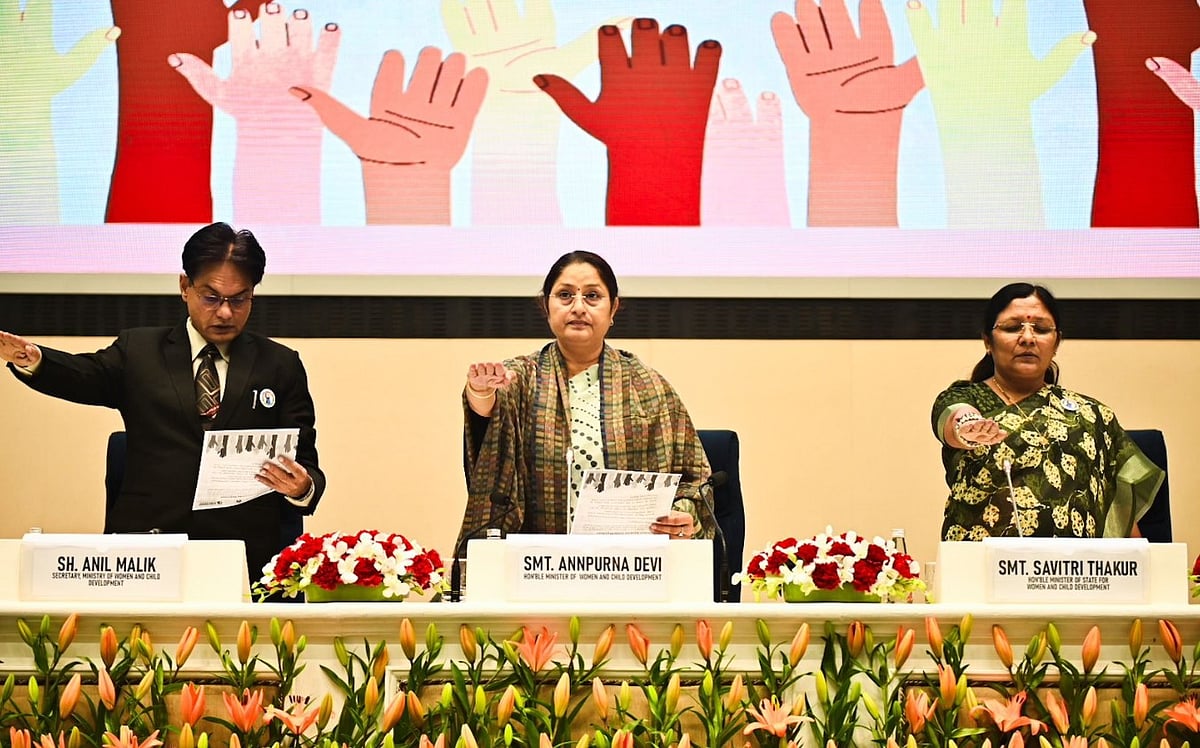
India has intensified its nationwide commitment to eliminate child marriage with the launch of a 100-Day Accelerated Campaign under the Bal Vivah Mukt Bharat Abhiyan. Senior Union Ministers highlighted the role of education, community participation, and women’s empowerment as key pillars in protecting the future of India’s children.
Speaking at the national event, the Union Women & Child Development Minister said that India is at a transformational juncture—one where girls’ education, safety and equal opportunity must become central to the country’s development narrative.
Women Leading India’s Growth Story
The Minister highlighted several powerful indicators of progress:
●43% of India’s STEM workforce is made up of women — one of the highest ratios anywhere in the world
●With better skilling and stronger school-to-career pathways, even more girls can enter high-growth sectors such as AI, biotech, engineering, and research
●India’s daughters are now competing and excelling on global platforms, from science and technology to sports and public service
She also expressed gratitude to Anganwadi workers, SHGs, counsellors, ASHAs, and civil society groups whose tireless community work strengthens India’s grassroots governance
The Minister emphasised that eliminating child marriage is not just a legal requirement but a national moral responsibility, essential for building a Viksit Bharat where every girl has the right to dream big.
States & UTs Told to Intensify Local Action
Calling child marriage a deeply localised challenge, the WCD Minister urged all States and Union Territories to expand ground-level enforcement and community engagement. She asked them to strengthen coordination with:
Panchayati Raj institutions
Women’s collectives & youth groups
District Child Protection Units
School and college networks
She stressed that with robust social mobilisation, India can reduce child marriage to near-zero levels in the coming years.
Bal Vivah Mukt Bharat Abhiyan: Grassroots Power at the Core
Minister of State Savitri Thakur highlighted that the Abhiyan’s true strength lies in its community-led and decentralised model, especially in remote tribal and rural regions.
She noted that ending child marriage is essential not just for protecting children but for building a socially resilient and economically strong Bharat. She emphasised that legal action must go hand-in-hand with social behaviour change.
What the 100-Day Campaign Will Focus On
The national drive aims to trigger a strong, united people’s movement through:
●Mass awareness sessions in schools, universities, and village centres
●Door-to-door campaigns by Anganwadi workers, ASHAs, and counsellors
●Skill-building workshops for adolescent girls to improve confidence and independence
●Identification & monitoring of vulnerable families and high-risk communities
●Stronger reporting mechanisms for child marriage cases
●Collaboration with religious and community leaders to shift long-standing social norms
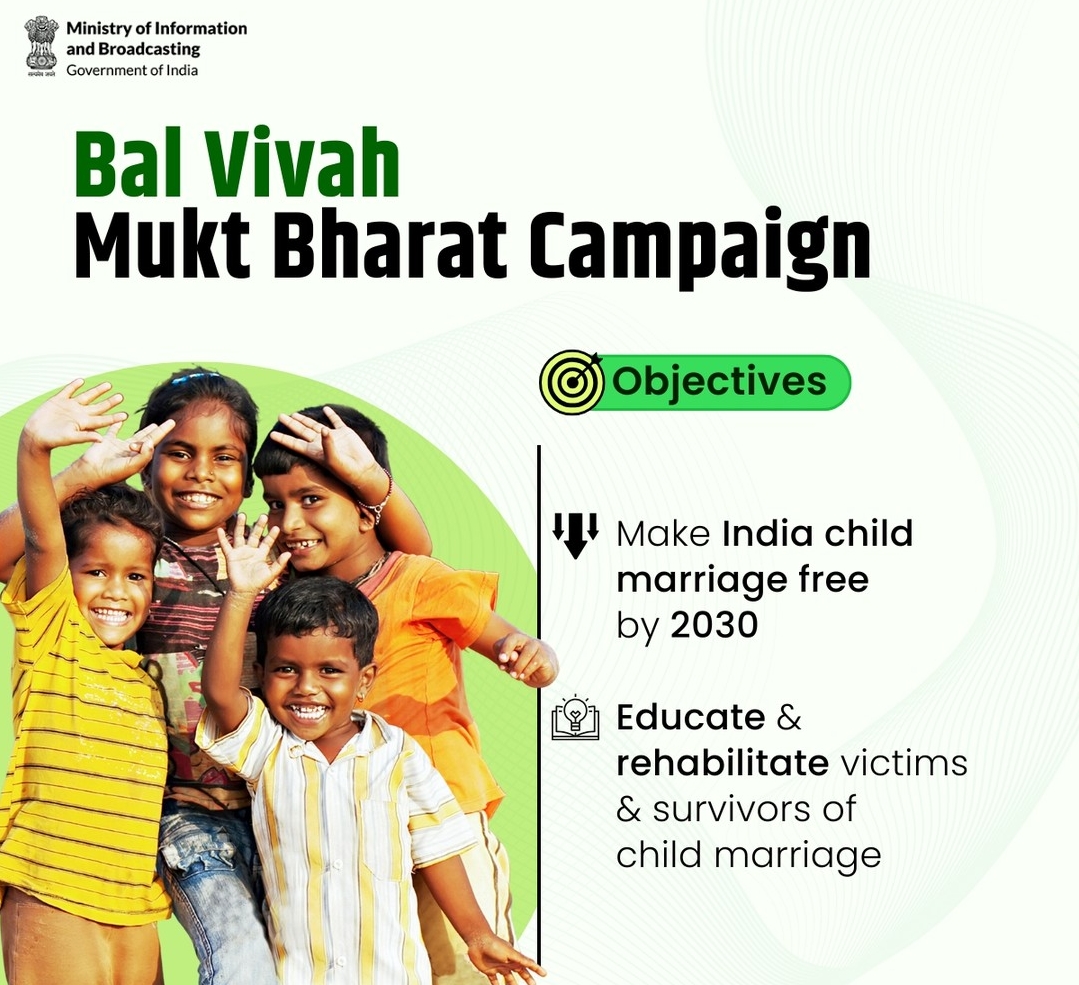
The initiative seeks to ensure that every child in India grows up with access to education, security, good health, and dignity—free from early marriage and harmful practices.