
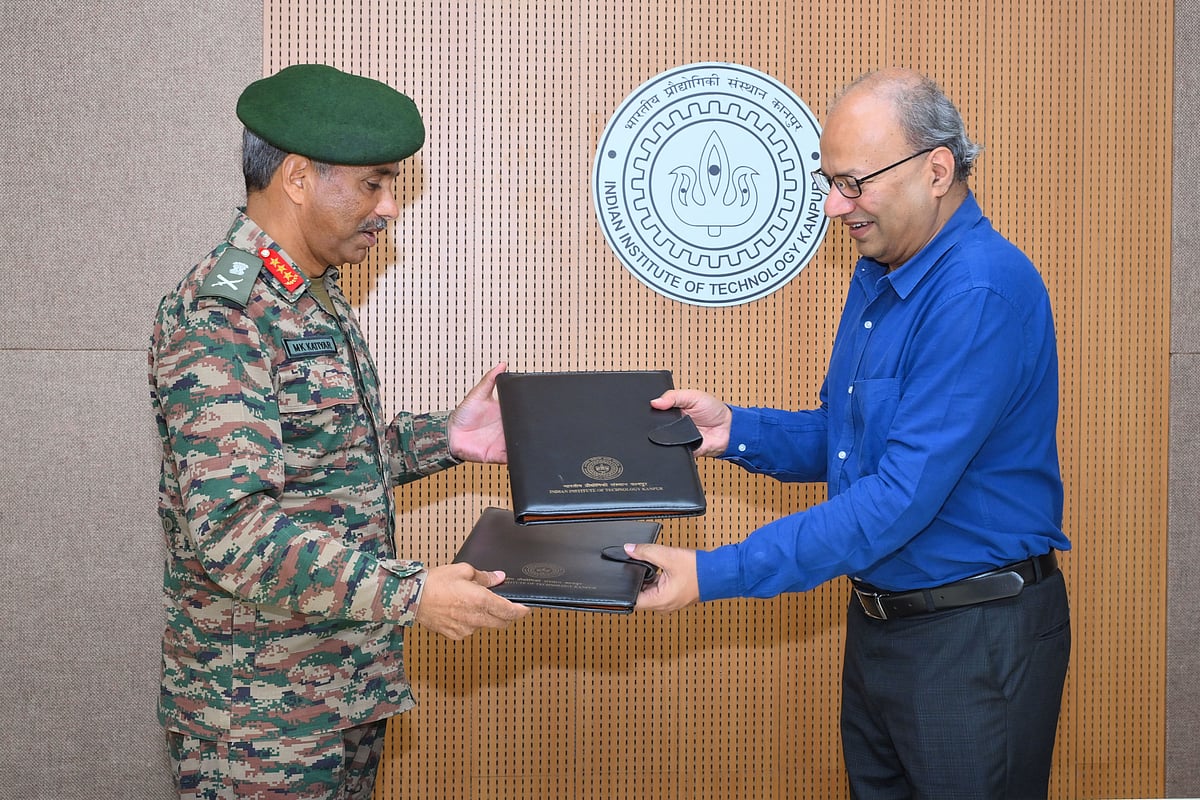
India has taken a major leap in military modernisation with a new agreement between the Indian Army’s Central Command and IIT Kanpur. Under a freshly signed Memorandum of Understanding (MoU), the Army will receive structured, high-level cybersecurity training from IIT Kanpur’s C3iHub — a frontline research centre specialising in cyber defence and digital security.
Officials said the collaboration marks a strategic shift in how the Army prepares for rapidly evolving cyber threats, especially as digital warfare becomes as critical as traditional battlefield operations.
What the Training Includes
C3iHub will deliver two intensive, three-month modules for Army personnel. These programmes will focus on:
●Emerging cyber threats
●Network and system protection
●Incident response and breach management
●Defence frameworks used globally
●Real-world cyberattack simulations for military environments
The aim is to equip Army units with the skills needed to defend critical networks in sensitive operational zones — especially within the Surya Command theatre, which covers multiple strategic states.

MoU Signed in Presence of Senior Leadership
The agreement was formalised in the presence of:
Lt Gen Naveen Sachdeva, Chief of Staff, HQ Surya Command
Professor Somitra Sanadhya, Programme Director, C3iHub
Dr Tanima Hajra, CEO of C3iHub
Calling the partnership a national security milestone, Professor Sanadhya said the initiative reflects C3iHub’s mission to convert advanced cybersecurity research into mission-critical defence capabilities.
A New Digital Era for the Indian Army
The Army is now shifting towards integrated training models, giving cyber defence the same priority as physical warfare preparation. With cyberattacks rising in frequency and complexity worldwide, this partnership is expected to significantly strengthen:
●Operational readiness
●Threat detection capabilities
●Rapid response mechanisms
●Protection of military communication networks
About IIT Kanpur
Established in 1959, IIT Kanpur is one of India’s premier institutions for engineering, research and technology. With:
1,055-acre campus
20 departments and 27 specialised centres
9,500+ students
570+ faculty
…it remains a national powerhouse for innovation, including cybersecurity, defence technologies and deep-tech research.