

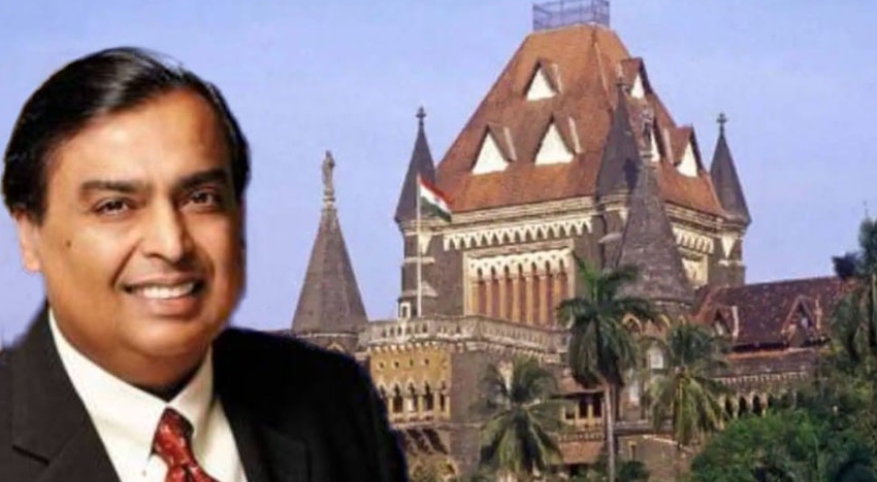
In a landmark judgment that resonates far beyond a single case, the Orissa High Court has brought the curtains down on a 23-year-long legal battle involving Mukesh Ambani. The case, which originated from a ₹501 mobile handset dispute, has now transformed into a defining moment in India’s legal landscape—highlighting the limits of criminal liability for corporate leaders.
The court didn’t just dismiss the complaint—it delivered a powerful message on how criminal law cannot be stretched to target individuals without direct responsibility.
“Floodgates of Litigation”: Court’s Warning Echoes Loud
In one of the most striking observations, the High Court warned that entertaining such cases would open the floodgates of indiscriminate litigation.
The bench painted a sharp picture of what could follow:
●Railway Ministers being summoned for delayed trains
●Postal authorities dragged into court over missing letters
●Government officials blamed for defective public supplies
Such a scenario, the court emphasized, would turn the justice system into a tool of chaos rather than accountability.
From a Small Purchase to a Two-Decade Legal Pursuit
The roots of the case trace back to 2003, when a telecom scheme offering a low-cost handset led to a dispute. The complainant alleged that the phone was defective and claimed he was billed unfairly even when the device was under repair.
What followed was not a routine consumer complaint—but an “almost unrelenting pursuit” of criminal litigation, as described by the court.
Over the years:
●Multiple complaints were filed on the same issue
●Earlier proceedings were quashed by courts
●The Supreme Court of India upheld those decisions
●Fresh attempts continued to implicate top-level executives
Despite repeated judicial clarity, the matter kept resurfacing—turning a minor dispute into a prolonged legal saga.
The Core Principle: Criminal Liability Is Personal, Not Positional
At the heart of the judgment lies a critical legal principle—
criminal liability must be based on direct involvement, not designation.
The court made it unequivocally clear that:
●Holding a high corporate position does not automatically create criminal responsibility
●There must be a clear, personal connection to the alleged offence
●Vicarious liability cannot be imposed unless specifically defined by law
In this case, the court found no evidence linking Mukesh Ambani directly to the transaction or the alleged wrongdoing, making the complaint legally untenable.
Sharp Criticism of Judicial Oversight
The High Court also turned its attention to procedural lapses, expressing concern over how summons were issued without proper scrutiny.
It emphasized that:
●Issuing summons is not a routine act but a serious judicial responsibility
●Courts must examine the history of litigation before proceeding
●Repetitive complaints on identical facts should be flagged early
The absence of such diligence, the court noted, contributed to unnecessary prolongation of the case.
Case Termed ‘Publicity-Driven’ and Abuse of Process
In a rare and direct remark, the court described the complaint as “publicity-oriented” rather than a genuine pursuit of justice.
It held that repeated litigation on the same grounds—despite earlier dismissals—amounted to:
●Harassment of individuals
●Misuse of judicial processes
●Wastage of court resources
To reinforce its stance, the court imposed a fine on the complainant, signaling that legal systems cannot be used as instruments of pressure or visibility.
Ripple Effects Across Corporate and Legal Ecosystems
The judgment carries far-reaching implications, especially in an era where corporate accountability and legal activism often intersect.
It reinforces that:
●Senior executives cannot be dragged into every operational dispute
●Legal action must be rooted in evidence, not hierarchy
●Courts will actively guard against misuse of criminal law
For businesses, it offers reassurance. For the legal system, it sets a precedent. For litigants, it sends a clear signal—the courtroom is not a stage for repetitive or symbolic battles.