
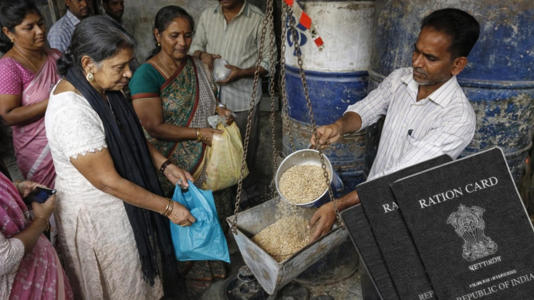
In a major policy shift aimed at strengthening food security for the urban poor, the Delhi Government has decided to expand eligibility for ration cards to families with an annual income of up to Rs 1.20 lakh. The decision, approved by the Delhi Cabinet under the leadership of Rekha Gupta, marks a significant step toward making the capital’s public distribution system more inclusive, transparent, and need-based.
Earlier, the income ceiling for ration card eligibility in Delhi was capped at Rs 1 lakh per year. With rising living costs and inflation, the government acknowledged that many genuinely needy families were being left out of the food security net due to outdated criteria.
A Shift Toward a Poor-Centric Food Security System
Announcing the decision, Chief Minister Rekha Gupta said that food security is not charity but a basic right of the poor. She emphasised that no resident of Delhi should go hungry because of policy gaps or administrative delays. By revising the income threshold, the government aims to bring thousands of struggling families under the ambit of subsidised food grains.
According to official data, more than 3.89 lakh ration card applications have remained pending for years due to the absence of clear and practical eligibility rules. Additionally, over 11.65 lakh people in Delhi are still waiting to be included in the food security system. The new policy is expected to address this backlog systematically.
Income Certificate Mandatory, Self-Verification Ends
Under the revised rules, applicants must submit a revenue department–issued income certificate. This move eliminates the earlier system of self-declaration, which officials say led to misuse and incorrect inclusion of ineligible beneficiaries.
However, the government has also clearly defined exclusion criteria to ensure benefits reach only the genuinely needy. Families will not be eligible if they:
◆Own property in A to E category colonies in Delhi
◆Pay income tax
◆Own a four-wheeler (except one commercial vehicle used for livelihood)
●Have a family member in government service
◆Possess an electricity connection exceeding 2 kilowatts
District-Level Committees to Decide Priority
A key reform in the new system is the end of the “first come, first served” approach. Instead, district-level committees will evaluate applications and decide priority based on need. These committees will be chaired by the District Magistrate (DM) or Additional DM and will include local MLAs and concerned officials.
The committees will prepare a priority list of beneficiaries and also maintain a 20% waiting list, ensuring that vacancies are filled quickly and transparently as they arise.
Cleaning Up the System: Removing Ineligible Beneficiaries
A government audit of the food security database revealed major irregularities:
◆Over 6.46 lakh beneficiaries had income details that did not match eligibility norms
Around 95,682 names were inactive beneficiaries
◆23,394 duplicate entries were found
◆6,185 cases involved benefits issued in the names of deceased persons
◆56,372 individuals voluntarily opted out
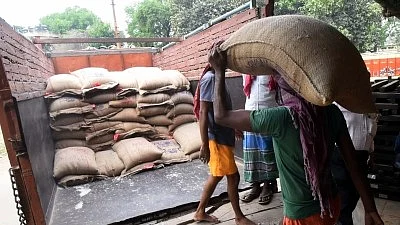
These corrections created more than 8.27 lakh vacant slots, which will now be filled by genuinely eligible families waiting for years.
Toward a Fair and Transparent PDS
The Delhi government said the revised policy aligns with the National Food Security Act, 2013, and aims to build a technology-driven, transparent, and fair public distribution system. Officials believe the reform will not only curb misuse but also restore public trust in welfare delivery.