
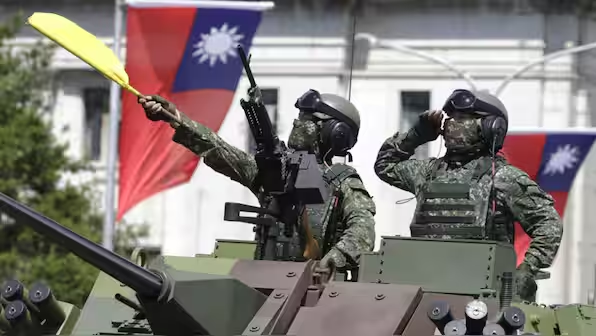
In a move set to reshape security dynamics across the Indo-Pacific, the United States has approved its largest-ever arms sale to Taiwan, a massive $11.15 billion (nearly Rs 98,000 crore) defence package that has triggered sharp reactions from China and renewed global focus on the Taiwan Strait.
The decision comes amid rising military pressure from Beijing and growing concerns in Washington and regional capitals over the possibility of a future conflict involving Taiwan. Strategic experts say the scale and timing of the deal underline the United States’ determination to strengthen Taiwan’s deterrence capabilities as geopolitical fault lines across Asia deepen.
Strengthening Taiwan’s Defence Posture
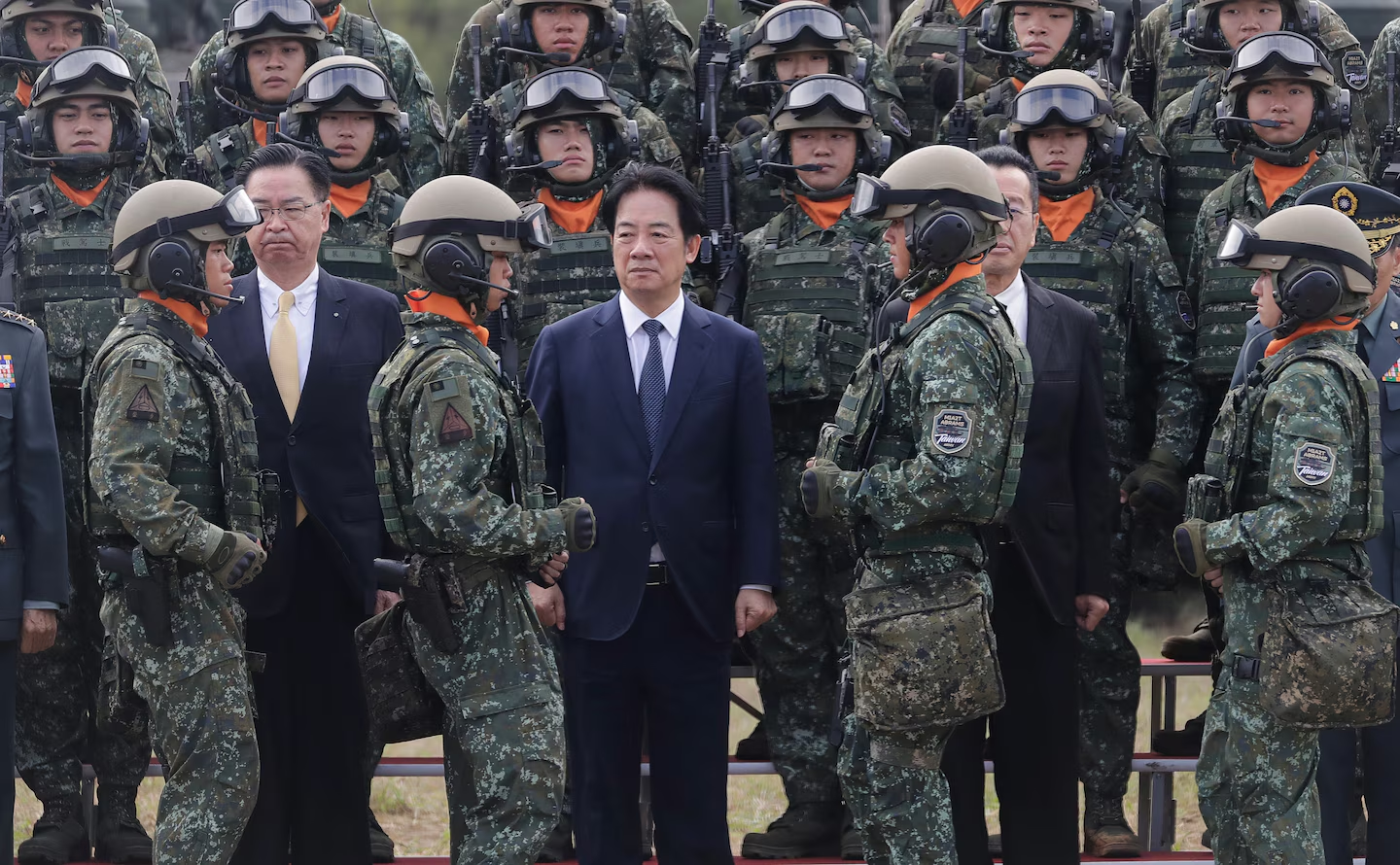
According to Taiwan’s Ministry of National Defense, the newly approved arms package is part of a $40 billion supplementary defence budget announced in November by President Lai Ching-te. The government has made clear that improving self-defence preparedness is a national priority in response to what it describes as escalating security threats from mainland China.
President Lai has repeatedly warned that China could attempt to seize Taiwan by 2027, citing Beijing’s rapid military modernisation and increasingly assertive operations in the Taiwan Strait, the East China Sea, and the South China Sea. Taipei has set the same year as its target to achieve full combat readiness, reflecting the seriousness of its threat assessment.
What the $11.15 Billion Arms Package Includes
The defence deal includes advanced weapons systems aimed at boosting Taiwan’s long-range strike capabilities, ground defence, and maritime security. The package reportedly consists of:
82 HIMARS (High Mobility Artillery Rocket Systems) worth about $4.05 billion
420 ATACMS missiles, capable of precision strikes up to 300 km
60 M109A7 self-propelled howitzers, valued at over $4 billion
Javelin and TOW anti-tank missile systems exceeding $700 million
Drone surveillance platforms, military software, and spare parts for helicopters and anti-ship missile systems
Military analysts say the systems will significantly enhance Taiwan’s ability to counter potential amphibious landings and missile threats.
China Reacts Sharply, Military Activity Intensifies
China has condemned the arms sale in strong terms. A spokesperson for Beijing’s Ministry of Foreign Affairs accused Taiwan’s ruling Democratic Progressive Party (DPP) of pushing “separatist agendas” with foreign military backing, warning that such actions would “lead nowhere.”
China reiterated that Taiwan is an inseparable part of its territory and described the arms deal as a violation of the One China principle, calling it a serious threat to regional stability.
Adding to the tension, Taiwan’s defence ministry reported that China’s Fujian aircraft carrier recently transited the Taiwan Strait, prompting Taiwanese forces to closely monitor the movement and activate precautionary measures.
US Strategy and the Taiwan Relations Act
Although the United States does not maintain formal diplomatic relations with Taiwan, the Taiwan Relations Act of 1979 allows Washington to provide defensive weapons to help the island maintain adequate self-defence capabilities.
Analysts believe the latest approval goes beyond routine military support, signalling Washington’s broader strategic intent as US–China rivalry intensifies across economic, technological, and military domains.
A Region on Edge
The historic arms sale underscores the rapidly shifting security environment in Asia. As Taiwan accelerates its military preparedness and China sharpens its rhetoric and shows of force, the risk of miscalculation continues to grow.
Experts warn that the coming years—particularly the period leading up to 2027—could prove decisive for peace and stability in the Indo-Pacific.