
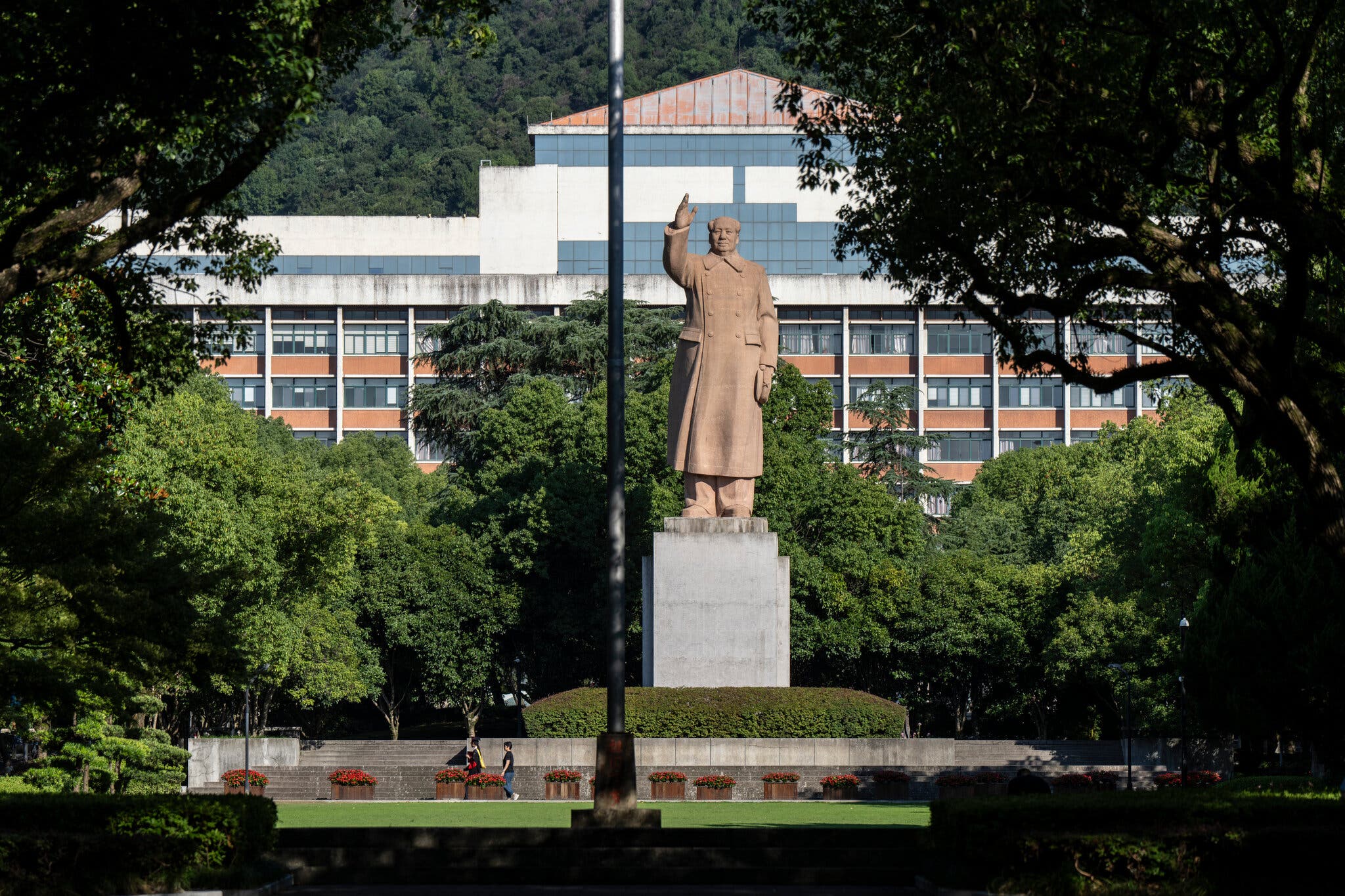
The global higher education landscape is undergoing a dramatic shift. For decades, institutions like Harvard University symbolised academic excellence and global leadership. However, recent international rankings have sent shockwaves across the world by placing Chinese universities—Zhejiang University and Shanghai Jiao Tong University—at the very top, surpassing long-established Western giants. This development is not just about rankings; it reflects a deeper transformation in global knowledge power—and raises uncomfortable questions for India.
China’s Rise: Strategy, Scale, and State Support
China’s ascent in global university rankings has not happened overnight. It is the result of sustained investment, long-term planning, and a clear national strategy linking higher education with economic and technological goals. Over the past two decades, China has poured billions of dollars into its universities, focusing on research infrastructure, world-class laboratories, international faculty recruitment, and strong industry-academia collaboration.
Institutions like Zhejiang University and Shanghai Jiao Tong University have become innovation hubs, producing high-impact research in artificial intelligence, biotechnology, engineering, and climate science. Their close ties with industry ensure that research outcomes translate into real-world applications, patents, and startups—factors that global ranking agencies heavily reward.
What About India? The Stark Reality
This global reshuffle forces India to confront a critical question: Do any Indian universities even feature among the world’s top 500 consistently?
While a handful of institutions such as IITs and IISc do appear in some global rankings, their presence remains limited and inconsistent. Most Indian universities struggle with low research output, inadequate funding, faculty shortages, and outdated curricula.
India produces one of the largest numbers of graduates in the world, yet its universities rarely lead global research conversations. The gap is not due to a lack of talent, but due to systemic issues—bureaucratic controls, limited autonomy, poor international collaboration, and insufficient emphasis on original research.
Why Rankings Matter—Beyond Prestige
Global university rankings are often criticised, but they matter because they influence:
◆International student flows
◆Global research partnerships
◆Faculty recruitment
Foreign investment in innovation ecosystems
China understands this well. Its universities are now magnets for global talent, reversing decades of academic brain drain. India, by contrast, continues to lose many of its best students and researchers to institutions abroad.

The Bigger Question: What Kind of Education Power Does India Want to Be?
India stands at a crossroads. With the National Education Policy (NEP) promising reform, autonomy, and multidisciplinary learning, the intent is visible—but execution remains slow. Without massive investment in research, strong governance reforms, and global benchmarking, Indian universities risk falling further behind as China accelerates ahead.
The rise of Chinese universities is not merely China’s success—it is a mirror for India. It highlights what is possible when higher education is treated as a strategic national priority rather than a routine administrative sector.
A Moment for Honest Introspection
The real question is no longer whether Harvard has been overtaken. The real question is: Can India create even one truly world-leading university in the next decade?
If India aspires to be a global knowledge leader, it must urgently rethink how it funds, governs, and values its universities. Otherwise, the global academic race will continue to be led by others—while India watches from the sidelines.
This moment should serve as a wake-up call, not just for policymakers, but for society as a whole. Education, after all, is not just about degrees—it is about shaping a nation’s future.