

What started as small cyber fraud rackets in the border villages of Uttar Pradesh’s Mathura district has now unravelled into a sophisticated international cybercrime empire, operating from luxury mansions in Delhi and the National Capital Region (NCR). A major police crackdown has exposed how fraudsters transformed illicit digital scams into a lavish lifestyle marked by premium SUVs, farmhouses, and overseas networks.
In a coordinated multi-day operation, Mathura Police arrested 37 accused, dismantling a syndicate that once operated quietly from villages like Devsaras, an area locally known as ‘Mini Jamtara’ for its history of cyber fraud. Investigators say mounting police pressure in rural pockets forced criminals to shift their base to urban centres, allowing them to scale operations while blending into elite neighbourhoods.
From Fields to Farmhouses
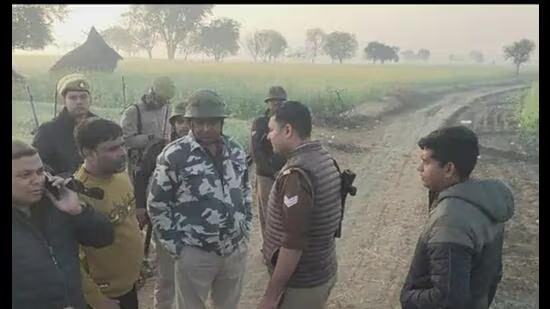
According to senior police officials, the gang initially ran fraud calls from fields, cowsheds and temporary shelters near Govardhan. The UP–Rajasthan border became their biggest shield. At the first hint of a raid, accused would cross into Rajasthan or Haryana within minutes, slipping beyond jurisdictional limits.
Over time, fraud proceeds were invested in large houses and agricultural properties across Rajasthan’s Deeg and Kaman regions, where terrain complexity and weak inter-state coordination allowed them to stay under the radar for years.
Lavish Wedding That Raised Red Flags
The scale of illegal earnings came into public view during a recent wedding in Devsaras village. The groom’s procession featured nearly 40 Mahindra Thar SUVs, a Land Rover Defender, and several high-end vehicles — an unprecedented sight in the rural belt.
What stunned villagers later alarmed investigators. Police are now tracking vehicle ownership, funding sources, and bank trails, suspecting the event was a calculated show of financial power rooted in cyber fraud.
Luxury Homes as Cyber Command Centres
The investigation revealed that the syndicate’s real control rooms were not villages, but luxury homes in Delhi-NCR. These residences functioned like professional call centres, equipped with fake SIM cards, VoIP calling systems, and layered digital payment channels.
Victims ranged from Indian citizens to foreign nationals in Thailand, Saudi Arabia, Nigeria, and other countries. The accused posed as businessmen, consultants, or property dealers, allowing them to operate unnoticed in upscale colonies.
Joint Operations Across States
Mathura Police have now sought formal assistance from Deeg Kotwali Police in Rajasthan, with Bhilamka village emerging as a key hideout and transit point. Joint patrolling, property verification, and financial scrutiny are underway to prevent further escapes.
Organised Crime, Money Laundering Charges
Officials confirmed that cases have been registered not only under the IT Act, but also under organised crime, criminal conspiracy, and money laundering laws. Forensic examination of seized phones, laptops, and bank accounts is ongoing, with authorities expecting more arrests and international linkages to surface soon.
Senior officers said the case highlights how rural cybercrime hubs have evolved into transnational criminal enterprises, requiring sustained, coordinated action across states and borders.
“This is not just a local cybercrime case anymore,” a senior officer said. “It’s a blueprint of how digital fraud can turn villages into gateways of international crime.”