
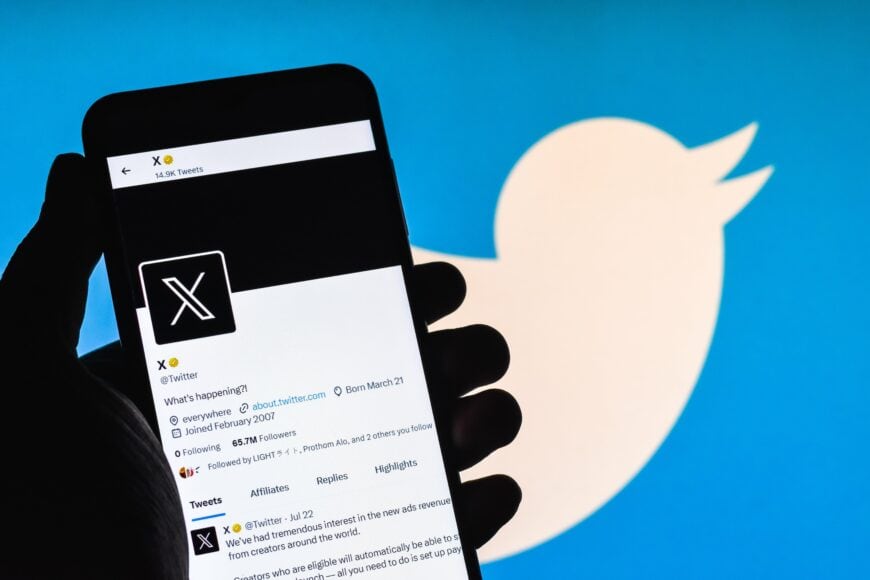
In a landmark ruling, the European Union has fined X (formerly Twitter) a massive €120 million (Rs 1,080 crore) for repeatedly violating the Digital Services Act (DSA) — the EU’s most powerful online accountability law to date.
This is the first non-compliance penalty ever issued under the DSA, signalling a new era where global tech giants will face strict scrutiny for misinformation, opaque algorithms, and user safety risks.
Why the EU Fined X: 3 Major Violations
The European Commission said X committed serious, systemic, and repeated violations affecting millions of European users.
1. Blue Checkmark Called “Deceptive Design”
After Musk made the blue tick available to anyone willing to pay Rs 650/month, regulators say X blurred the line between verified identities and impersonators.
The EU warned this change:
●Erodes trust
●Increases scams
●Fuels misinformation
●Enables influence operations
The redesigned system, they said, tricks users into assuming legitimacy where none exists.
2. Faulty, Restrictive Ad Database
Under the DSA, platforms must maintain a publicly accessible ad repository showing:
● Who funded each ad
● What audience it targeted
● Why it was shown
But X’s ad database was found to be:
●Technically broken
●Delayed
●Difficult for researchers to access
●Missing critical data
The Commission bluntly stated the system appeared “intentionally restrictive and non-functional.”
3. Blocking Researchers From Studying Risks
The EU also accused X of hindering independent researchers by limiting access to public data.
According to the ruling, this directly obstructs efforts to:
●Track misinformation
●Identify election interference
●Analyse extremist content
Officials said the platform “blocked legitimate research, preventing vital risk assessment.”

EU’s Strong Warning: ‘No Deception. No Opacity. Not in Europe.’
Henna Virkkunen, the EU’s Executive Vice-President for Tech Sovereignty, issued a sharp message:
“Deceiving users, obscuring advertising information, and blocking researchers have no place in the European Union.”
She stressed the ruling protects European citizens — not punishes American companies.
What Happens Next?
X has not issued any official response yet.
But tensions with the US could rise, as Washington has previously accused the EU of “targeting American tech companies.”
If X refuses to comply, it could face:
●More fines (up to 6% of global revenue)
●Platform restrictions in Europe
●Legal battles with EU regulators
What Is the Digital Services Act?
The DSA, implemented in 2024, is Europe’s toughest internet safety law.
It requires big tech platforms to:
●Remove harmful content quickly
●Be transparent about ads
●Provide researcher access
●Ensure user safety
●Prevent manipulation and fraud
Violations can result in multi-million-euro penalties — as Musk now knows firsthand.
A Historic Turning Point in Global Tech Regulation
The fine marks a defining moment for digital governance worldwide.
For Elon Musk, the penalty isn’t just financial — it is a reputation and policy challenge, as countries across the world now watch Europe’s enforcement model.
The EU’s message is crystal clear:
“Freedom of speech does not mean freedom from accountability.”
With this ruling, the Digital Services Act enters a new phase — one where tech giants are no longer untouchable.