
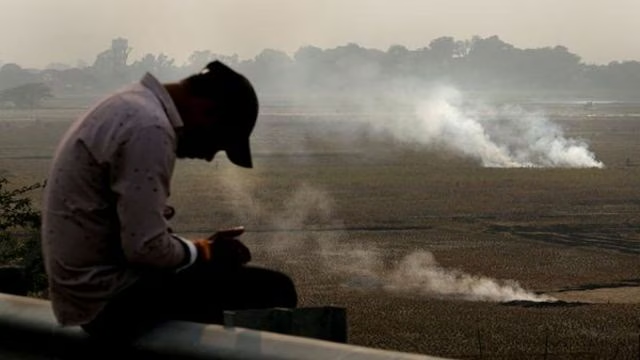
In a worrying sign for global public health, Tashkent, Uzbekistan has recorded the worst air quality in the world, topping the latest Air Quality Index (AQI) chart with a hazardous score of 254. But the biggest alarm bells are ringing much closer to home.
India Dominates Top 3 — And Not for the Right Reasons
India features prominently in the global pollution list, with:
Delhi ranked #2 (AQI 249)
Kolkata ranked #3 (AQI 239)
Mumbai ranked #16 (AQI 157)
These levels fall in the “Very Unhealthy” and “Unhealthy” categories, posing serious risks especially for children, elderly people, and those with respiratory issues.
South Asian Region Emerges as Pollution Hotspot
The top 10 list paints a grim picture for South Asia:
Lahore, Pakistan (#4, 233)
Dhaka, Bangladesh (#5, 196)
Bishkek, Kyrgyzstan (#6, 194)
Experts say rapid urbanisation, industrial emissions, vehicle exhaust, and seasonal weather patterns are driving this pollution spike across the region.
What Does This Mean for Residents?
At these AQI levels:
◆Breathing the air is equivalent to smoking several cigarettes a day
◆Outdoor exercise is unsafe
◆Schools and hospitals face increased pressure
◆Respiratory illnesses, asthma, and heart problems can worsen
Doctors warn that long-term exposure can lead to chronic disease and reduced life expectancy.

Why the Global Concern?
Air pollution is now one of the world’s deadliest environmental threats, linked to:
●7 million deaths annually
●Higher COVID and flu vulnerability
●Economic losses due to reduced labour productivity
With cities like Seoul, Hanoi, Shanghai, Baghdad, and Sarajevo also appearing on the list, experts say the crisis is no longer regional — it’s planetary.
A Call for Urgent Action
Environmental analysts stress the need for:
●Cleaner fuels & renewable energy
●Public transport expansion
●Industrial emission control
●Green urban planning
●Cross-border cooperation
Pollution doesn’t stop at borders — and neither should solutions.