
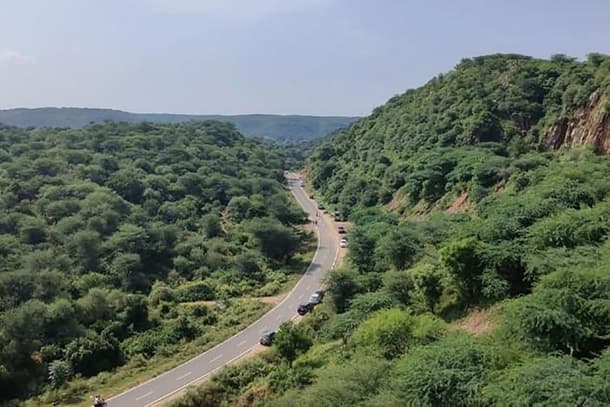
In a major push to restore ecological balance in the Aravalli region, authorities have launched a large-scale afforestation drive along the Kundli–Manesar–Palwal (KMP) Expressway, planting thousands of native, climate-resilient trees to create a long-term green corridor.
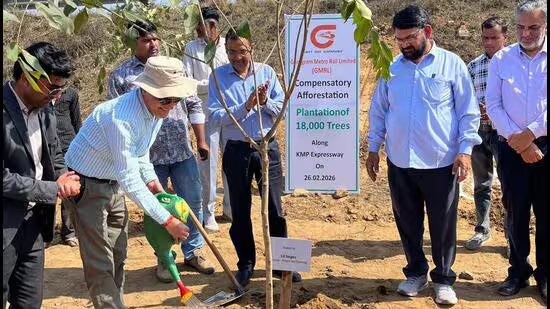
Senior officials from Gurgaon Metro Rail Limited (GMRL), the project contractor and the forest department jointly inaugurated the plantation initiative. The drive focuses on indigenous species known for their durability and environmental benefits, including banyan, peepal, neem, pilkhan, jamun, bael, amaltas, tamarind, white siris and desi kadam.
Native Trees Chosen for Survival and Impact
Officials said the selection of species was based on scientific assessment to ensure high survival rates and long-term ecological value. Native trees not only adapt better to local climate conditions but also support biodiversity, improve soil quality and help recharge groundwater.
“Local, hardy species have been chosen so that they thrive naturally and contribute meaningfully to the region’s greenery,” an official involved in the drive said.
Shift from Rocky Terrain to Expressway Corridor
The plantation was initially planned for land in Kadarpur village. However, rocky soil conditions there posed challenges for sapling survival. Authorities subsequently shifted the project to the KMP Expressway corridor, where soil conditions and irrigation access are more favourable.
This move is expected to significantly improve survival prospects and allow the creation of a continuous green belt along the highway.
Scientific Monitoring for Long-Term Success
Experts from the Haryana Forestry Training Institute emphasised that the plantation will follow scientific methods, including proper spacing, soil treatment, watering schedules and continuous monitoring.
Officials confirmed that the saplings will be maintained over the years rather than planted and abandoned — a common issue in past plantation drives.
Public Participation Key to Sustained Greening
Authorities also called for community involvement, noting that long-term success depends on public awareness and protection of the planted trees.
The initiative is part of broader efforts to combat air pollution, rising temperatures and environmental degradation in the fast-urbanising NCR region. Once mature, the plantation is expected to act as a natural carbon sink, reduce dust levels and enhance the overall landscape of the expressway.
If sustained effectively, the project could transform the KMP corridor into one of the region’s largest man-made green buffers — offering both environmental and aesthetic benefits for decades to come