
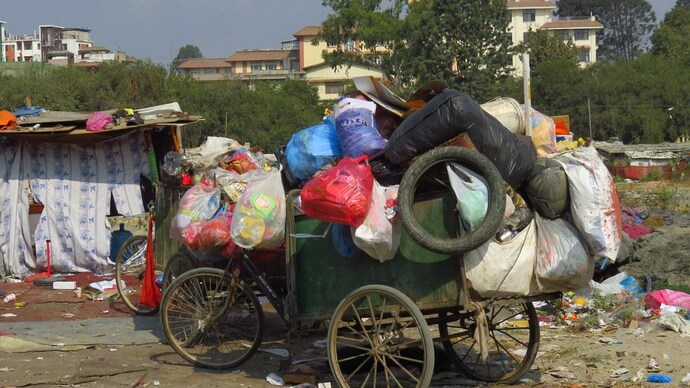
Growing frustration over ineffective waste management has prompted residents of Gurugram to demand stricter, performance-based contracts for garbage collection agencies, citing municipal surveys that suggest door-to-door collection currently covers only about 10% of sector areas.
Citizen groups say the limited reach of collection services is undermining efforts to improve sanitation and reduce landfill dependence.
Calls for Accountability in Waste Contracts
Residents argue that contract renewals should depend on measurable performance outcomes rather than routine extensions.
Ravi Trivedi, a resident of Rising Homes in Sector 92, said contractors must meet targets for expanding collection coverage and ensuring proper segregation before receiving further work orders.
Environmental advocates echo this concern, warning that the current system rewards waste transportation rather than waste reduction.
Ruchika Sethi Takkar, founder of Citizens for Clean Air Bharat, said most municipal contracts operate on a “Collection & Transportation” tipping-fee model, where payments are linked to the quantity of waste transported. This, she noted, creates incentives to move garbage to landfills instead of processing or reducing it.
Segregation at Source Seen as Key Solution
Residents emphasise that separating dry and wet waste at the household level will only succeed if supported by segregated collection systems and local processing facilities.
Without ward-level infrastructure for recycling and composting, segregation efforts often collapse, resulting in mixed waste ultimately being dumped at landfill sites.
Municipal officials said earlier requests for proposals to empanel bulk waste management agencies included performance parameters, but implementation remains a challenge.
Mounting Pressure on Landfills
Gurugram currently generates around 1,200 tonnes of fresh waste every day, of which roughly 900 tonnes ends up at the Bhandwari landfill, one of the region’s primary dumping sites.
Authorities say the long-term goal is to reduce landfill dependency through improved segregation, recycling, and scientific disposal methods.
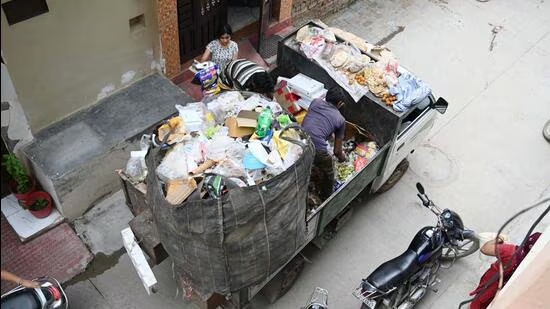
A System at a Crossroads
Experts warn that without structural reforms — including accountability, decentralised processing, and incentive redesign — the city risks worsening environmental and public health challenges.
For residents, the issue is no longer just about cleanliness but about sustainability. With waste volumes rising alongside rapid urban growth, many believe Gurugram must shift from a “collect and dump” approach to a modern circular waste management system.