
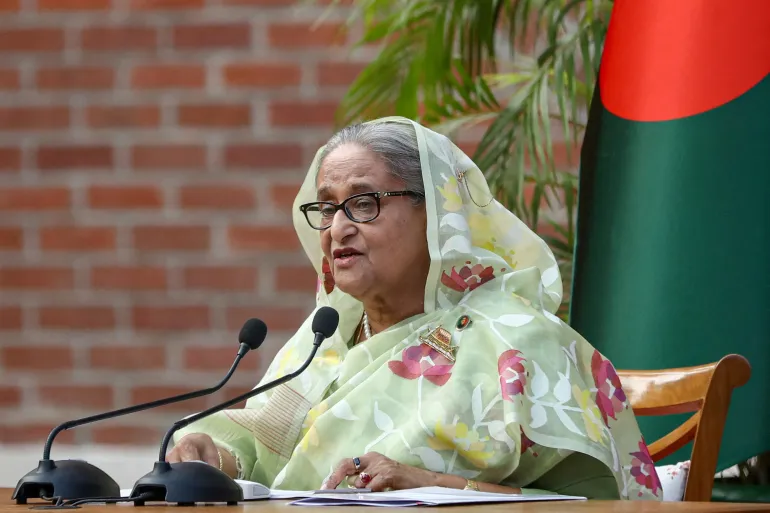
In a dramatic turn of events that has deepened political turmoil in Bangladesh, former Prime Minister Sheikh Hasina has been sentenced to death by the International Crimes Tribunal (ICT) on charges of crimes against humanity.
Brutal Crackdown During 2024 Student Uprising
The tribunal, in a landmark ruling delivered in absentia, found Hasina guilty of ordering a violent crackdown on student-led protests in July–August 2024. Prosecutors said she “personally authorised and oversaw” actions that led to mass civilian deaths, torture, and conspiracy.
According to court documents and a UN report cited in the trial, up to 1,400 people were killed during the unrest—making it one of Bangladesh’s deadliest episodes in decades.
Verdict & Sentences
Death Sentence: Hasina was convicted on multiple counts, including incitement of violence and mass killings.
Life Sentence: In addition to the death penalty, she was also handed a separate life sentence for other charges.
Other Accused: Her former home minister, Asaduzzaman Khan Kamal, and ex-police chief Chowdhury Abdullah Al-Mamun were also convicted; Al-Mamun had pleaded guilty and become a state witness.
Hasina’s Reaction: Political Vendetta, She Says
From her self-imposed exile in India, Hasina rejected the verdict as politically motivated. She called the court “rigged” and termed the process “biased.” Her legal team argued there was no strong proof linking her directly to the decisions that led to the unrest.
Legal Options & Appeal
Under Bangladesh’s International Crimes Tribunals Act, Hasina may appeal to the Supreme Court’s Appellate Division, even from abroad, if she appoints authorized counsel.
The Act also allows the President to commute or pardon the sentence, though Hasina would need to surrender.
Tensions Soar Across Bangladesh
The build-up to the verdict saw serious unrest in Dhaka, with reports of bomb blasts and arson attacks. Security was heightened across the capital and major cities.
Her son, Sajeeb Wazed, warned of protests and vowed not to participate in elections unless the ban on her party, the Awami League, is lifted.
Global Reactions & Implications
The sentencing raises serious international concerns:
Diplomatic Fallout: India may face pressure over Hasina’s status, given she currently resides in New Delhi.
Human Rights Debate: Rights groups question the fairness of the trial and call for due process, while the interim government defends it as essential accountability.
Political Crisis: With elections expected in February 2026, the verdict could further destabilize Bangladesh’s already fragile political landscape.
Why This Matters:
This is not just a courtroom verdict—it’s a turning point for Bangladesh’s democracy. The sentencing of a former long-term leader over mass protest crackdowns signals a powerful moment of reckoning, but also opens the door to deeper political rifts and international scrutiny.