
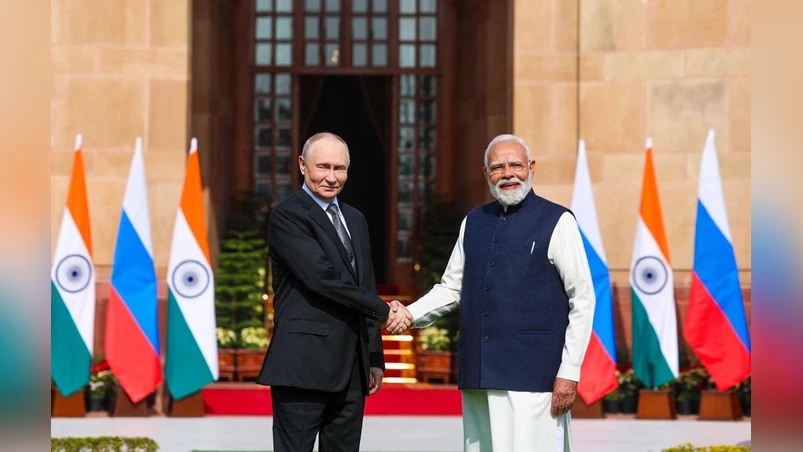
In a landmark moment for global geopolitics, Prime Minister Narendra Modi and Russian President Vladimir Putin unveiled a sweeping 70-point “Vision 2030” roadmap that aims to completely reshape the future of India–Russia ties.
From energy to defence, from trade corridors to higher education, from pharma to Arctic cooperation — the new framework marks one of the most ambitious bilateral programmes India has signed in recent decades.
At its core is a bold economic target:
Boost bilateral trade to USD 100 billion by 2030.
$100 Billion Trade Ambition: A New Economic Architecture
The newly announced India–Russia Economic Programme 2030 sets the foundation for balanced, sustainable and diversified trade.
Key priorities include:
●Expanding Indian exports, especially agriculture & pharmaceuticals
●Digitising customs and logistics
●Removing transport bottlenecks
●Facilitating faster, smoother trade documentation
Russia has also pledged greater market access for Indian goods — a long-standing demand of Indian exporters.
Energy Takes Centre Stage: Russia Assures Reliable, Long-Term Supply
Calling energy cooperation the “pillar of trust,” Moscow reaffirmed its commitment to support India’s rapidly rising fuel needs. The new plan deepens collaboration across:
●Crude oil & petroleum supplies
●Natural gas & LNG
●Coal & coking coal
●Nuclear energy cooperation
●Critical minerals supply chains
This strategic assurance strengthens India’s energy security at a time of volatile global markets.
Three Mega Corridors to Redraw Trade Geography
One of the summit’s biggest highlights was the accelerated push for three game-changing connectivity routes:
●INSTC – International North-South Transport Corridor
●Cuts shipment time to Europe & Central Asia.
●Northern Sea Route
●A new Arctic passage linking Asia to Europe more efficiently.
●Chennai–Vladivostok Maritime Corridor
●A direct shipping line connecting India’s east coast to Russia’s Far East.
Once operational, these corridors will transform trade speed, cost, and geo-strategic outreach.
New Consulates, Labour Mobility, and Safer Migration
India will open new Consulates in Yekaterinburg and Kazan, strengthening cultural and commercial engagement.
●Labour mobility agreements will enable:
●Regulated temporary employment
●Better protection for Indian workers
●Reduced irregular migration
Healthcare & Pharma Breakthroughs
Russia has approved the setup of a major Indian pharmaceutical plant in Kaluga — a milestone for India’s global pharma footprint.
Both nations will collaborate on:
●Medical education & student exchange
●Regulatory harmonisation
●Food safety standards
●Joint health research
This opens new export opportunities for India’s thriving pharma sector.
Arctic, Maritime & Fertiliser Cooperation Strengthened
Agreements signed include:
●Training Indian seafarers for polar navigation
●Enhanced cooperation for Arctic resource exploration
●Long-term fertiliser supply arrangements
●Customs data sharing and India Post–Russian Post integration
These steps strengthen supply chains and maritime resilience.
Boost to Education, Science & Soft Power
Key academic collaborations were signed, including DIAT Pune–Tomsk State University partnerships.
Six MoUs in the media sector will boost content creation, cultural exchange, and joint broadcasting initiatives.
Russia also announced:
●Free 30-day e-tourist visas for Indians
●Joining India’s International Big Cat Alliance
Both symbolic gestures highlight renewed people-to-people warmth.
A Defining Partnership for a Changing World
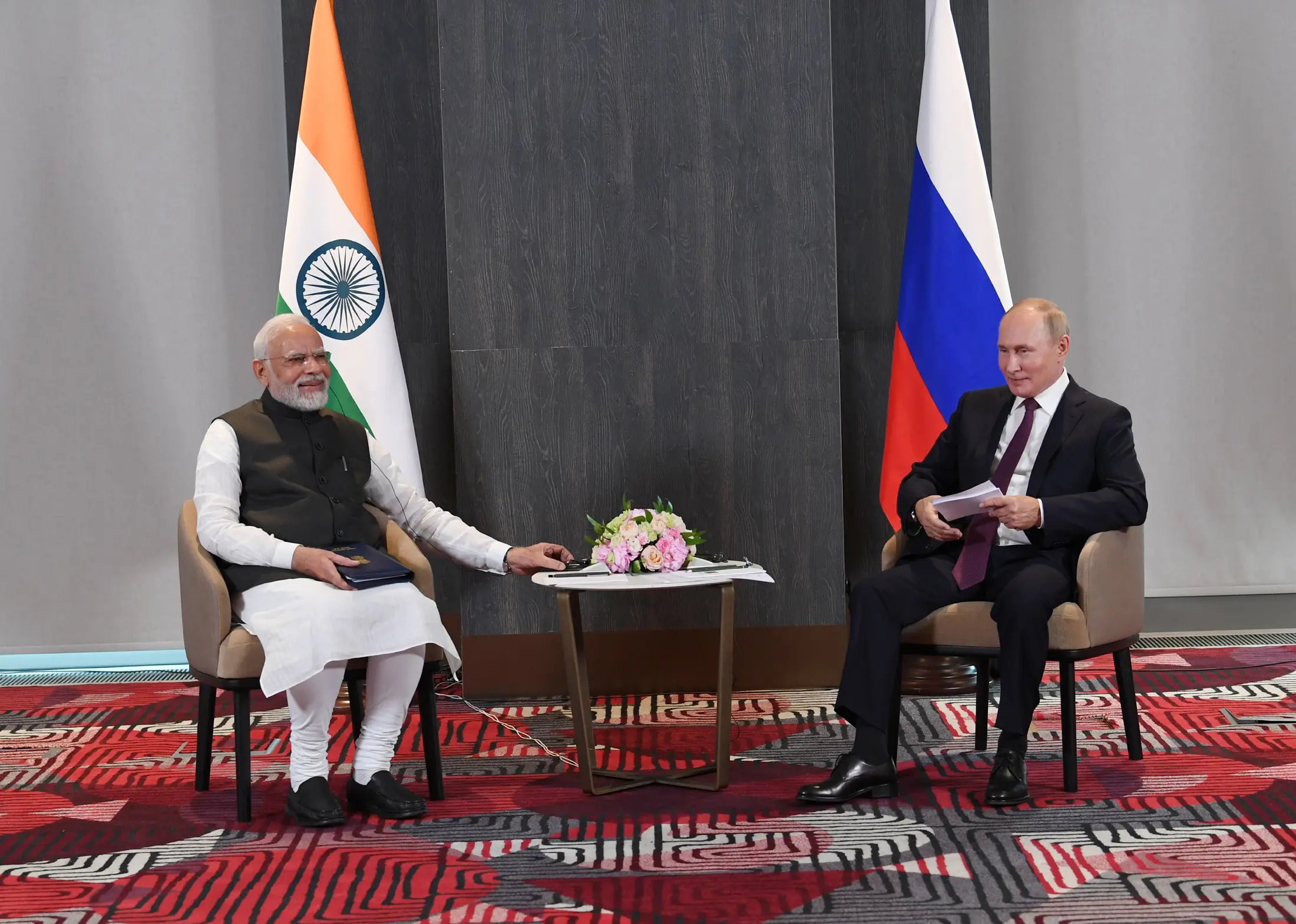
The Modi–Putin summit marks a decisive shift in India–Russia relations — from a relationship once dominated by defence, to a dynamic, multi-sector strategic partnership grounded in:
●Economic expansion
●Technological cooperation
●Energy security
●Connectivity leadership
●Cultural & scientific exchange
Vision 2030 is more than a diplomatic document — it is a blueprint for the next decade of India–Russia cooperation, built on trust, mutual benefit, and shared global ambitions.