

India has entered a bold new era in space technology as Prime Minister Narendra Modi unveiled Vikram-I, the country’s first-ever private orbital rocket, marking a historic milestone for India’s rapidly growing space-tech ecosystem. Developed by Hyderabad-based Skyroot Aerospace, Vikram-I is designed to reshape global small-satellite launches with its speed, agility, and next-gen engineering.
The Prime Minister also inaugurated Skyroot’s futuristic Infinity Campus, a 2,00,000 sq ft advanced rocket factory capable of producing one orbital rocket every month—a first for any Indian private space company.
Meet Skyroot: The Startup That Made History
Skyroot Aerospace was founded by IIT alumni and former ISRO scientists Pawan Chandana and Bharath Daka. In just a few years, the duo transformed Skyroot into India’s most prominent private space startup—making global headlines in 2022 when they launched Vikram-S, India’s first private rocket.
Now, Vikram-I takes that achievement to a whole new level.
What Is Vikram-I? India’s First Private Orbital Rocket
Named after Dr. Vikram Sarabhai, the father of India’s space programme, Vikram-I is built to serve the booming small-satellite market—from Earth-imaging and disaster management to navigation, agriculture analytics, climate mapping and more.
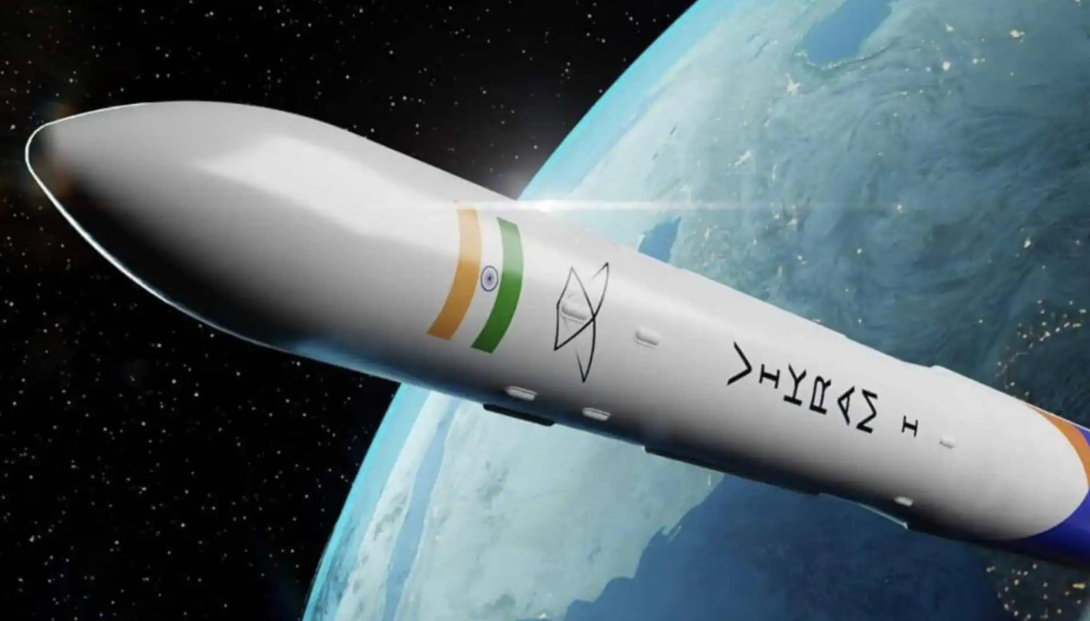
Its key feature?
It can launch multiple satellites in a single mission, significantly reducing launch costs for Indian and global companies.
Vikram-I: Full Specs and Cutting-Edge Features
Payload Capacity
●350 kg to Low Earth Orbit (LEO)
●260–290 kg to Sun-Synchronous Orbit (500 km)
●480 kg to LEO at 45° inclination
Size & Build
●20 meters tall, 1.7 meters diameter
●Entire body made of carbon composite, making it ultra-light and efficient
Power & Performance
●Generates 1,200 kN thrust
●Assembly and launch readiness in 24–72 hours
●Portable — can launch from any site with minimal setup
Rapid Deployment Advantage
Vikram-I’s modular design enables quick turnaround launches, helping India become a competitive global player in commercial space missions.
Why Vikram-I Matters for India’s Future
Positions India as a serious player against global giants like SpaceX’s Falcon 1, Rocket Lab’s Electron, and Blue Origin’s New Shepard.
Boosts India’s private space ecosystem under the government’s new pro-innovation space policy.
Provides affordable launch access to startups, universities, and research labs.
The unveiling of Vikram-I signals the rise of private space innovation in India, backed by government reforms and strong startup capabilities. With this rocket, Skyroot brings India a step closer to becoming a global small-satellite launch hub.