

In a significant technological breakthrough that could dramatically improve road safety across India, ITS Engineering College, Knowledge Park, has been granted a patent for an Artificial Intelligence (AI)-based system designed to prevent road accidents caused by stray animals. The innovation directly addresses one of India’s most persistent and deadly traffic challenges—uncontrolled livestock on highways and rural roads.
Stray cattle, dogs, and other animals roaming freely on national and state highways are responsible for thousands of accidents every year, often resulting in fatalities, severe injuries, and extensive damage to vehicles. Despite multiple awareness campaigns and infrastructure upgrades, the problem has remained largely unresolved. The newly patented AI-powered system aims to change that.
How the AI System Works
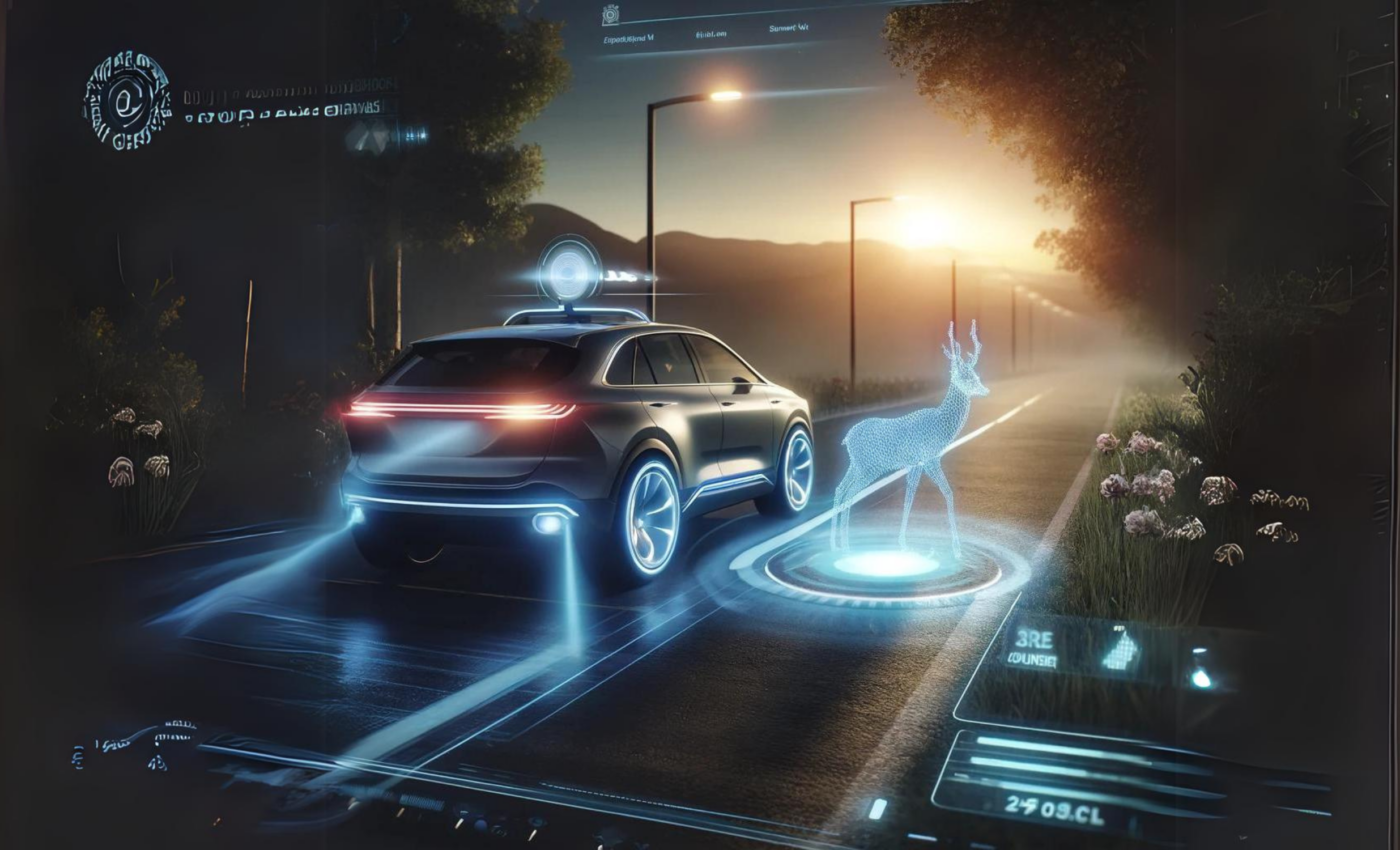
According to the institute, the patented device uses a combination of intelligent sensors, real-time data processing, and advanced AI algorithms to detect the presence of animals on roads. Once an animal is identified, the system instantly alerts approaching vehicles, giving drivers crucial extra seconds to slow down, change lanes, or stop safely.
Unlike conventional warning systems, this AI-based solution continuously learns and adapts, improving its detection accuracy under varying conditions such as poor visibility, nighttime driving, fog, or heavy traffic. The system is capable of distinguishing animals from other roadside objects, significantly reducing false alerts.
A Solution with National Impact
Experts believe the innovation has the potential to revolutionise road safety infrastructure, especially in India’s rural belts and high-speed corridors where stray animals pose a constant threat. If implemented on a large scale, the system could save countless human and animal lives, reduce economic losses from accidents, and ease pressure on emergency and healthcare services.
Speaking on the achievement, Dr Mayank Garg, Director of ITS Engineering College, emphasised the broader significance of the patent.
“This patent is not merely a certificate of innovation. It reflects our core mission of developing technologies that directly benefit society. By integrating Artificial Intelligence with transportation safety, our researchers have demonstrated how academic institutions can provide practical, scalable solutions to real national problems,” he said.
Young Innovators Behind the Breakthrough
The patented system is the result of collaborative research and development by Agha Aseem Hussain, Manvendra Yadav, Shashwat Pandey, and Divya Verma, whose technical expertise and dedication transformed an idea into a viable safety solution. Their work stands as a strong example of how young Indian engineers can contribute meaningfully to national development through applied research.
The Road Ahead
With India witnessing rapid expansion of highways and expressways, the need for intelligent safety systems has never been greater. Policymakers and transport authorities are increasingly exploring AI-driven solutions to reduce accident rates. Innovations like this could play a critical role in shaping the future of smart and safe mobility in India.
As discussions on implementation and pilot projects gain momentum, the patented AI system from ITS Engineering College may soon become a vital component of India’s road safety ecosystem—turning cutting-edge technology into life-saving action.