
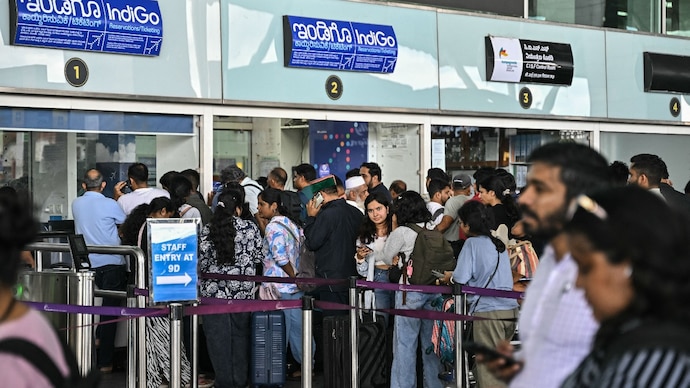
India’s aviation sector has entered one of its worst turbulence phases in recent years as IndiGo’s operational crisis triggers massive flight cancellations and unprecedented airfare spikes. The country’s largest airline — with over 60% market share — has cancelled hundreds of flights over the past few days, creating a vacuum so large that ticket prices on some domestic routes have become costlier than flights to London, Dubai or Paris.
From families rushing home for weddings to students stuck in transit, thousands of travellers are now caught in a supply-demand storm that has pushed airfares to record highs across the country.
Airfares Hit Absurd Levels: Rs 6,000 Tickets Now Selling Above Rs 60,000
Fresh data from travel portals reveals a near-collapse of pricing logic:
Delhi → Patna: Normally Rs 6,000–10,000
Now: Rs 50,000–Rs 66,000
Mumbai → Udaipur: 6–7x surge
Delhi → Kolkata / Bengaluru: 5–8x spike
Tier-2 cities: Fares touching premium international levels
On social media, stranded passengers are sharing screenshots of shocking last-minute prices, calling the situation “economic harassment” and “the worst aviation crisis in recent memory.”
A senior travel executive described the fare surge as “a near-perfect storm created by cancellations, peak season pressure, and ruthless dynamic pricing algorithms.”
Why Are Fares So High?
Experts point to a mix of technology + timing + shortages:
1- Thousands of IndiGo seats vanished overnight
The airline’s sweeping cancellations removed huge capacity from the system instantly.
2- Other airlines don’t have enough spare aircraft
Air India, Vistara, Akasa, and SpiceJet run lean fleets — they cannot absorb such a massive passenger overflow.
3- Peak travel season added fuel to the fire
Marriage season + school vacations = already high demand.
4- Dynamic pricing algorithms kicked into top gear
When thousands searched for the same limited seats, AI-driven pricing pushed fares to their maximum permissible limits.
Aviation analysts warn that this imbalance “may take days to correct, even with regulatory intervention.”
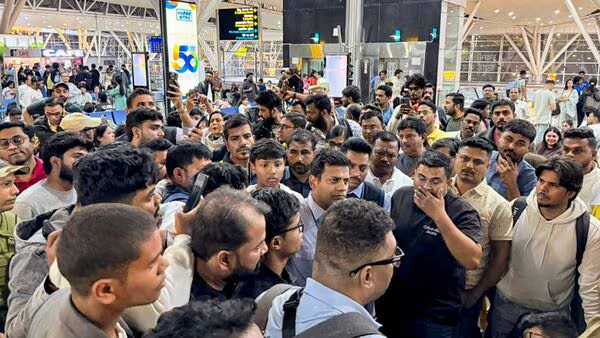
What Triggered IndiGo’s Operational Crash?
According to the airline and DGCA sources:
●New FDTL (Flight Duty Time Limitation) norms disrupted roster planning
●Crew shortages and last-minute unavailability
●Scheduling gaps after shift restructuring
●Heavy monsoon season pressure
The DGCA has now temporarily relaxed certain crew-rest rules to help IndiGo stabilise operations.
However, insiders say full normalcy may take 3–7 days, possibly longer if fresh disruptions emerge.
Ripple Effect: Railways Jammed, Trains Full in Minutes
As airfares shot up, Indian Railways saw an immediate surge in bookings:
●Major routes from Delhi, Mumbai, Bengaluru, Chennai and Patna are now waitlisted instantly
●Railways is considering deploying additional coaches on high-traffic routes
●Bus fares have also surged in several states
The transportation ecosystem is under pressure as travellers scramble for alternatives.
When Will Flyers See Relief?
Aviation experts say the crisis is far from over:
●IndiGo needs to restore full capacity
●DGCA must monitor dynamic pricing abuse
●Taxi-like surge pricing may need review
Until IndiGo stabilises its schedules, fares will remain inflated, and last-minute travellers may continue to face uncertainty.
For now, passengers are advised to:
● Book early
● Avoid peak travel hours
● Check alternate airports/routes
● Monitor airline advisories closely
India’s skies may clear soon — but at the moment, travellers remain strapped in for a bumpy ride.