
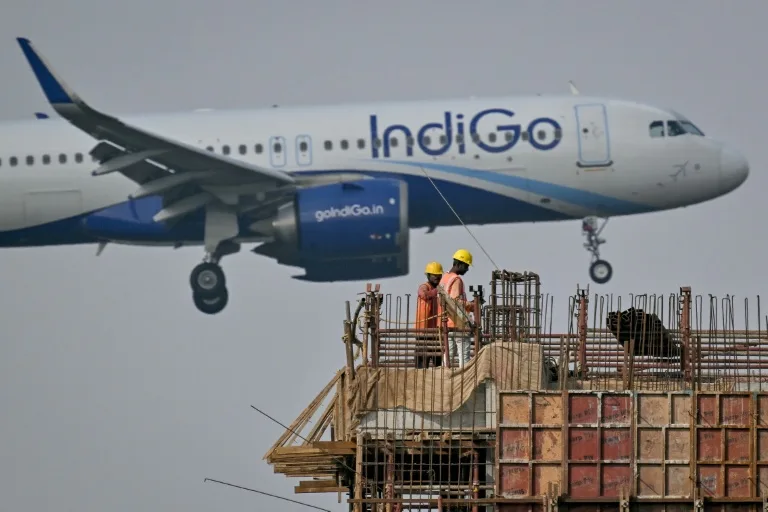
India’s aviation sector has entered a decisive new phase as IndiGo has emerged as the country’s largest international airline by passenger traffic, overtaking the Air India Group for the first time in nearly six years.
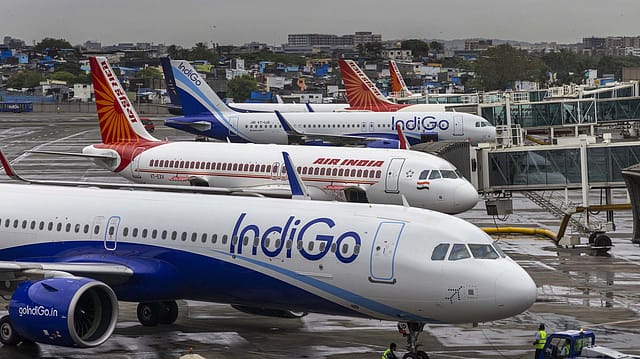
According to the latest data released by the Directorate General of Civil Aviation (DGCA), IndiGo carried 4.14 million international passengers between July and September 2025, narrowly surpassing the Air India Group’s 4.10 million during the same period. While the numerical gap is small, the shift carries significant strategic and symbolic weight.
This marks the first occasion since Tata Group’s consolidation of Air India and Air India Express that a single private airline has outpaced the combined international traffic of the national carrier group.
Operational Headwinds Slow Air India
Industry experts attribute Air India Group’s slip primarily to operational disruptions. The airline’s international capacity took a major hit following a Boeing 787 Dreamliner crash near Ahmedabad, which claimed 260 lives. In the aftermath, Air India reduced wide-body international operations by nearly 15%, impacting long-haul connectivity.
Additionally, aircraft groundings for refurbishment, maintenance issues, and global supply-chain delays in aircraft deliveries from Boeing and Airbus further constrained fleet availability. These factors limited Air India’s ability to fully deploy capacity on key international routes during the quarter.
DGCA data shows Air India transported 2.38 million passengers, while Air India Express carried 1.72 million, together falling just short of IndiGo’s single-airline total.
IndiGo’s Efficiency Pays Off
In contrast, IndiGo capitalised on its younger fleet, high aircraft utilisation, and operational discipline. The airline maintained stability across international routes despite industry-wide pressures, reinforcing its reputation for efficiency-driven expansion.
The dominance becomes even clearer in comparison with smaller carriers. SpiceJet carried only 0.31 million international passengers during the quarter, while Akasa Air transported 0.21 million, highlighting the widening gap between India’s top two aviation players and the rest of the market.
Winter Schedule Confirms the Trend
IndiGo’s leadership extends into the current winter schedule. Data from aviation analytics firm Cirium shows the airline has expanded international operations by 14.5%, scheduling 44,035 international flights between October and March.
Meanwhile, the Air India Group has reduced its international schedule by over 9%, reflecting continued operational recalibration. Though schedules may still change, the trajectory points to a clear short-term shift in market leadership.
Challenges Remain for IndiGo
IndiGo’s rise has not been without turbulence. The Civil Aviation Ministry recently directed the airline to cut overall capacity by 10% after widespread disruptions linked to new Flight Duty Time Limitation (FDTL) norms.
Between December 1 and 9, IndiGo cancelled over 4,200 flights, mainly domestic. However, international operations remained largely protected, with only 2.4% of overseas flights cancelled, underlining the airline’s strategic prioritisation of global routes.
A Turning Point for Indian Aviation
Aviation analysts say IndiGo’s ascent reflects how operational resilience and capacity management can reshape leadership in a competitive market. While Air India’s long-term transformation under the Tata Group continues, the latest DGCA data highlights the immediate challenges facing its international ambitions.
For now, IndiGo’s milestone signals a clear shift in India’s aviation hierarchy — one that could redefine competitive dynamics in the years ahead.